A battery-shaped warning while the engine runs, repeated discharge after driving or changing electrical behaviour can raise a charging-system question. The alternator may be involved, but these signs do not prove it has failed. The battery, belt, terminals, wiring and vehicle controls all need consideration. Ask for a charging-system diagnosis before approving an alternator replacement.
In short
- A charging warning is a reason to act according to the vehicle manual, not a parts diagnosis. Some manuals direct an immediate safe stop.
- DENSO’s charging-system diagnosis calls for battery and connection checks as well as alternator testing.
- A car that starts after a jump but fails later may have a battery, alternator, belt, wiring or electrical-drain issue.
- Do not use dashboard brightness or a single voltage number from the internet as proof. Test the vehicle under the correct procedure.
- Pungbrother’s alternator and starter repair service has no confirmed fixed price; request a finding and firm quote.
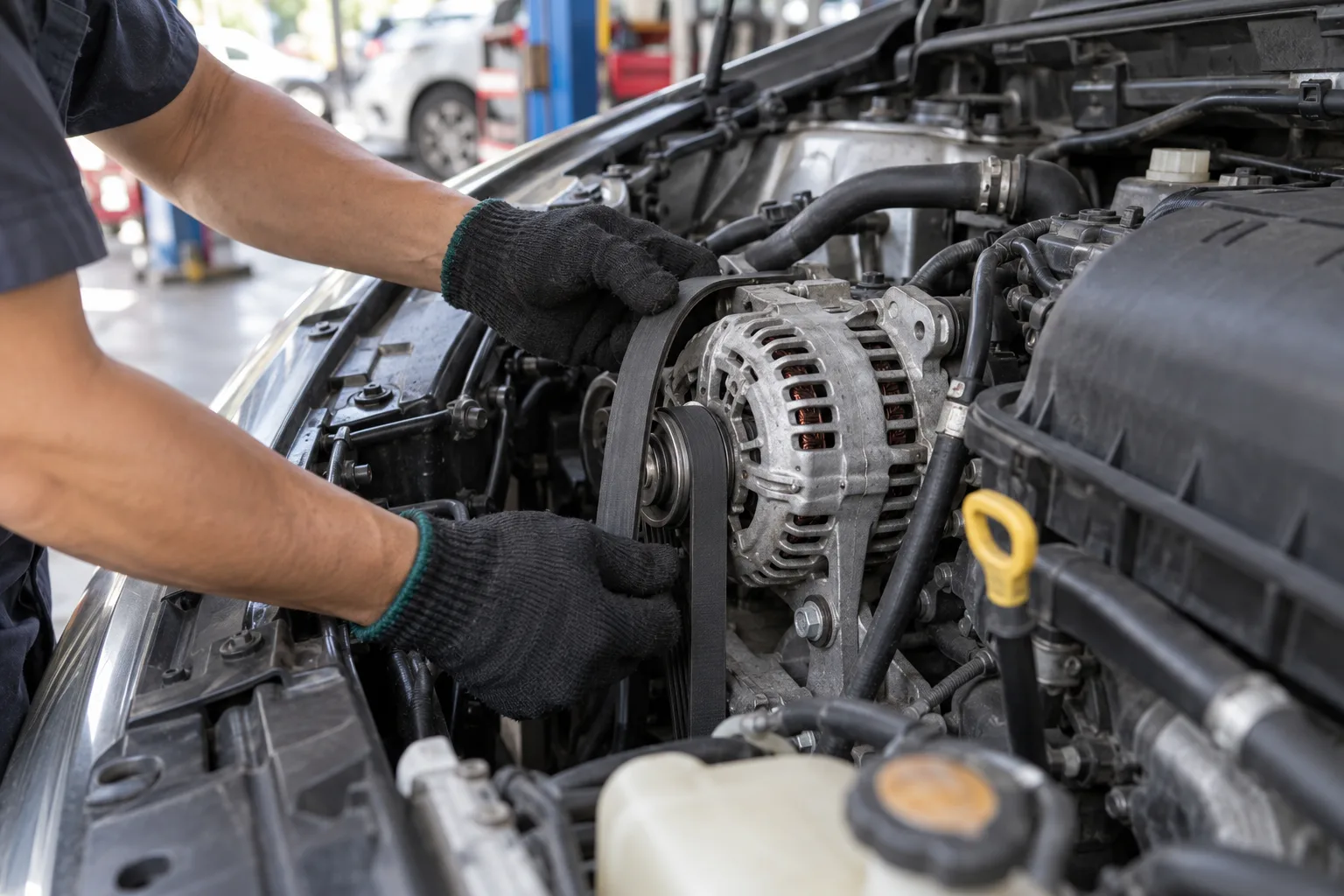
AI-generated illustration. The depicted part has not been tested or diagnosed.
What does the alternator do while you drive?
In a conventional combustion-engine vehicle, the alternator is part of the charging system. While the engine runs, it helps supply electrical power and recharge the 12-volt battery. The battery’s role is especially obvious at startup, but the two parts work together. If charging fails, the car may continue briefly on stored battery energy and then develop electrical problems or stop. The exact behaviour depends on the vehicle and fault.
This guide covers conventional 12-volt charging systems, not high-voltage hybrid or electric traction systems. Some vehicles use different charging strategies, belt layouts or battery-management controls. That is why the owner’s manual and model-specific service procedure matter more than a single generic test value. DENSO’s charging-system guide treats alternator output, battery condition and connections as related diagnostic questions.
An alternator is not always replaced as a whole. Depending on the design and damage, a repair may be possible, but a workshop should first explain which part failed and whether the proposed work is appropriate for that model. Ordering a replacement because an online article says “bad alternator” is an expensive shortcut with uncertain results.
Is the battery warning light an alternator warning?
A battery-shaped lamp that remains on while the engine runs commonly points to a charging-system problem, but the cause is not necessarily the alternator. Toyota’s warning-light instructions direct drivers of the cited model to stop immediately in a safe place when the charging-system warning appears. Follow the exact instructions for your vehicle. Our separate battery warning guide focuses on the immediate driving decision.
Do not assume the light means the battery itself must be replaced. A loose or broken drive belt on some cars, poor connection, wiring fault or charging component can trigger a similar warning. DENSO’s troubleshooting reference lists several areas to check. Likewise, a failing alternator may not announce itself with one neat, steady symbol in every situation.
If the warning appears while driving, find a safe place, stop as the manual directs and ask for qualified help. Do not continue until the battery drains simply because the engine has not stopped yet. Turn off equipment only if it is safe and consistent with the manual; keep essential lights and safety systems as needed. The article cannot estimate how far a particular car can travel on remaining battery energy.
Can a flat battery be caused by a bad alternator?
Yes, inadequate charging can leave a battery depleted. But a flat battery can also be old, deeply discharged after parking, affected by a loose terminal or drained by an electrical load. The timing of the problem helps. A car that is repeatedly flat after normal driving may warrant charging-system checks; one that goes flat only after several days parked may need a different investigation. Neither pattern proves a specific component without testing.
Tell the technician whether a jump start helped, whether the car then ran normally, whether it failed again after parking, and whether a charging warning appeared. Do not repeatedly jump-start a car with an unresolved warning and send it back into traffic. A vehicle that stalls when electrical power is lost may create a road-safety risk. If it is unreliable, ask about recovery.
Battery testing and charging-system testing answer different questions. DENSO recommends checking the battery and connections before concluding that the alternator is faulty. If the battery is damaged as a consequence of repeated discharge, it may need attention too, but replacement should be justified by its own condition and the correct vehicle specification.
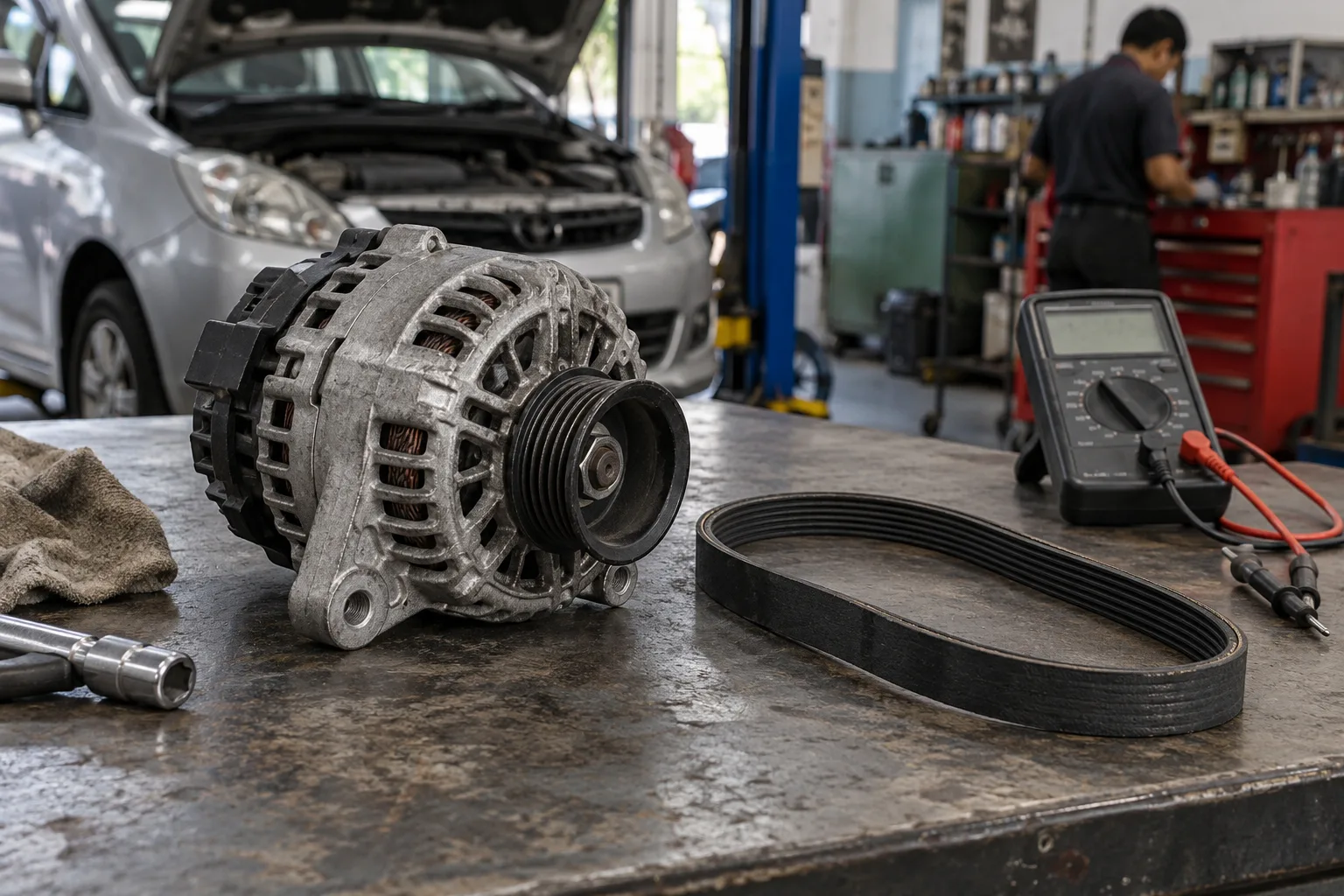
AI-generated illustration. The meter is not a real charging test result.
What about dim lights, noise or electrical glitches?
Changing headlight brightness, unusual accessory behaviour, a whining noise or a burning smell may accompany an electrical or belt problem. They are not unique alternator signs. A noise from the front of the engine could come from a belt, pulley, bearing or another driven component. A smell may have several causes. If you see smoke, smell burning insulation or experience a severe new warning, stop safely and seek help rather than testing the car by driving farther.
Describe when the symptom occurs: at idle, after switching on aircond, during acceleration or during a rainy night with more electrical loads. Note whether the battery light came on at the same time. A technician can then inspect relevant connections, belt condition where applicable and charging behaviour under the proper vehicle procedure. DENSO’s troubleshooting list shows why a belt or wiring check matters before condemning an alternator.
Do not put hands near an operating belt to listen or feel for a noise. Do not disconnect a battery cable while the engine runs as a home alternator test. Modern vehicle electronics can be sensitive, and this is not a safe or reliable diagnostic method. Ask for a measured inspection instead.
| Observation | Possible charging-system relevance | What else to consider |
|---|---|---|
| Battery lamp while engine runs | Charging fault may be present | Belt, wiring, battery and controls |
| Repeated flat battery after driving | Insufficient charging is possible | Battery condition and connections |
| Flat only after long parking | Charging may still need checking | Electrical drain or battery ageing |
| Noise near belt drive | Alternator bearing or pulley possible | Other driven components |
| Dim or changing lights | Electrical supply may be unstable | Connections and other electrical faults |
How should a workshop test a suspected alternator?
A sensible starting point is the complaint history, battery state and physical connections. The technician may inspect the relevant belt and wiring, test charging performance under the vehicle’s specified conditions and consider the battery-management system if present. The exact sequence varies by model. A single reading taken without knowing battery charge, electrical load or vehicle strategy may be misleading. Ask what was measured and how it compares with the maker’s procedure.
The quote should name the failed component and explain why the battery or another part was ruled out. If an alternator is proposed, ask whether the work includes repair or replacement, which component brand or specification is used, what labour is involved and whether the battery will be rechecked afterward. If the starter is also mentioned, ask what separate evidence supports that; a starting motor and charging alternator perform different jobs.
Pungbrother’s alternator and starter repair page describes the service category but does not publish a universal price. Its pricing page lists estimates for five specified services only. A charging-system repair should be quoted after diagnosis, with a firm amount before agreed work. Do not transfer the battery replacement estimate to an alternator job.
Is it safe to keep driving with suspected alternator failure?
There is no reliable distance answer. The battery’s remaining charge, vehicle load and the type of fault vary. Toyota’s charging-warning guidance for the cited model calls for an immediate safe stop. Follow your vehicle manual. If the car’s charging lamp is on, electrical systems behave abnormally or the engine threatens to stall, stop safely and arrange qualified advice or recovery.
If no warning is present but you have a repeated weak start, arrange a planned test before a long journey. Do not wait for a complete breakdown to learn whether the battery or charging system is healthy. At the same time, do not replace the alternator preventively based only on its age. A confirmed finding and correct part specification matter more than a guess.
Pungbrother Enterprise is located at 1, Jalan Kota 1/1, Cahaya Kota Puteri, 81750 Masai, Johor. Use the workshop contact page to describe the warning and ask whether the car should be brought in or recovered. No mobile repair or same-day part availability should be assumed from this article.
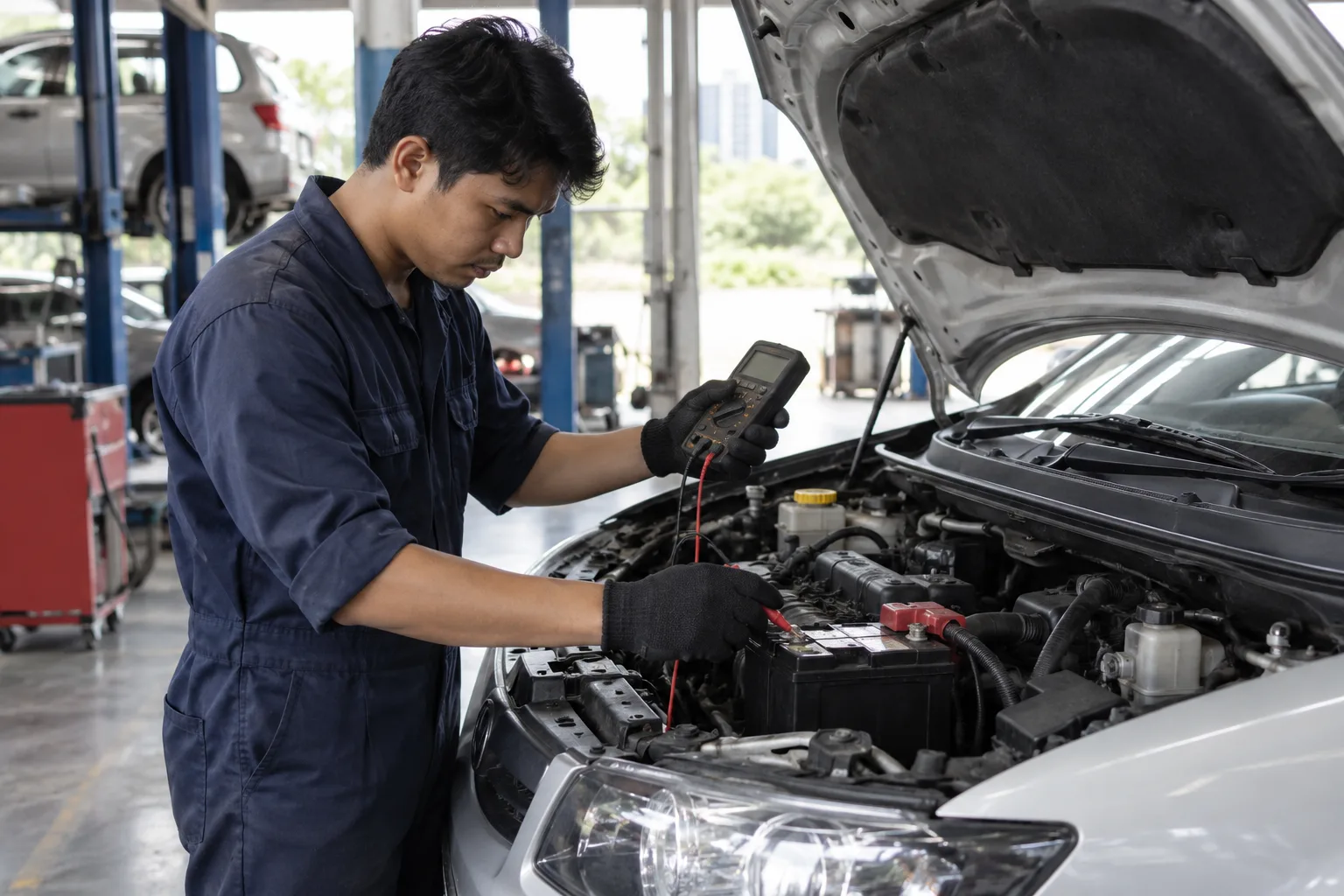
AI-generated illustration of a charging-system check, not a real diagnosis.
Frequently asked questions
Does a battery light mean the alternator is bad?
Not necessarily. It signals a charging-system concern on many vehicles. The battery, belt, wiring and alternator may all need assessment. Follow your owner’s manual for the immediate action.
Can a car start with a bad alternator?
It may start while the battery still has enough energy, but continued operation can become unreliable. Do not infer safety or remaining driving distance from one successful start.
Should I replace the battery and alternator together?
Only if each has a justified finding. Test the battery and charging system, then request an itemised quote. A new battery alone will not correct a charging fault.
Can a bad belt cause charging problems?
On vehicles with a belt-driven alternator, belt condition can matter. DENSO’s troubleshooting guide includes belt-related checks. Your vehicle’s layout determines what applies.
Is a voltage reading enough to diagnose an alternator?
No single internet number is a complete diagnosis. Battery charge, electrical load and vehicle controls can affect readings. Ask for the maker’s procedure and the complete finding.
Does Pungbrother list a fixed alternator repair price?
No confirmed universal price appears on its pricing page. Ask for diagnosis, repair scope and a firm quote before work.