When your car will not start, the most useful first question is what happens when you try. Does the engine stay silent, turn slowly, or turn at its normal speed without running? Those are different complaints. A flat battery is common, but it is not the only possibility, and buying one before testing can miss the real fault. This guide helps you describe the symptom and choose a safe next step. It cannot diagnose a particular car remotely.
In short
- If the engine does not turn at all, the workshop should consider the battery, cable connections, starting controls and starter circuit. A silent attempt does not prove that a new battery is needed. DENSO’s starter troubleshooting chart lists several possible causes.
- If the engine turns slowly, battery condition, cable connections and the starter remain possible. A proper test matters more than the age of the battery alone. DENSO’s battery testing guide starts with visual inspection and performance testing.
- If the engine turns at a normal speed but does not run, describe that as cranks but will not start. The battery may have enough power to turn the engine, so a battery replacement is not the automatic answer. The vehicle needs a model-specific diagnosis.
- If the vehicle is stopped in an unsafe place, deal with traffic and personal safety first. Do not repeatedly try to start it in a dangerous position. Follow the owner’s manual and arrange appropriate assistance.
- Pungbrother’s published guide price for a car diagnostic inspection is RM 80 for a small car or RM 120 for a large car, with an estimated time of about one hour. Its separate battery replacement service lists guide prices of RM 250 and RM 350 respectively. The cause and a firm quote come after inspection; these prices are not a promise that any specific part needs replacing.
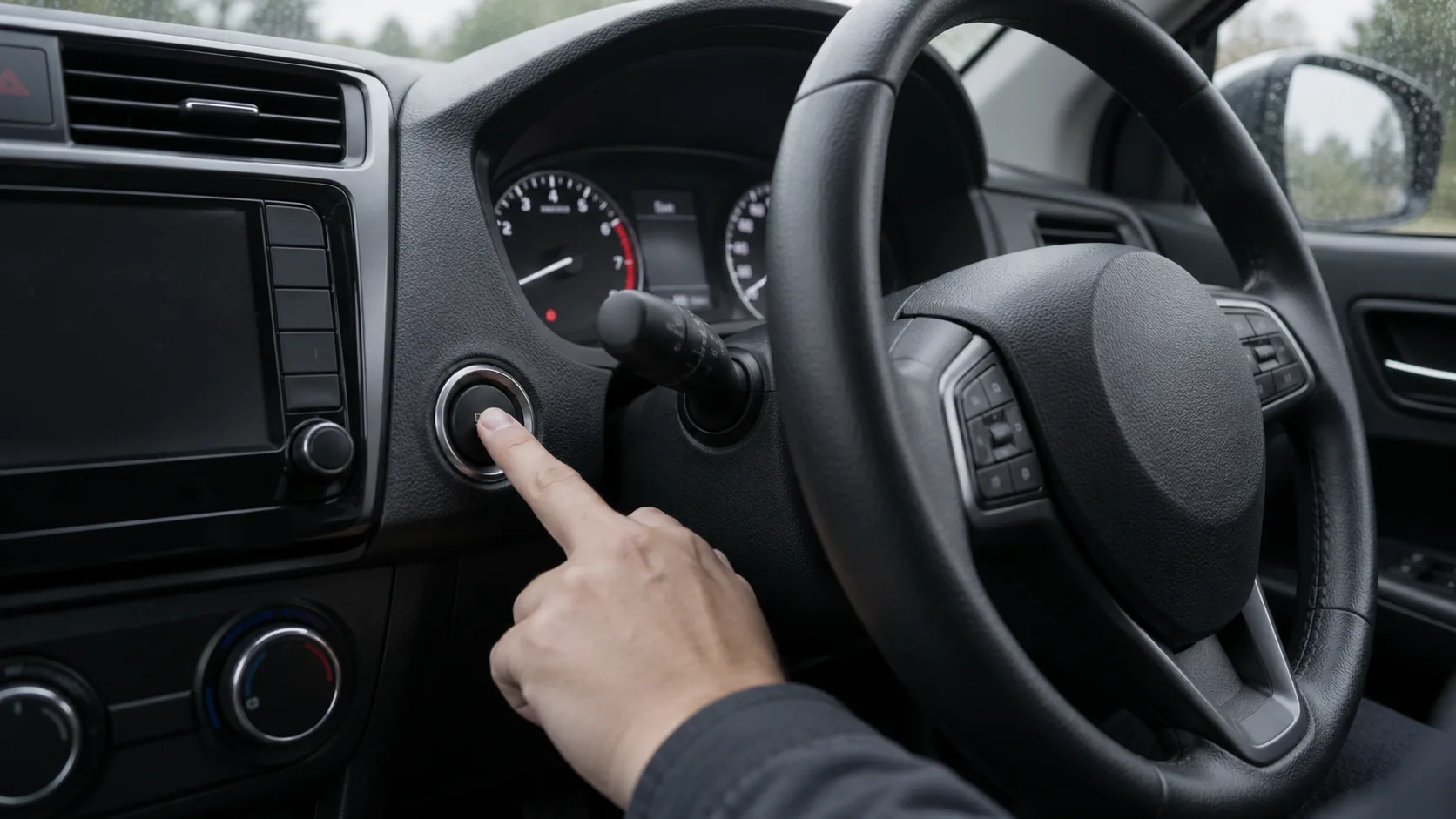
AI-generated illustration of a starting attempt. It is not a customer vehicle or a photograph of a Pungbrother repair.
First, is the car in a safe place?
A breakdown beside traffic is not the moment to work under the bonnet. If the car can be positioned safely, stop in an appropriate place, select Park or neutral as the vehicle requires, apply the parking brake and switch on the hazard lights when needed. If you cannot safely exit or inspect the vehicle, stay clear of traffic and use the assistance option appropriate to your location. The precise roadside procedure depends on the road, vehicle and local instructions; this article is not a substitute for them.
Before trying again, look for obvious signs that make further attempts unwise: smoke, a strong electrical or burning smell, a visibly damaged battery case, leaking fluid, or a warning in the owner’s manual. Do not touch a leaking battery or try to repair wiring at the roadside. Toyota’s battery safety guidance notes that battery handling can cause injury or electrical damage and recommends trained technicians for the safest replacement. Its instructions apply to Toyota vehicles in the US, so use your own car’s manual for model-specific precautions in Malaysia.
If the car is already safely parked at home, note the dashboard response and sound during one normal start attempt. Avoid a long sequence of repeated cranking. DENSO’s starter troubleshooting reference emphasises documenting the conditions of the failure, not guessing a component from one symptom. Tell the workshop whether the problem began suddenly, appeared after the car had been parked, or happened after a previous intermittent start. Those details can change the first tests.
Does the engine not crank, crank slowly or crank normally?
The word start hides three distinct observations. Cranking means the starter is turning the engine. The instrument cluster lighting up does not mean the engine has cranked. You may hear a click without engine rotation, or hear the normal repeated turning sound without the engine beginning to run. Separate these before ordering a battery or asking for an alternator.
| What you observe | Useful description for the workshop | What it does not prove |
|---|---|---|
| No engine rotation and little or no response | “There is no crank; this is what the dashboard and lights do” | That the battery alone is faulty |
| A click, but no engine rotation | “It clicks once or repeatedly, but the engine does not turn” | That the starter alone is faulty |
| Engine turns more slowly than usual | “It cranks slowly and will not run” | That replacing a battery will solve it |
| Engine turns at a familiar speed but will not run | “It cranks normally but does not start” | That the battery or starter is necessarily the cause |
| Engine starts after help, then later will not start | “It starts temporarily, then the same failure returns” | That the first temporary fix repaired the underlying problem |
This table is a description guide, not a diagnostic chart. DENSO’s starting-system chart explicitly lists a dead or weak battery, loose connections and starter faults among the possibilities for no-crank or slow-crank symptoms. A normal crank without starting moves the diagnostic question beyond a simple low-power starting complaint; the workshop should follow the relevant vehicle procedure rather than assume one universal cause.
What if the car does not crank at all?
With a no-crank complaint, ask the workshop to establish whether the battery has adequate charge and condition, whether connections and grounds are sound, and whether the starting circuit is receiving the expected command. DENSO’s starter checklist includes a battery load test, charging-system check, cable inspection and electrical circuit tests. These are technician procedures. The result, not the sound alone, should justify the proposed repair.
You can make a few observations without touching electrical parts. Do the interior lights appear much dimmer than usual when a start is attempted? Does the dashboard respond differently from its normal sequence? Is the selector in the position required by your owner’s manual? If the car uses a keyless start system, does its manual describe a low key-fob battery procedure? Do not assume the same start interlock or key procedure applies to every model.
A single click is a useful description, but it is not a diagnosis. A low-power supply, poor connection or starter-system issue can present similarly. If the lights work, the battery may still be unable to deliver what the starter needs. Conversely, if the battery tests adequately, the workshop can check the rest of the circuit instead of replacing it automatically. Record whether you hear one click or repeated clicks, and tell the workshop whether the lights stay bright or change when you try to start.
What if the engine cranks slowly?
Slow cranking deserves a battery test, but it also deserves a look at the path from battery to starter. DENSO’s battery inspection guide calls for checking the case, mounting, cable condition and corrosion before a performance test. DENSO’s starter chart also names weak battery, loose or corroded connections and a faulty starter as possible causes of slow cranking. None of these should be inferred solely from a sound recorded on a phone.
Tell the workshop whether slow cranking happens only after a long period parked, on every start, or only after a drive. If the car needs help to start once, it is still worth asking why it became weak. A battery that no longer holds charge, an electrical draw while parked and a charging problem require different responses. DENSO’s charging-system guide says battery condition and connections should be evaluated before the charging system is judged. The order matters because a poor battery or connection can distort later conclusions.
If you are considering a jump start, check the vehicle manual first. Some vehicles have specified jump points or precautions, and an incorrect connection can be dangerous. Do not attempt it with a cracked or leaking battery. This page deliberately does not give a one-size-fits-all cable sequence; use model-specific instructions or qualified help.
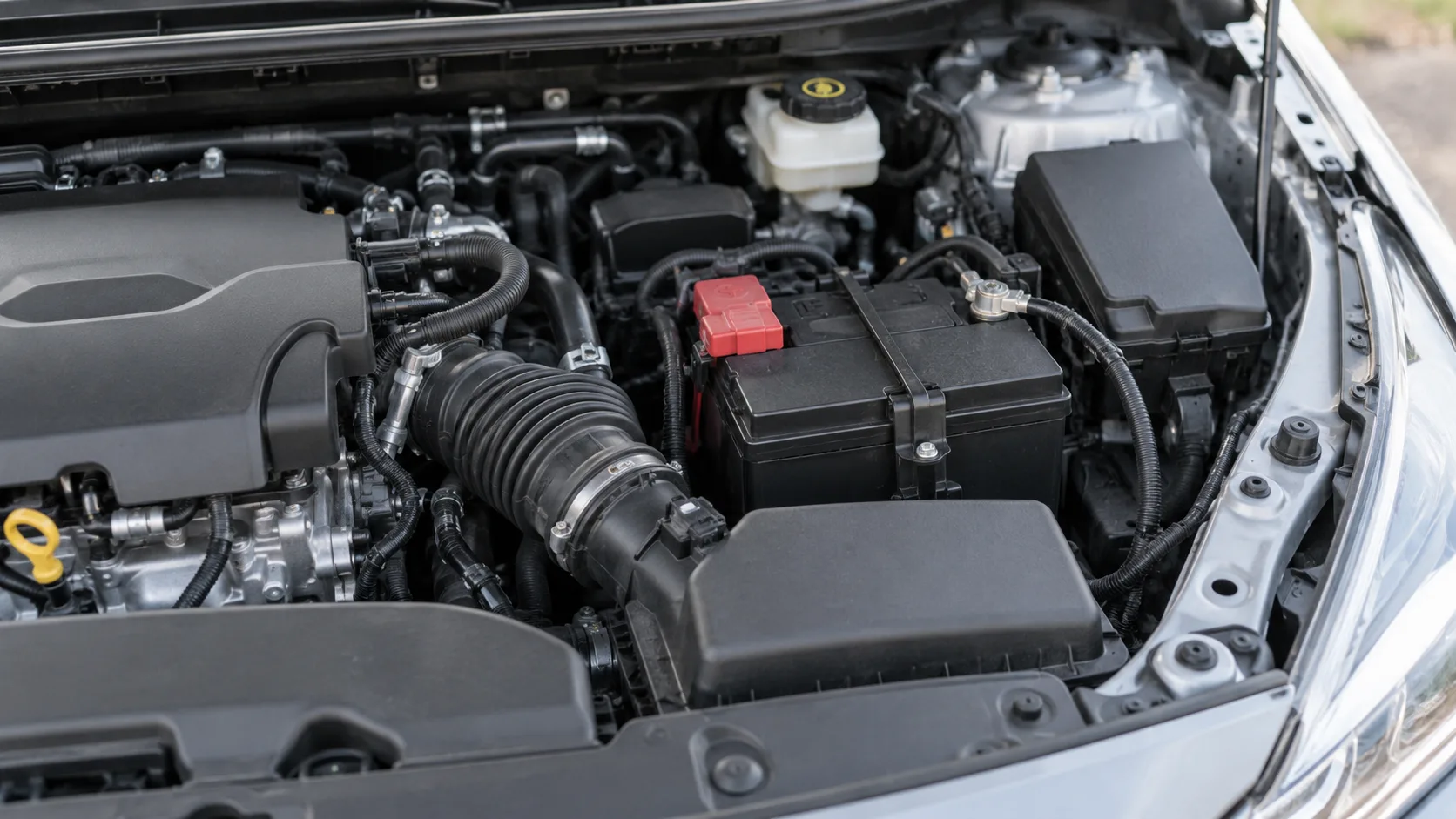
AI-generated illustration of a generic battery location. It does not show a tested battery or a fault found by Pungbrother.
What if the engine cranks but will not run?
When you hear the engine turning at roughly its normal rate but it never begins to run, say exactly that. It distinguishes this case from a starter that cannot turn the engine. The next checks depend on the vehicle, its warning messages, recent work and whether the failure is intermittent. A diagnostic scan may contribute evidence, but a code is a clue about a system, not an order to replace the named part.
Check the obvious without dismantling anything: whether the car has sufficient fuel according to its gauge, whether the dashboard shows a security or immobiliser message, and whether the owner’s manual describes a safe response to it. Report if the car stalled before it refused to start, or if it failed only after refuelling or service. The workshop may need to reproduce the fault and follow the manufacturer’s procedure. Avoid repeatedly cranking in the hope of forcing it to run, especially when there is an unusual smell or sound.
Pungbrother’s diagnostic inspection page describes scanning stored codes, checking live readings and relating findings to the reported symptom. That is a more defensible next step than treating a lit warning lamp as a complete diagnosis. If a start problem appears together with other signs such as loss of power while driving, tell the workshop the full sequence, not just the final no-start event.
How do battery, alternator and starter problems differ?
These parts work in related but different phases. The battery supplies the initial electrical power, the starter turns the engine, and the charging system replenishes the battery when the engine is running. That description explains why a failed start can involve more than one test. DENSO’s charging-system diagnosis begins by inspecting and testing the battery, its cables and grounds before judging the alternator. DENSO’s starter guidance then traces the starting circuit rather than assuming every no-crank complaint is a starter failure.
If a replacement battery solves the starting problem for only a short time, that return of the symptom is important. It could point to the need for charging or electrical-drain checks, but it does not identify an alternator from the pattern alone. Likewise, a jump start that gets the engine running proves only that an external power source helped at that moment; it does not prove why the original system could not start. Ask for test results that support the repair being quoted.
If a charging warning light came on while you were driving before the no-start event, mention it. DENSO notes that a charge lamp can reflect more than an alternator itself, including wiring and battery conditions in some circumstances. Avoid a long drive to “recharge” a car with a persistent charging warning without consulting the owner’s manual and arranging assistance. A separate alternator and starter repair page explains that Pungbrother quotes this work after inspection rather than publishing one fixed price.
What should a workshop test before quoting a repair?
Ask for a short explanation that connects your observation to the proposed part. For a no-crank or slow-crank problem, that may mean confirming battery charge and condition, checking terminals and grounds, testing the starting circuit and confirming charging performance when appropriate. DENSO’s battery test sequence and starter checklist provide a manufacturer-side basis for these checks. The exact measurements and thresholds are vehicle-dependent and belong in the service procedure, not in a universal online verdict.
Before approving work, ask four practical questions:
- Which symptom did you reproduce: no crank, slow crank or normal crank without starting?
- Which checks were performed, and what results point to the proposed cause?
- Is the quote for diagnosis, battery replacement, a starter or alternator repair, or another identified fault?
- What is included in the quoted amount, and what would require a separate approval?
This is useful even if the outcome is a straightforward battery replacement. It reduces the chance that a charging or cable problem is left behind. If an inspection cannot reproduce an intermittent fault, ask what was checked and what evidence would help if it returns. A clear record of dates, dashboard messages and start attempts can be more useful than buying a part on speculation.
What does Pungbrother publish about inspection and price?
For customers around Masai, Johor, Pungbrother lists car diagnostic inspection at an estimated RM 80 for a small car or RM 120 for a large car, with about one hour shown as the workshop duration. This is a guide price for inspection, not an all-in price to repair every no-start fault. Its battery replacement page lists guide prices of RM 250 for a small car and RM 350 for a large car, with about 30 minutes as an estimated duration when replacement is the agreed job. A battery should be tested against the vehicle’s actual requirements first.
The pricing page says the listed figures are estimates and that a firm quote is provided before work. Pungbrother does not publish a fixed guide price for every alternator, starter, wiring or engine fault. For those problems, the amount depends on inspection and the agreed scope. Do not use another workshop’s price or a parts retailer’s online price as a Pungbrother quote.
When contacting the workshop, give the vehicle model and year, where the car is located, whether it is safe to move, exactly what happens during a start attempt and any warning message. If the car is stranded, ask what assistance is available rather than assuming a mobile visit or towing service. The site’s workshop contact page has the current phone and WhatsApp details. If a scheduled visit is possible, take the owner’s manual and any recent battery or repair documentation with you.
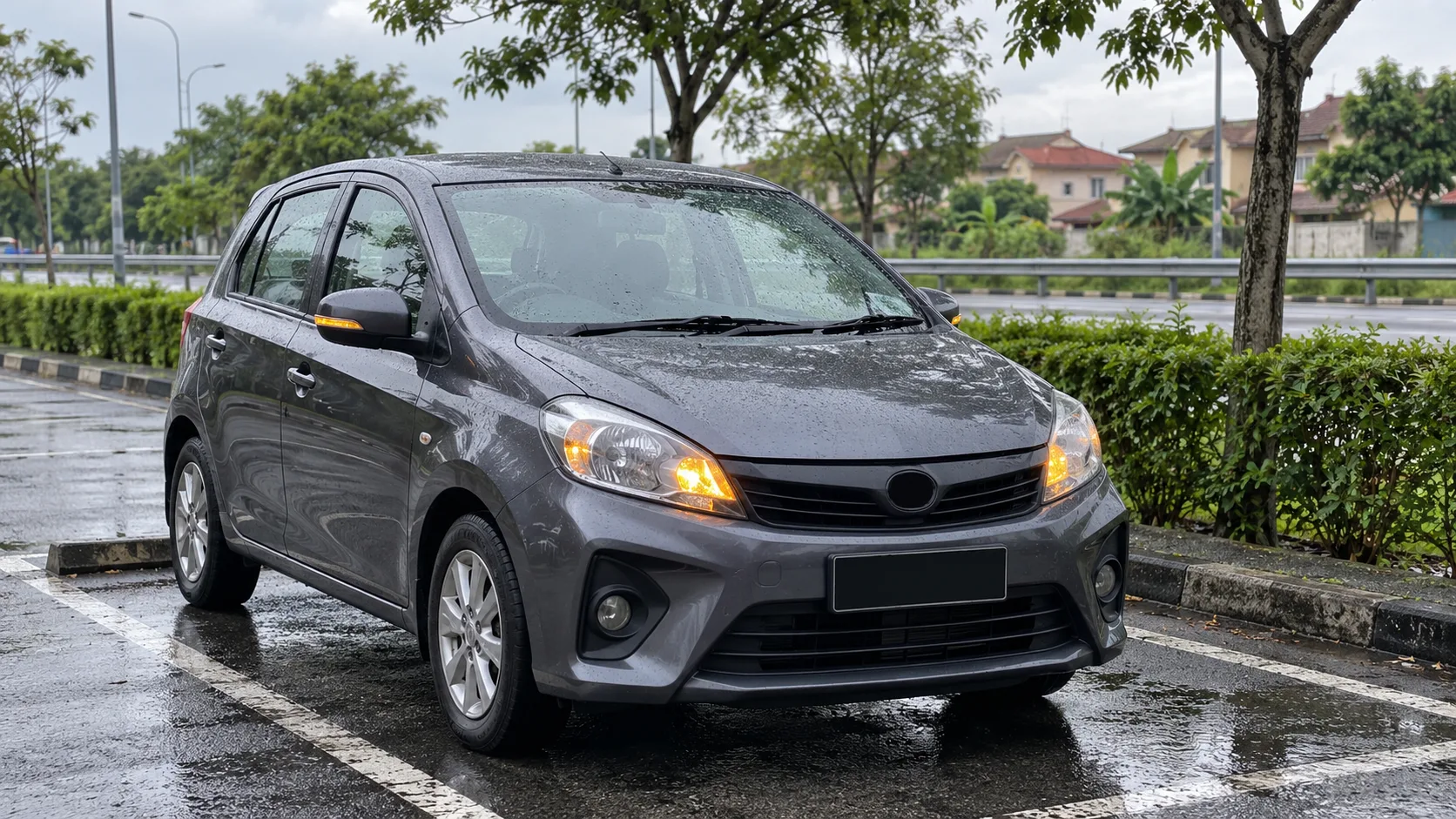
AI-generated illustration of a safely parked vehicle. This is not a Pungbrother customer car or an image of a real breakdown.
Questions drivers often ask
Can a battery be bad if the headlights still work?
Yes, that is possible. Lighting up the headlights and turning the engine are different electrical demands. Headlights alone cannot confirm a battery’s ability to start the car or rule out connection and starter problems. Describe both observations and request appropriate battery and starting-system tests. DENSO’s starter troubleshooting chart distinguishes those checks rather than relying on one light test.
Does one click mean I need a new starter?
No. The click is worth recording, but it does not establish the failed part. The battery, cable and starter circuit still need to be checked. DENSO’s starting-system guidance lists multiple no-crank causes. A quote should follow the tests that identify the fault.
If a jump start works, is the alternator fine?
Not necessarily. A successful assisted start shows that added power helped at that moment. It does not prove whether the battery can hold charge, whether the charging system is working correctly, or whether another fault is present. DENSO’s charging diagnosis calls for battery, connection and charging checks before reaching a conclusion.
Should I replace the battery immediately if it cranks slowly?
Not solely on that symptom. Slow cranking can involve battery condition, connections or the starter. A visual inspection and performance test can show whether the battery itself is unsuitable or whether another part of the circuit needs attention. See DENSO’s battery guide.
What if the engine turns normally but still will not start?
Tell the workshop that it cranks normally but will not run. This is a different diagnostic branch from a no-crank complaint. Note fuel level, warning messages, recent work and whether the failure is intermittent, but do not dismantle the vehicle or infer a part from the symptom alone. A model-specific inspection is needed.
How much is a no-start inspection at Pungbrother?
Pungbrother publishes a guide price of RM 80 for a small car or RM 120 for a large car for its car diagnostic inspection. The actual repair is separate and should be quoted after the cause is found. The pricing page states that estimates are followed by a firm quote before work.
What to do next
Write down whether your car does not crank, cranks slowly or cranks normally without running. Add the dashboard warning, the sound, when the fault started and whether the vehicle is safely parked. Then arrange a diagnosis before approving a battery, alternator or starter replacement. If you are near Masai, contact Pungbrother with those details and ask for the appropriate next step. The workshop’s published guide prices are a starting point for a conversation, not a substitute for inspection.