A jump start can get a car moving when its 12-volt battery cannot supply enough power to start it. It is not a diagnosis or a repair. The safe connection points and sequence depend on the vehicle, especially when a battery is relocated or the car has a hybrid system. Before touching a cable, find the jump-start section of your own owner’s manual. If the manual is unavailable, the battery is damaged, or the location is unsafe, arrange qualified help instead.
In short
- Move personal and traffic safety ahead of the jump start. Do not work beside moving traffic.
- Confirm the vehicle’s manual permits a jump start and identify its specified 12-volt terminals or remote jump points. A hybrid may have a dedicated point rather than an accessible battery. Toyota’s model-specific hybrid instructions demonstrate why this matters.
- Do not attempt a jump start if the battery case is cracked, leaking or otherwise visibly damaged. Do not touch exposed wiring or let cable clamps contact each other.
- Follow the exact vehicle-manual connection and disconnection instructions. This article intentionally does not substitute one universal cable diagram for different cars.
- Once the car starts, ask why the battery was weak. A successful jump does not prove that the battery alone needs replacement. DENSO’s starting-system troubleshooting lists several possible causes.
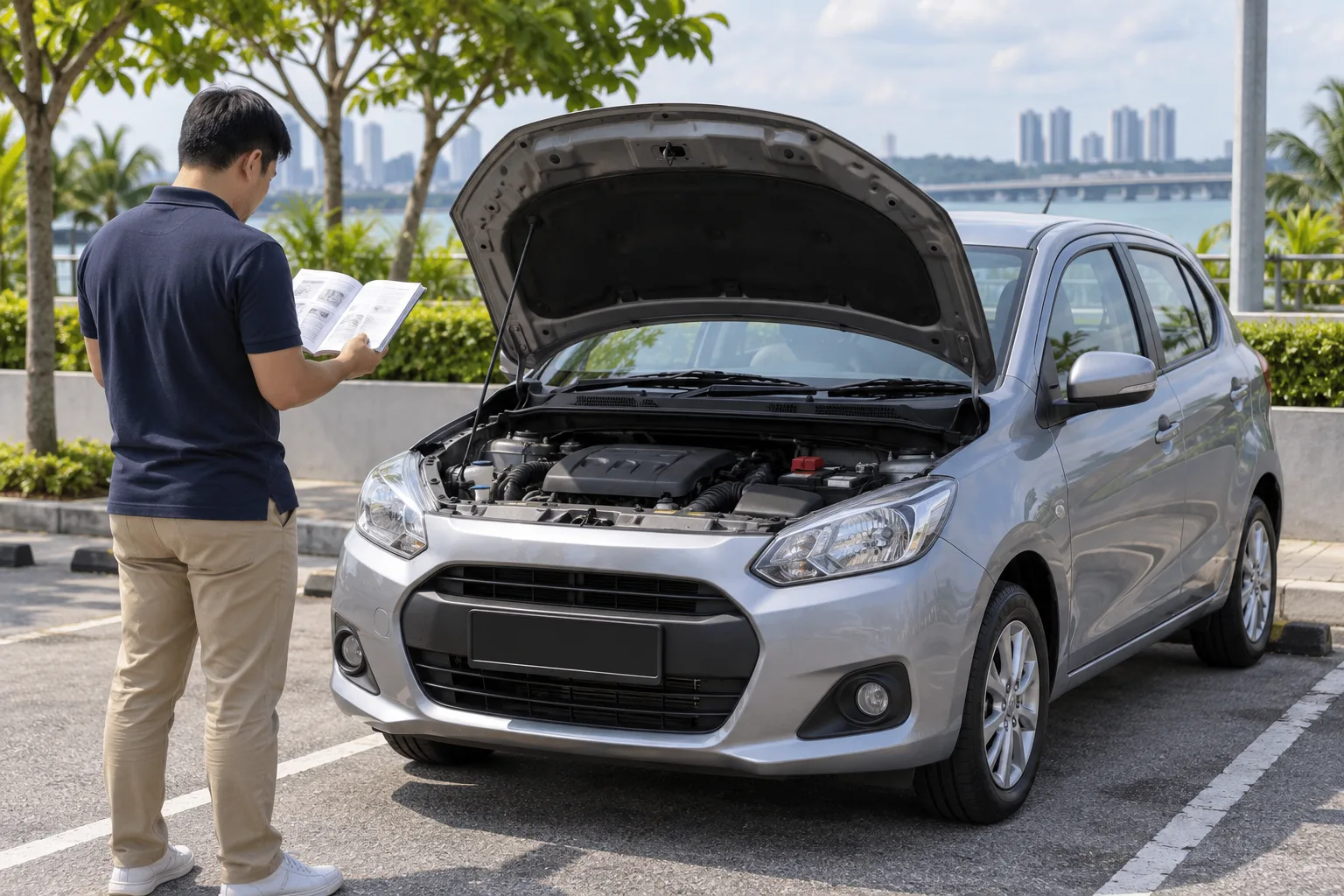
AI-generated illustration. The scene does not depict a Pungbrother employee, customer or real roadside event.
When should you avoid a roadside jump start?
Do not open the bonnet on a live traffic lane, a narrow shoulder, or any location where you cannot stand clear of passing vehicles. If the car is in a hazardous position, use the assistance option appropriate to that road and place. There is no benefit in getting the engine running while exposing yourself or another driver to traffic. Make sure the vehicle is immobilised as its manual requires, and keep children and bystanders away from the work area.
The condition of the battery matters too. A leaking, swollen or cracked case, strong chemical smell, smoke, unusual heat or visibly damaged cables are reasons to stop. Battery acid and electrical faults can cause injury. Toyota’s battery handling guidance describes electrical and chemical risks and recommends a trained technician when the work is uncertain. That article is general Toyota advice, not a replacement for your particular car’s Malaysian-market manual.
Do not use an unknown donor vehicle or power pack simply because its clamps fit. The voltage, approved connection locations and jump-pack procedure must match your vehicle’s instructions. Never improvise a connection to a metal part because a generic online diagram says to. A few extra minutes spent finding the manual or calling for help are preferable to damaging electrical components or creating a spark near a battery.
What should you check before connecting anything?
First, confirm the complaint. Does the engine crank slowly, not crank, or crank normally without starting? A jump start is most relevant to an insufficient 12-volt power supply. If the engine already turns at its normal speed but does not run, the fault may lie elsewhere. The symptom guide in our car-won’t-start draft should not be read as a remote diagnosis; a workshop must test the vehicle.
Second, read the actual owner’s manual. Locate the pages headed jump starting, discharged battery or similar. Identify the vehicle’s specified positive point and negative or ground point, the order of clamps, whether the donor engine should run, any timing limits, and the order for removing clamps. A 2023 Toyota Corolla manual gives one procedure for that model, while the 2024 Grand Highlander Hybrid manual describes a dedicated 12-volt jump terminal. Their differences are the reason not to copy a procedure blindly.
Third, inspect without disturbing wiring. Are the battery and permitted connection points accessible? Are the cables in good condition and long enough for the vehicles to remain separate? Are the clamps clean and secure? Is the donor power source suitable according to both manuals? If you cannot answer these questions, let a qualified technician handle the jump. In a workshop, DENSO’s battery inspection guidance calls for visual checks before performance testing; an unsafe-looking battery is not a candidate for guesswork.
| Before a jump | Safe decision | Why it matters |
|---|---|---|
| Car is beside fast traffic | Do not work there; arrange assistance | Exposure to traffic is the immediate hazard |
| Battery is leaking or damaged | Stop; seek qualified help | Electrical and chemical risks outweigh a quick start |
| Manual gives dedicated jump points | Use only its procedure | The accessible battery may not be the correct connection point |
| Engine cranks normally but never runs | Ask for diagnosis rather than repeated jumps | External power may not address the cause |
| Car has started after a jump | Arrange battery and charging checks | Starting once does not identify the failed part |
What is the safe sequence if your manual permits it?
Treat this as a decision sequence, not a substitute wiring diagram. Start with both vehicles in the positions required by their manuals, unable to touch each other, with the parking brakes applied and unnecessary electrical loads switched off where instructed. Check that the donor source meets the stated requirements. Identify the exact terminals before removing a clamp from its insulated storage position.
Then follow your vehicle’s manual word for word for each cable connection. Keep clamps clear of each other and moving engine parts. If the manual specifies a remote positive post or a chassis ground, do not replace that location with a battery terminal because an online photograph looks simpler. If the clamps will not reach without stretching across a fan, belt or hot part, stop and reposition safely or request help. Never reverse polarity to see whether the engine will start.
Attempt the start only within the limits stated by the manual. If the car does not respond as expected, do not keep cranking repeatedly or reconnect cables at random. Shut down the attempt and investigate the failure. When it does start, remove cables in the order stated for that vehicle, ensuring the clamps cannot touch each other or metal surfaces. A person unfamiliar with the procedure should stop and use a technician. Toyota’s Corolla manual gives a model-specific sequence and says to contact qualified service if the engine does not start after the prescribed attempts.
This is deliberately less of a step-by-step cable tutorial than many search results. A universal connection sequence could be wrong for a car with a relocated battery, dedicated jump terminal or different control system. The correct final instruction is the one supplied by the vehicle maker for the exact model and year, not a photograph of somebody else’s engine bay.
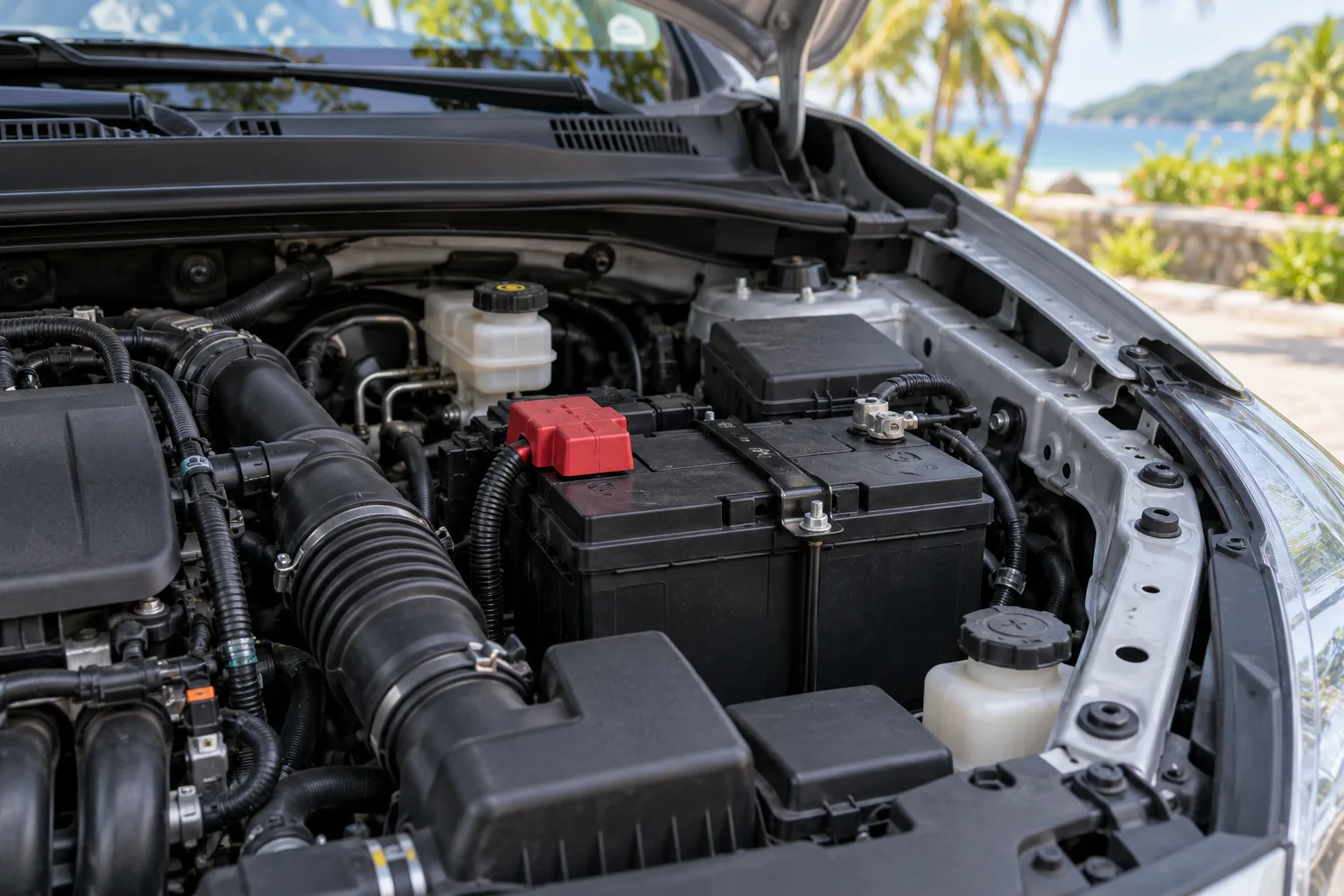
AI-generated illustration of a generic battery area. It does not show approved jump points or a completed safety inspection.
What if the jump start fails?
Describe exactly what changed. Did the dashboard wake up? Did the starter turn slowly, click, or turn at normal speed? Did a warning message appear? Note whether the donor source was known to be suitable and whether the vehicle manual’s procedure was followed. Do not repeatedly bridge or move clamps to unfamiliar points in response to no change.
The battery may be too weak, a cable connection may be poor, or a different starting fault may be present. DENSO’s starter troubleshooting chart treats no-crank and slow-crank symptoms as reasons to test battery condition, cables and starting circuitry. If the engine cranks at its usual speed but will not run, further jumps are unlikely to answer the actual question. The workshop should diagnose the current symptom on that specific vehicle.
If the car makes an unusual noise, gives off smoke or develops a strong smell, stop attempts immediately. Make the area safe and seek qualified assistance. If the car starts for a moment and stops, do not infer from that alone that an alternator has failed. DENSO’s charging-system diagnosis begins with battery, cable and ground checks because these can affect charging-system conclusions.
What should happen after a successful jump start?
A running engine after a jump means outside electrical help was useful, but it does not identify the reason the original battery could not start the car. Arrange a battery condition test and a charging-system check if the symptom calls for one. Tell the workshop if the car was parked for a long time, had lights left on, had an intermittent warning lamp, or needed a previous jump. These details help separate a discharged battery from one that cannot hold charge or a fault elsewhere.
Do not assume that a fixed-length drive will repair the problem. Whether driving is appropriate depends on warning lamps, the charging system and the vehicle manual. A persistent charging warning can mean the car may not continue to run as expected. If that lamp remains on or the car drives abnormally, follow the manual’s warning response and arrange assistance rather than taking a long test drive. DENSO’s charging guidance explains why testing the battery and connections precedes an alternator verdict.
For customers near Masai, Johor, Pungbrother lists a diagnostic inspection at a guide price of RM 80 for a small car or RM 120 for a large car, with about one hour estimated. If testing supports battery replacement, its battery replacement page lists guide prices of RM 250 and RM 350 respectively, with about 30 minutes estimated. These are different jobs, and neither price promises that a jump-started car needs a new battery. The pricing page says a firm quote is provided before work.
What should you tell the workshop?
Give the make, model and year, the exact start symptom, how long the car had been parked, what help was used, and whether the engine stayed running. Mention any warning lights or previous battery work. Ask what tests will be done before a part is proposed. A useful request is: “Please check battery condition and charging performance, then explain the result before replacing anything.” That does not demand a particular repair; it asks for an evidence-based one.
If you are unsure whether the car is safe to move, say so before arranging a visit. Pungbrother’s Pungbrother contact details contains its current phone and WhatsApp details. Do not assume a roadside visit or towing service is available unless the workshop confirms it. If the vehicle has a special jump procedure, bring or share the owner’s manual page so the technician can use the correct model-specific instructions.
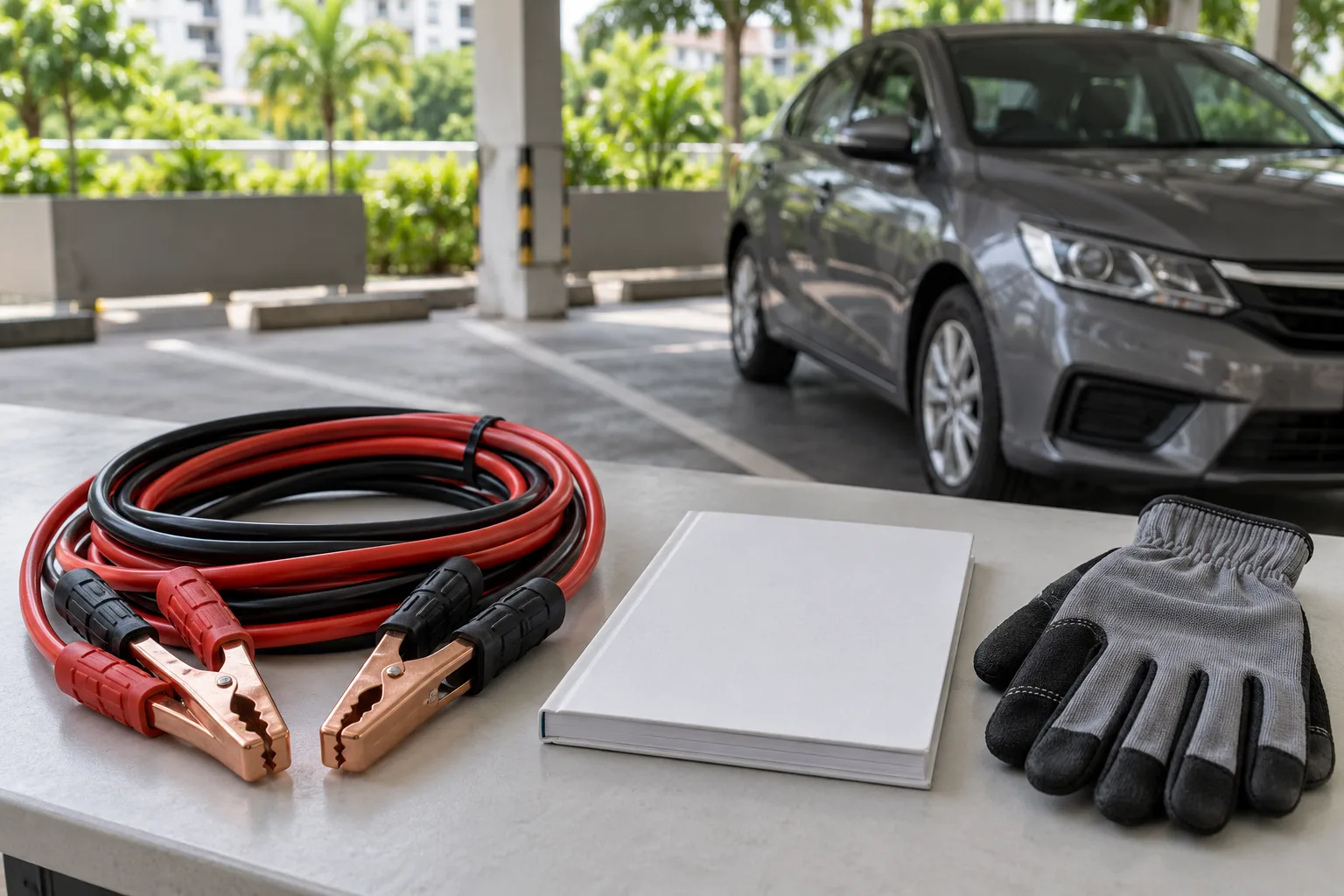
AI-generated illustration of equipment before use, not a connection guide or a photograph of Pungbrother.
Frequently asked questions
Can I jump-start a car without its owner’s manual?
If you cannot confirm the permitted points and sequence for that exact car, avoid improvising. Some vehicles use a remote terminal or special precautions. Find the official manual for the model and year, or ask a qualified technician to help.
Does a successful jump mean I need a new battery?
No. External power helped the engine start at that moment. Battery condition, connections and charging performance still need testing. A discharged but serviceable battery and a battery that cannot hold charge are different findings.
Can I jump-start a hybrid car like a normal petrol car?
Do not assume so. Hybrid vehicles may use a dedicated 12-volt jump point and model-specific precautions. Toyota’s hybrid owner’s manual illustrates one such arrangement. Consult the manual for your exact car.
What if the car starts and then stops again?
Avoid repeated jumps as a substitute for diagnosis. Record when it stops, any warning lights and whether it drove normally. Have the battery, charging system and relevant starting or running systems checked before approving a part.
Can I disconnect cables in any order once the engine runs?
No. Use the disconnection order in the vehicle manual and keep clamps apart. If you cannot identify the order or safely access the points, stop and ask a technician.
Is it safe to jump-start a leaking battery?
No. Do not touch or jump a battery with a visibly cracked or leaking case. Keep clear and arrange qualified assistance. Toyota’s battery safety guidance explains why battery handling is not a casual roadside task.