A weak car battery often shows up as slower engine cranking, intermittent starting or a need for external power. But a symptom is not a battery test. Loose terminals, a charging problem, an electrical drain or a starter fault can look similar. Record what the car actually does, then ask a workshop to test battery condition and the relevant electrical system before buying a replacement.
In short
- Slower-than-usual cranking is a useful clue, not proof of a failed battery. DENSO’s starter chart includes cables and starter faults among possible causes.
- Dim or flickering lights can help describe a low-power complaint, but brightness alone cannot determine battery condition.
- A jump start that works once does not tell you why power was insufficient. Do not rely on repeated jumps as maintenance.
- A charging warning lamp while driving deserves prompt attention to the vehicle manual. DENSO’s charging-system guide shows why battery, cables and charging components must be checked together.
- If the battery case is leaking, swollen or damaged, do not handle it or attempt a jump. Get qualified assistance.
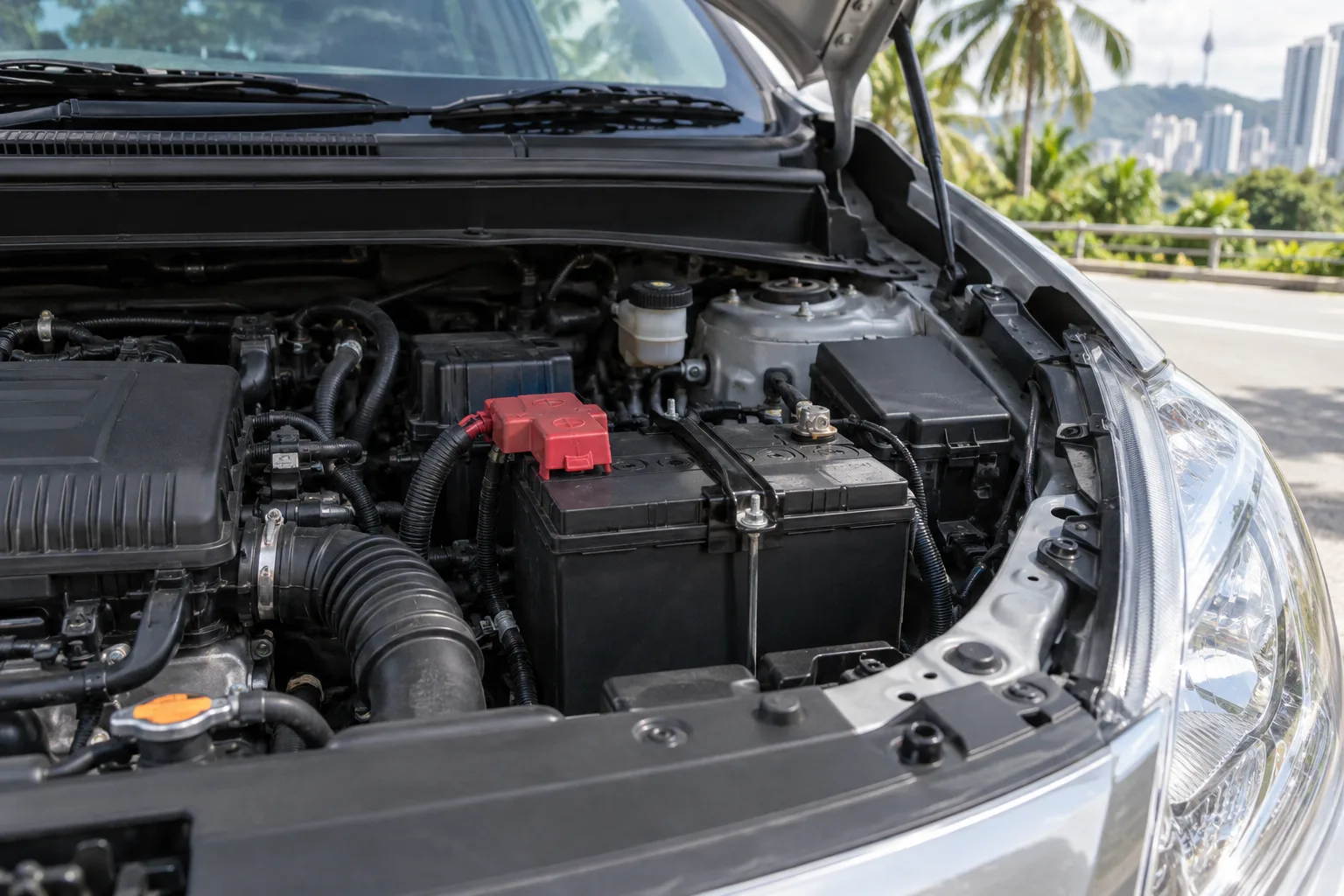
AI-generated illustration of a generic engine bay. It does not depict a faulty battery or a Pungbrother customer car.
What does a weak battery actually do?
The battery must deliver sufficient power for the start attempt, while the charging system replenishes it during normal running. If the available power is inadequate, the starter may turn slowly or fail to turn. Yet a start attempt depends on more than the battery: current must pass through sound connections and the starter circuit must work. DENSO’s starting-system reference lists a weak battery, cable problems and starter faults as alternative explanations for no-crank and slow-crank complaints.
That is why “my battery is weak” should begin as a question. Tell the workshop whether the engine turns slowly, only clicks, or turns normally but will not run. A normal-speed crank without starting is a different complaint and may need checks beyond the 12-volt supply. Describe whether the problem occurs after the car sits overnight, only after short trips or at unpredictable times. The pattern can guide testing, but it cannot identify a part without measurements and inspection.
For a car used around Masai or Pasir Gudang, heat, frequent short journeys, extra electrical accessories and periods parked may be relevant context. They are not a local battery-life formula. The battery type, age, charge history and vehicle demands vary. Avoid advice such as “all batteries in Malaysia last exactly two years” unless it is tied to a specific manufacturer’s product and use conditions. A condition test is more useful than a generic age rule.
Is slow cranking the clearest sign?
Slow cranking is one of the most useful observations because you can compare it with how your own car normally sounds. If the engine turns more reluctantly than usual, particularly after being parked, report the change. A DENSO starter troubleshooting chart recommends checks that distinguish weak supply from poor electrical connections or starter faults. Do not order a starter or battery solely because the engine sounds slow.
Try to note whether the symptom appears every time, only when the engine is warm, or after a long stand. Do lights dim dramatically during the attempt? Is there a single click, rapid clicking, or a slow turning sound? A short video can sometimes help the workshop reproduce an intermittent complaint, provided filming is safe and does not distract anyone. It is a record of the symptom, not a remote diagnosis.
If the engine cranks at its normal speed and still will not run, say that plainly. Battery replacement is unlikely to be the automatic first answer. The workshop may need to inspect another system using the vehicle maker’s procedure. Pungbrother’s diagnostic inspection service is the relevant route when the symptom is not yet explained.
Do dim lights or dashboard warnings prove battery failure?
No. Dim cabin lights, a weak horn or an unusual dashboard response can support a low-power complaint, particularly when they change during a start attempt. Yet lighting can be affected by connections, normal vehicle load management and faults elsewhere. Some warning icons briefly illuminate during the normal start sequence, and the exact meaning of a persistent lamp depends on the owner’s manual. The safest description is what lit up, when, and whether it stayed on after the engine ran.
A charging-system warning while driving deserves more caution than a battery-shaped icon shown for a moment before starting. DENSO’s charging-system diagnosis begins by confirming battery condition, connections and grounds before attributing the fault to an alternator. That sequence guards against replacing an alternator when the underlying problem is elsewhere. If a warning remains on, follow the vehicle manual’s action rather than taking a long drive simply to “charge the battery.”
Do not disconnect a battery terminal while the engine is running as an informal alternator test. This old shortcut is not an appropriate diagnostic procedure for a modern vehicle. Ask the workshop what it measured or inspected and what the result means for your specific car. If there is smoke, a burning smell or unexpected electrical behaviour, stop driving when safe and arrange assistance.
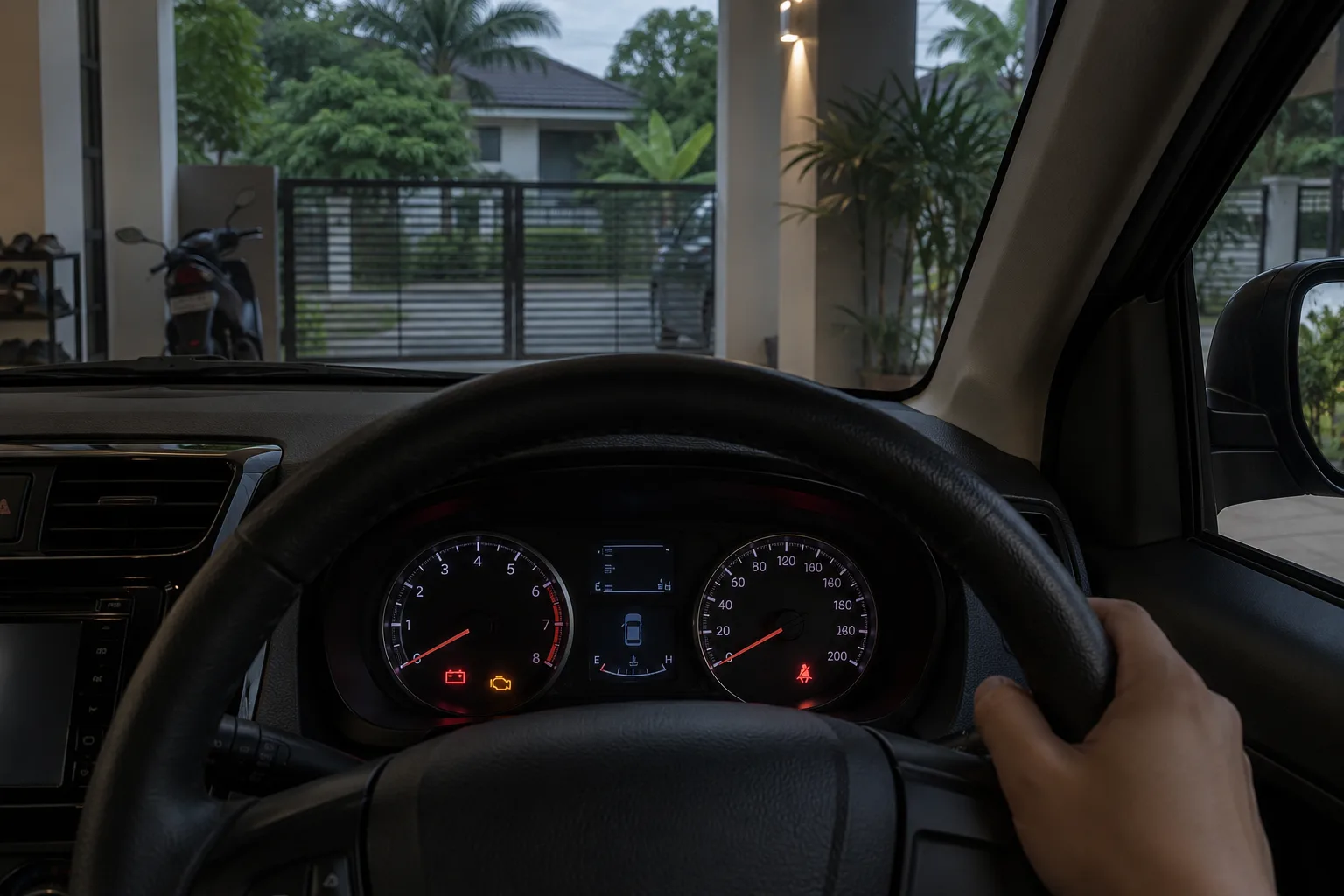
AI-generated illustration. Dashboard shapes are not a diagnostic reading or a model-specific warning display.
What does a repeated jump start tell you?
It tells you that additional power helped start the car, not why the original supply was inadequate. Perhaps the battery was discharged by a light left on, no longer holds charge, or is not being replenished properly. A poor cable connection can also create a starting problem. DENSO’s battery testing guide combines visual inspection with performance testing; its charging guide checks the broader system.
If you need a second jump within a short period, arrange a test instead of treating the cables as a routine solution. Repeated roadside attempts introduce risks and may leave the car stranded in a worse place. The safe jump points and sequence depend on the vehicle. Toyota’s hybrid manual provides an example of dedicated 12-volt jump points, but it applies only to that model. Use your own manufacturer’s instructions or a qualified technician.
If the engine starts after a jump but warning lights stay on or the car runs abnormally, the car may need assistance rather than a drive to the workshop. Ask whether it is safe to move. A starting event and a charging fault are related possibilities, not interchangeable labels.
Which signs deserve immediate attention?
Some observations make the situation a safety question rather than a shopping decision. A leaking or visibly damaged battery case should not be touched or jump-started. A strong chemical or burning smell, smoke, exposed wires or abnormal heat are reasons to stop. Toyota’s battery safety guidance explains that battery handling can cause injury and electrical damage; a trained technician is the safer option when something looks wrong.
If the vehicle loses electrical functions while driving, develops a persistent charging warning or repeatedly stalls, find a safe place to stop and follow the owner’s manual. Do not assume you can complete a journey because the engine restarted once. The exact warning response is model-specific. For a car that is simply slow to start but otherwise parked safely, record symptoms and arrange a planned inspection instead of waiting for a complete no-start.
| Observation | What it may suggest | What to do next |
|---|---|---|
| Engine turns more slowly than usual | Low supply, connection or starter issue | Ask for battery and starting-system checks |
| Lights dip during a start attempt | Electrical load affects supply | Record the behaviour; do not diagnose from brightness |
| Car needs repeated jump starts | Unresolved discharge or electrical issue | Test battery and charging system before buying a part |
| Persistent charging warning while driving | Charging or related circuit problem | Follow the manual; arrange prompt inspection |
| Cracked or leaking battery | Unsafe component condition | Do not handle or jump-start it |
How should a workshop test the battery?
A useful inspection starts with the history and a visual look at the battery, its mounting, case, terminals and cables. DENSO’s battery inspection and performance guide then describes charge and performance tests as part of deciding whether the battery is suitable. Measurements should be interpreted against the battery and vehicle specifications, not a universal screenshot found online.
The technician may also check charging performance and electrical connections when the symptom points that way. DENSO’s charging-system sequence explicitly places battery and connection checks before concluding the alternator has failed. Ask for a simple explanation: Was the battery merely discharged, unable to meet the required performance, or affected by a separate fault? Was a charging issue found? These are different outcomes and can lead to different work.
Avoid treating one voltage number as a complete diagnosis. A resting measurement, a test under load and a charging measurement answer different questions. Temperature, state of charge, battery type and vehicle procedure matter. If a workshop cannot reproduce an intermittent symptom, provide the dates, conditions and any photos or video of warning messages, then ask what should be monitored before ordering a component.
What will battery inspection or replacement cost at Pungbrother?
Pungbrother’s car battery replacement page publishes guide prices of RM 250 for a small car and RM 350 for a large car, with around 30 minutes as an estimated duration. These figures apply when replacement is the agreed job. They are not a diagnosis based on this article, and they do not state a universal battery specification for every model.
For an unexplained starting complaint, the car diagnostic inspection has separate guide prices of RM 80 and RM 120, with about one hour estimated. If the problem is in the starter, alternator or another circuit, Pungbrother’s alternator and starter service is quoted after inspection; no fixed price is published for it. The pricing page says estimates are followed by a firm quote before work.
When you contact the workshop, give the vehicle’s make, model and year, the start symptom, how long it had been parked, whether a jump was used and whether a charging warning appeared. Ask for the test findings before approving a new battery. You can find the current number and WhatsApp on the Masai workshop contact details. Do not assume a mobile service is available unless confirmed.
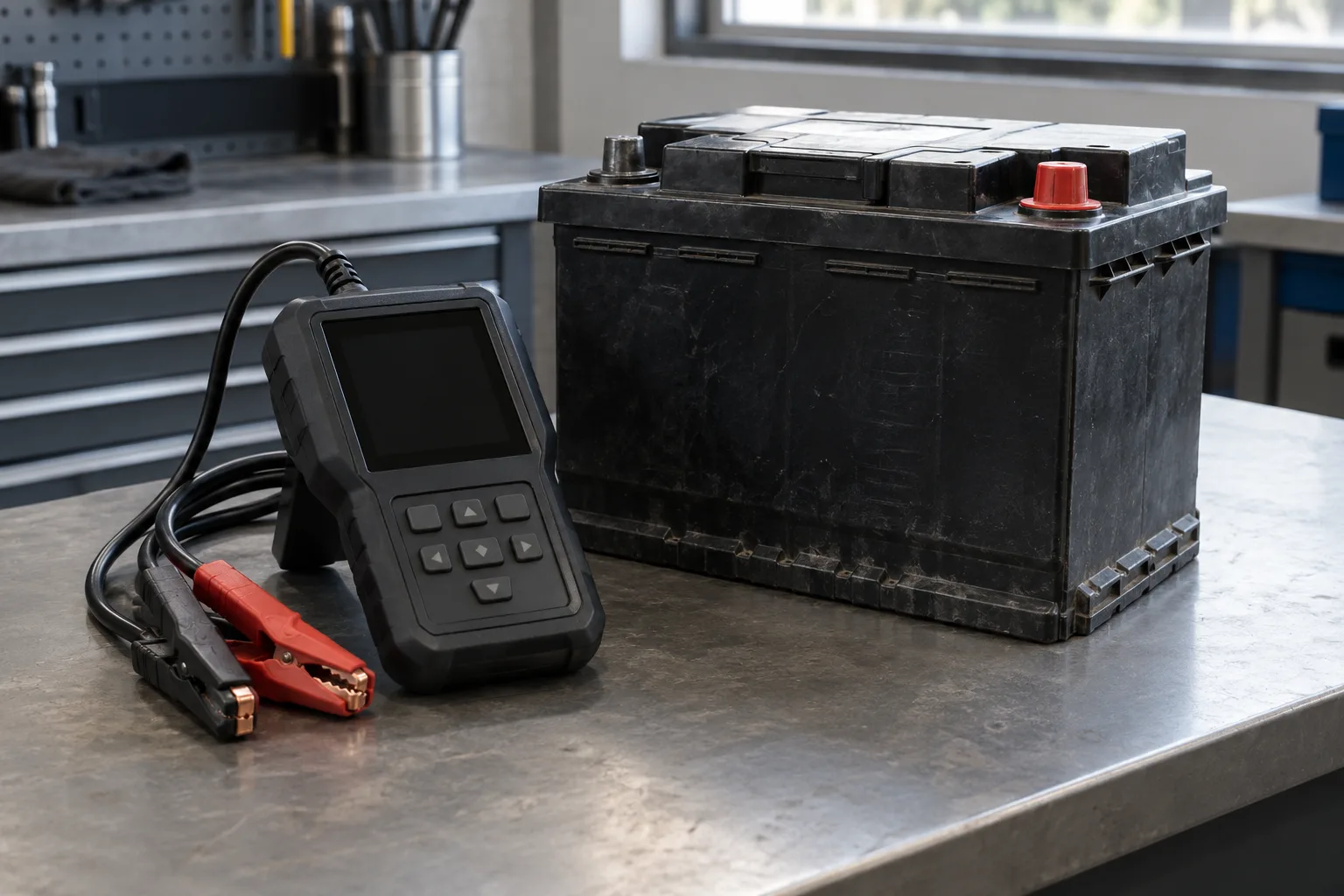
AI-generated illustration. No measurement or test result is represented.
Frequently asked questions
Does slow cranking always mean the battery is worn out?
No. The battery may be weak or discharged, but cables, grounds or the starter can also contribute. Record the sound and ask for the relevant tests before replacing a part.
Can a car battery be weak even if the radio works?
Yes. The radio working is not a performance test for the much more demanding start attempt. A workshop can assess the battery against the vehicle’s requirements and check connections.
How many years should a battery last in Malaysia?
There is no reliable universal number for every battery, vehicle and usage pattern. Use the battery manufacturer’s guidance and condition testing. Avoid replacing or keeping it solely because of a generic age claim.
Should I drive to charge a weak battery?
Do not assume driving will fix it. A persistent warning or underlying charging fault may make that unsafe or ineffective. Follow your vehicle manual and arrange inspection, particularly after repeated no-start events.
Does a successful jump prove the alternator is healthy?
No. A jump says external power helped at the time of starting. Battery condition and charging performance are separate checks. DENSO’s charging-system guide explains their relationship.
When should I stop trying to start the car?
Stop if there is smoke, a strong smell, visible battery damage, unusual heat, unsafe roadside conditions or a vehicle warning that calls for stopping. Repeated attempts are not a substitute for diagnosis.