There is no reliable one-size-fits-all kilometre number for brake pads. Pad material, car weight, driving style, traffic, road conditions and the braking system all affect wear. The right question is not whether your car has reached a generic interval, but whether the pads and discs have been inspected against the vehicle maker’s service limits. If braking feels different or a warning appears, arrange an inspection sooner.
In short
- Brake pads wear whenever friction braking is used, but the rate varies by vehicle and use. A mileage claim from another model is not your replacement schedule.
- Some pads have acoustic wear indicators, but not every squeal means the pad is worn out. Brembo’s pad information describes indicator and noise-control features; its noise guidance lists more than one cause of noise.
- Ask for actual pad condition and rotor findings, not just the car’s odometer reading.
- Grinding, a severe change in braking or a warning should be treated as a prompt safety concern. Avoid driving until a qualified professional advises that it is safe.
- Pungbrother lists a brake pad replacement guide price of RM 200 for a small car or RM 250 for a large car. A firm quote comes before work.
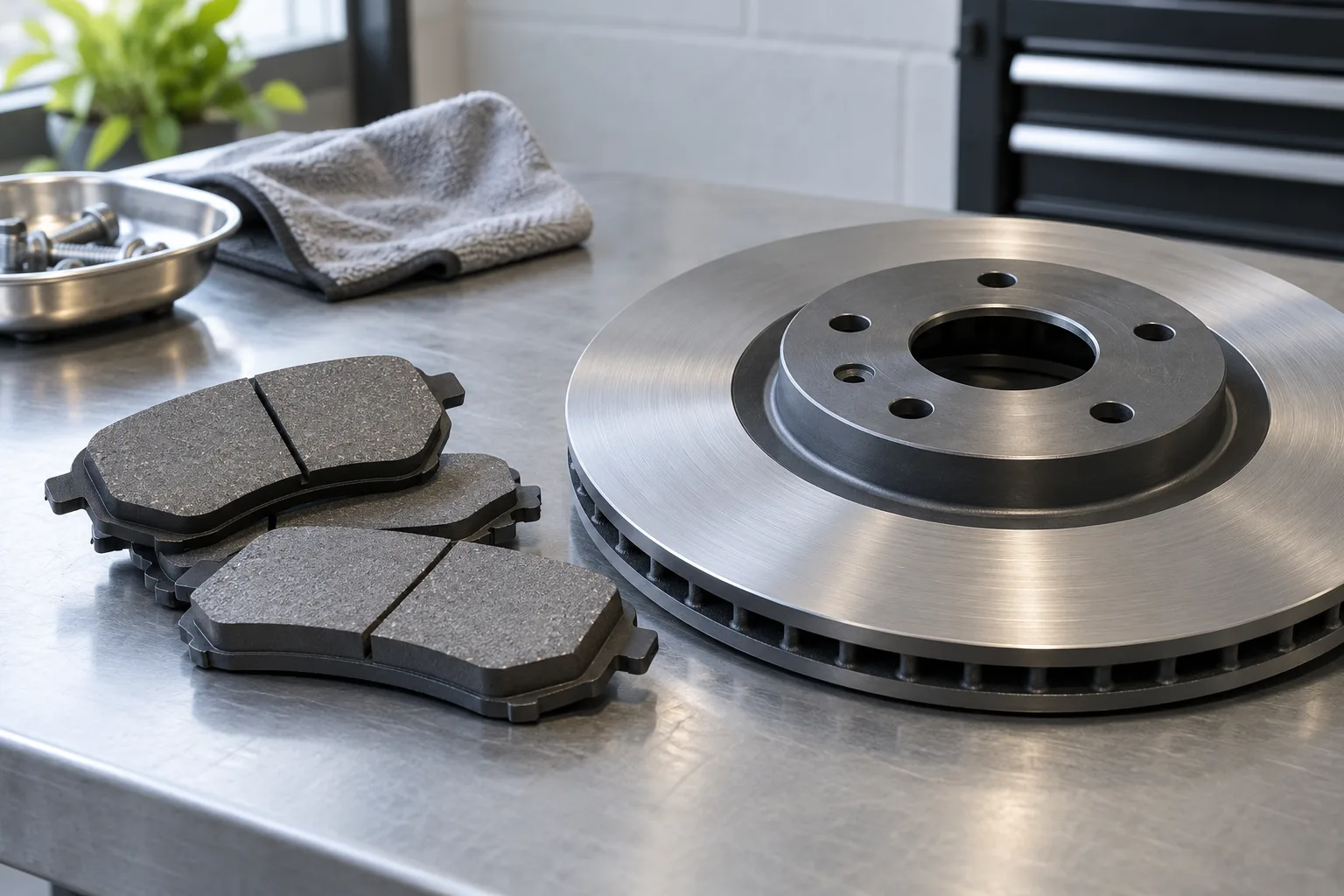
AI-generated illustration of component types. It shows no real Pungbrother work or measured pad thickness.
Why is there no universal brake-pad mileage?
Two drivers of the same model can use their brakes very differently. Stop-start traffic means more braking events than a steady journey. Harder braking, steep routes, vehicle load and pad compound can alter wear. A hybrid or electric vehicle may use regenerative braking under some conditions, but its friction brakes still need inspection. These variables mean a single mileage figure cannot safely tell you whether a particular pad has usable material left.
Brembo publishes model-specific brake information, including a Honda Civic example with a broad potential range. That is an example tied to a model and conditions, not a Malaysian rule, a Pungbrother service interval or a promise for your vehicle. The appropriate owner’s manual and workshop measurement take priority. If someone says every car needs pads at one exact distance, ask what vehicle and inspection result that claim is based on.
Front and rear brakes can also wear at different rates. Uneven wear between left and right, or between inner and outer pads on one wheel, may point to an issue needing more than fresh friction material. A workshop should identify that condition rather than simply fitting a new set and sending the car away. The brake disc and caliper area deserve a look when pads are inspected.
What changes brake-pad wear in ordinary driving?
Think about how the car is used, not just its age. Frequent traffic lights and queues require repeated slowing. Carrying a heavy load changes braking demand. A vehicle driven mostly on clear roads may accumulate many kilometres with fewer heavy braking events than one used for short urban trips. Pad formulation and the vehicle’s braking balance matter too. There is no defensible conversion from one driver’s commute to a universal replacement date.
Driving style matters, but avoid blaming the driver when wear is unexpectedly uneven or rapid. A sticking component, rotor condition or another fault can contribute. A qualified inspection can identify whether all pads are wearing similarly, whether the rotor surface is acceptable under the vehicle maker’s specifications, and whether another brake part needs attention. Brembo’s noise and vibration guidance treats the pad, disc and installation condition as a system rather than an isolated part.
Rain and humidity can cause temporary surface changes on exposed discs. A noise after a car has been parked is not automatically pad wear, but it should not be ignored if it persists or braking changes. Do not use a single rainy-morning squeal to book a replacement without inspection, and do not use the possibility of surface moisture to dismiss persistent grinding.
Which signs should make you book a brake inspection?
Record a new sound, pedal feel, braking response or dashboard message. A high-pitched squeal can come from a wear indicator on some pads, but can also have other causes. Brembo’s brake-noise guidance stresses that squeal and vibration require inspection of the brake system. A grinding sound can indicate contact that may harm the disc or indicate another serious condition. Stop using the car when safe and seek prompt professional advice if grinding is persistent or braking performance has changed.
Changes in stopping feel, a pull to one side during braking, unusual pedal travel or a brake warning lamp are not normal lifespan counters. They may involve the pads, fluid, hydraulics, tyres or other components. The correct response is to have the braking system inspected, not to order pads online as a guess. The owner’s manual describes model-specific dashboard warnings and any immediate actions.
Do not put a finger between a disc and pad or rely on a quick glance through the wheel to judge remaining material. Pad geometry and visibility vary, and a visible outer pad may not represent the inner pad. A trained technician can inspect safely and explain measurements or clear visual findings for each relevant wheel.
| What you notice | What it can mean | Better next step |
|---|---|---|
| Odometer reaches a number mentioned online | Little without your model’s guidance | Ask for inspection at routine service |
| New, repeatable squeal | Wear indicator or another noise source | Inspect pads, discs and related parts |
| Persistent grinding | Possible damaging or unsafe brake condition | Stop when safe; get prompt professional advice |
| Vehicle pulls or pedal feel changes | Wider brake or vehicle issue | Arrange an urgent system inspection |
| No sound, but pads not checked recently | Wear may be silent | Request condition check during service |
What should the workshop measure or show you?
Ask whether the technician inspected the pads at each wheel relevant to the complaint, including inner and outer material where accessible. Ask how the remaining material compares with the manufacturer or component maker’s limit for that vehicle. The workshop should also look at rotor condition, uneven wear and any caliper or hardware issue before recommending only pad replacement. This is a request for evidence, not an invitation to perform a roadside measurement yourself.
If a rotor is scored, damaged or outside its specification, pads alone may not be the complete job. Conversely, a recommendation to change every rotor should be supported by findings. Pungbrother has a separate brake disc and rotor service that is quoted after inspection. Its brake pad replacement page describes visual rotor checks and a safety check alongside pad work. Confirm exactly what the final quote includes.
Photographs of components can help explain a recommendation, but they should correspond to your actual car and wheel. A generic stock photograph of a thin pad is not proof of your pad’s condition. Ask what was measured, what limit applies and whether the issue affects immediate driving safety. If the result is “not yet due,” ask when the next inspection should occur under your vehicle’s service schedule.
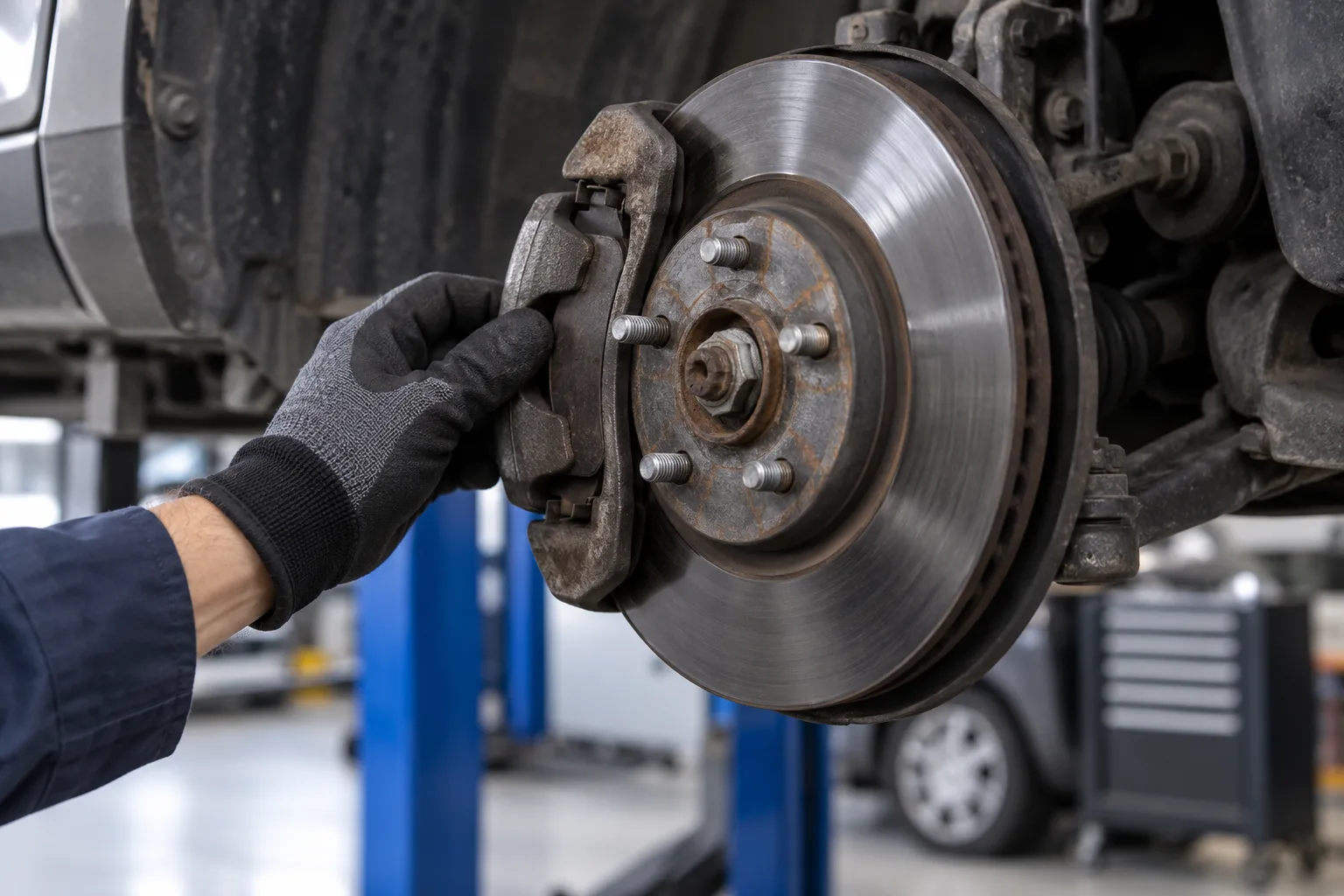
AI-generated illustration. It does not show a measured component or a Pungbrother technician.
Can you wait until a wear warning appears?
Not every vehicle or pad uses the same warning method. Some have audible indicators, some have electronic sensors, and some rely on periodic visual inspection. Brembo’s pad product information describes available acoustic indicator and anti-noise features, not a universal feature list for every car. If you wait only for a squeal, you may miss silent wear or a fault that does not activate that indicator.
Use the service interval and inspection advice in your vehicle manual as the baseline. Ask for a pad condition check during routine maintenance, especially if your usage has changed or a previous inspection showed limited remaining material. If a brake warning appears, follow its manual instructions. An electronic alert is not a licence to continue driving until a convenient date if braking feels unsafe.
Likewise, do not replace pads early solely because a car has reached an internet mileage. Premature replacement wastes a usable component and may distract from the true reason for a noise. A condition-based decision can be explained and recorded.
What does brake-pad replacement cost at Pungbrother?
Pungbrother’s brake pad replacement page lists guide prices of RM 200 for a small car and RM 250 for a large car, with about one hour estimated. These are guide figures, not a binding quote for every vehicle or every brake fault. The pricing page states that estimates are followed by a firm quote before work. If discs, calipers or another part need attention, ask for a separate explanation and quote rather than assuming they are included.
The workshop is in Masai, Johor. When using the Masai workshop contact details, describe any noise, warning or change in pedal feel, and say whether the vehicle can be driven safely. If there is persistent grinding or a serious change in stopping, seek immediate advice and avoid an unnecessary drive. Do not infer from this guide price that pads are the only repair required.
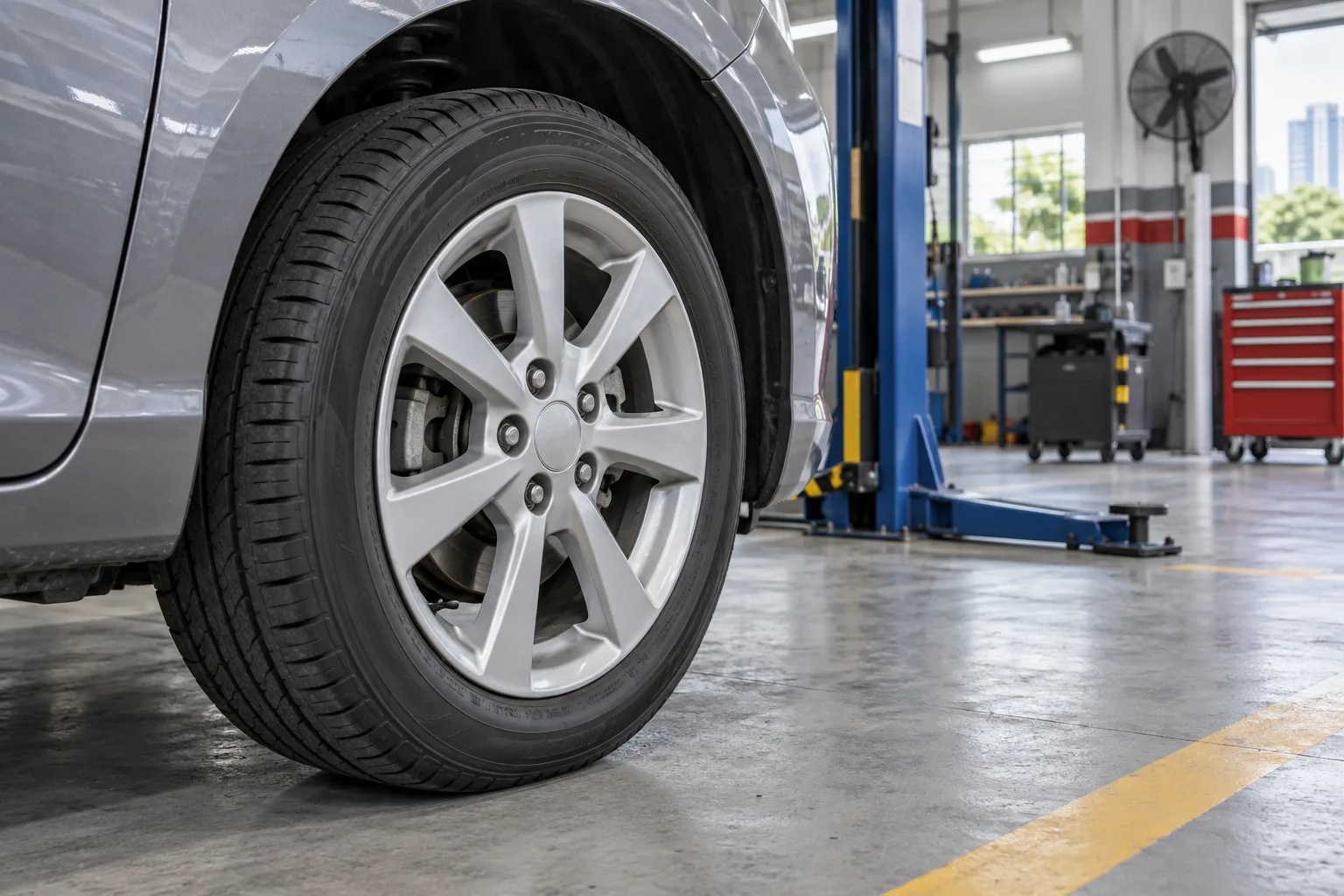
AI-generated illustration of a vehicle wheel. It does not document a brake condition or a customer visit.
Frequently asked questions
How many kilometres do brake pads last?
There is no single safe figure for all cars and drivers. Vehicle design, pad material and use change wear. Ask for an inspection against the correct service limit, not a generic mileage claim.
Do front pads wear before rear pads?
They often have different duties and can wear differently, but the pattern varies by vehicle. Inspection of the relevant wheels is better than assuming one axle is due from the other axle’s condition.
Does squealing always mean the pads are worn?
No. Some pads have wear indicators, but noise can have several causes. Brembo’s noise guidance recommends a wider brake-system assessment.
Is it safe to drive with grinding brakes?
Do not assume it is safe. Stop when safe and seek prompt qualified advice. Grinding can indicate a condition that damages components or compromises braking. A workshop must inspect the actual vehicle.
Should discs be replaced whenever pads are changed?
Not automatically. Disc condition and manufacturer limits matter. Ask for the measured or visible reason if rotor work is proposed, and request a separate quote where appropriate.
Can I judge pad thickness through the wheel spokes?
A glance may not reveal the inner pad or a reliable measurement. Ask a technician to inspect safely and explain the condition of the pads and discs for your specific car.