Clunks over bumps, repeated bouncing, unusual body movement and uneven tyre wear can all raise a suspension question. None proves that a shock absorber alone has failed. Tyre pressure, wheel alignment, steering parts and other components can produce overlapping signs. Record when the symptom happens and have a technician inspect the vehicle before approving a suspension repair.
In short
- Excessive bouncing, nose dive, sway, leakage and unusual noise are signs worth investigating. Monroe’s shock and strut symptom guide describes these as prompts for inspection, not remote proof.
- Uneven tyre wear may involve worn dampers, but pressure and alignment can also contribute. Monroe’s tyre-wear guide notes multiple possibilities.
- A car that pulls, feels unstable or has a severe new noise should be assessed promptly. If control feels compromised, stop in a safe place and get qualified advice before driving farther.
- Ask which part was found worn or damaged, how the conclusion was reached and whether alignment or tyre condition must also be addressed.
- Pungbrother’s suspension repair service is priced after inspection; no fixed suspension-repair price has been confirmed.
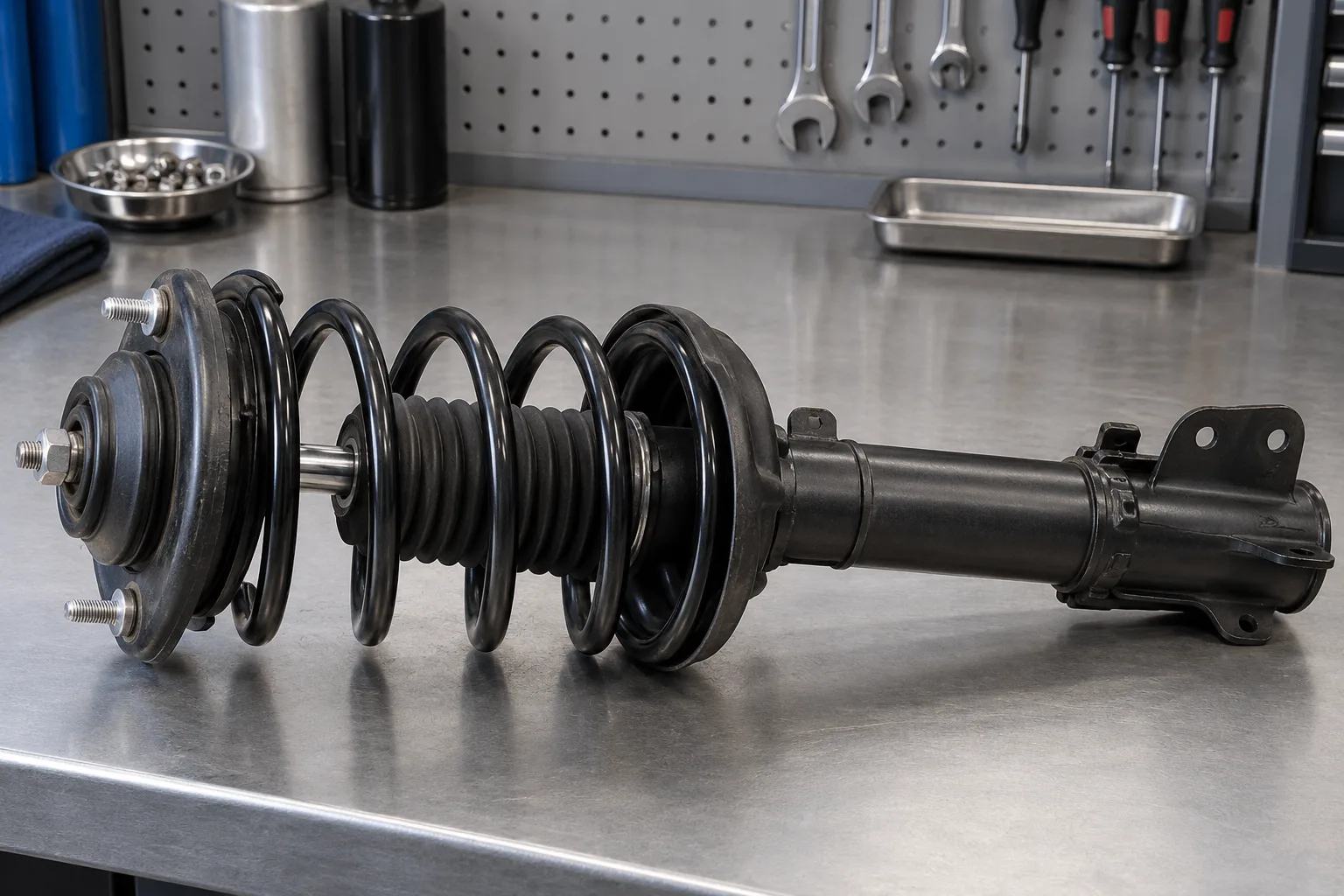
AI-generated illustration of component types. It does not show a failed part or a Pungbrother repair.
What is the suspension supposed to do?
The suspension helps the tyres maintain useful contact with the road while supporting the vehicle and controlling body movement. Springs carry load; dampers such as shocks or struts control motion. Bushings, links and other parts locate the wheels, while steering and tyres affect what the driver feels. A complaint labelled “suspension” can therefore involve more than one component. Monroe’s explanation of shocks and struts links damping performance with vehicle control.
You do not need to identify the failed part from the driver’s seat. The valuable information is when the car behaves differently: over a speed bump, on a rough road, while turning, while braking or at highway speed. Is the sound on one side? Has the symptom developed gradually or appeared after a pothole impact? Has a tyre been replaced recently? A clear history helps a technician choose the right inspection rather than replacing a set of absorbers on a guess.
Be cautious about comparing your car’s ride with someone else’s. Different vehicles have different normal body movement and tyre sizes. Judge a change against your own car’s previous behaviour, then ask whether a test or physical finding confirms a fault. A new rattle is not always a shock; an uncomfortable ride is not always a spring.
Is repeated bouncing a sign of worn absorbers?
Repeated body movement after a bump can be consistent with reduced damping. Monroe’s guide lists excessive bouncing, nose dive and sway among symptoms of worn shocks and struts. Still, the feeling should be assessed together with tyres, load and other suspension components. A vehicle can also feel harsh when tyres are incorrectly inflated or a different component is damaged.
Describe whether the car settles promptly after an ordinary bump or continues to move noticeably. Do not conduct an aggressive “bounce test” beside traffic or climb under a car to look for a leak. A workshop can inspect the suspension safely, check for visible damage and evaluate it using the vehicle’s procedure. Monroe’s inspection guidance treats shock and strut condition as part of a broader physical check.
If the car feels unstable at speed or during a normal stop, treat it as a safety issue. Find a safe place and get advice before continuing. An online article cannot determine whether your particular car is safe to drive from a description of “bouncy.”
What can clunks over bumps mean?
A clunk can come from several moving or worn parts. It might be in a suspension link, bushing, mount, strut or another nearby assembly. A loose item in the cabin or boot can also sound like a mechanical knock. Rather than ordering a shock absorber based on the word “clunk,” record which wheel area it seems to come from, whether it happens on a small or large bump, and whether steering or braking changes it.
An inspection should include the relevant wheel and suspension assemblies, along with obvious related safety items. The technician may need to safely raise the car and check for looseness or damage. You should not put yourself under an unsupported vehicle or pull on parts at the roadside. If a severe noise appears after a pothole impact, or the steering wheel position changes, seek prompt advice and avoid unnecessary driving.
A repair quote should name the actual component and explain the finding. “Suspension is bad” is not enough detail to approve a collection of parts. Ask whether the replacement is necessary for safety, whether it addresses the sound you reported, and what follow-up checks are needed. Some repairs can affect alignment, but that decision depends on the work performed and vehicle procedure.
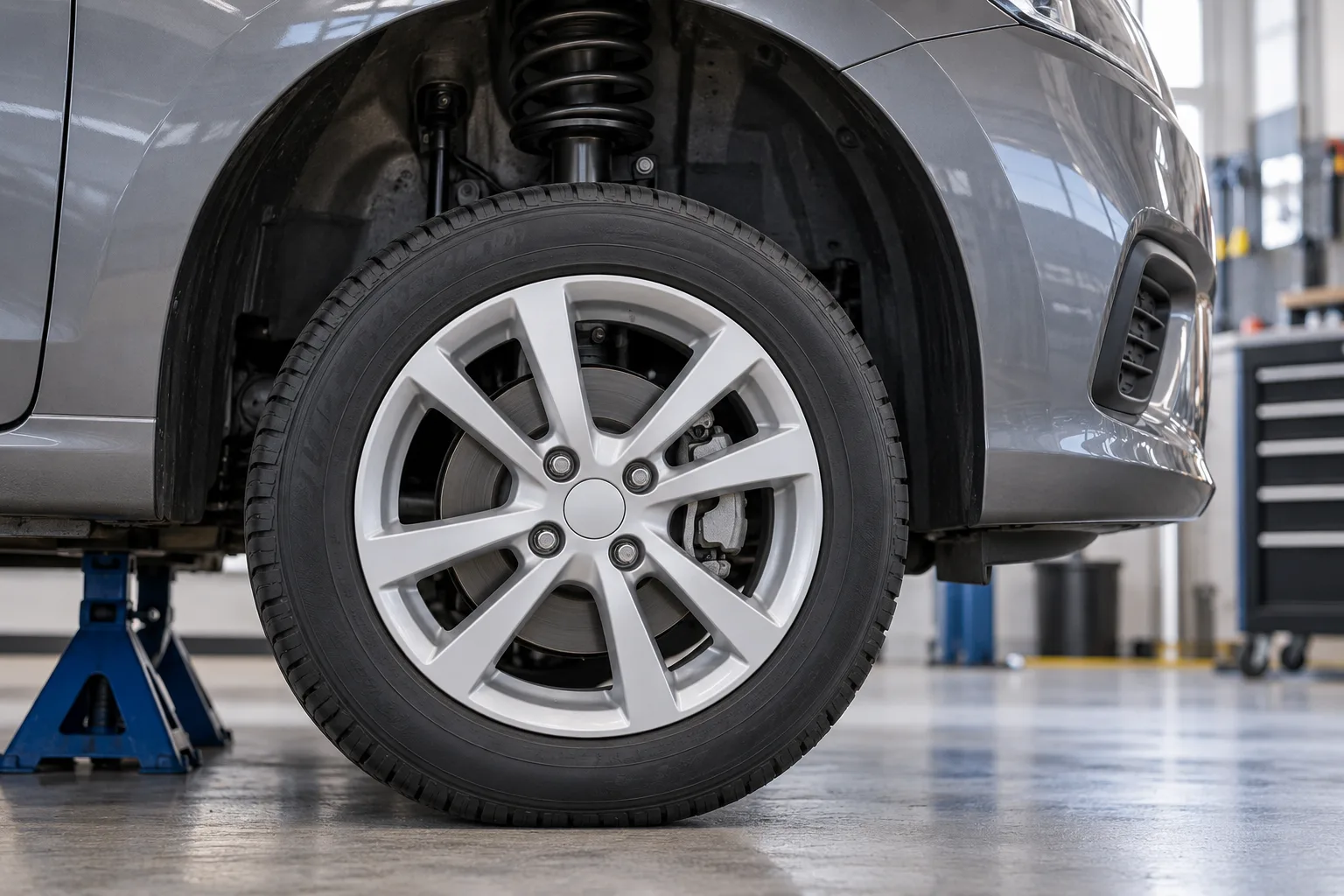
AI-generated illustration. It is not an inspection result or evidence of wear.
Can uneven tyre wear point to suspension trouble?
It can, but it also has other common explanations. Incorrect tyre pressure, alignment, wheel balance, driving conditions and component wear can produce different patterns. Monroe’s guide to uneven tyre wear specifically notes that shocks are one possible factor among several. That is why a new tyre alone may wear badly again if the underlying issue is not addressed, and why an absorber should not be sold solely from the tread pattern.
Tell the workshop whether one tyre, both fronts or all tyres show the problem. Bring any previous alignment report if available. Ask for tyre pressure and condition to be checked alongside suspension and steering parts. Pungbrother also has a separate wheel alignment and balancing service whose suitability should follow inspection, not be assumed as the answer to every wear pattern.
Do not run a hand across an unknown damaged tyre or continue driving on a tyre that appears unsafe. A technician can inspect tread, sidewall and wear pattern safely. If a tyre is severely worn, the immediate safety decision about that tyre may matter before the longer suspension diagnosis is complete.
| Observation | Possible area to inspect | What it does not prove |
|---|---|---|
| Continued bouncing after bumps | Dampers, tyres and load | That one shock must be replaced |
| Clunk over rough roads | Links, bushings, mounts and related parts | That the sound identifies one component |
| Nose dive or excess sway | Damping and broader vehicle condition | That a specific part has failed |
| Uneven tyre wear | Tyre pressure, alignment, steering, suspension | That absorbers alone caused it |
| Visible fluid on a damper | Possible leak, confirm source and severity | That all four dampers need replacing |
Is visible fluid on a shock absorber always a failure?
Visible wetness can be important, but a technician should confirm the source and degree. Fluid from another component or road contamination can make an area look wet. Monroe lists leakage among signs to investigate and recommends inspecting shocks and struts as part of the vehicle assessment. A photograph without context cannot establish a complete diagnosis.
If you notice a fresh patch under the car, do not assume it comes from a damper. Brake fluid, coolant, engine oil and other fluids have different safety implications. Avoid touching unknown fluid or driving if a brake or steering warning accompanies it. Tell the workshop where the fluid appears and whether the car’s handling changed. The technician can locate the source before quoting a suspension part.
Likewise, not every faulty damper will have an obvious external leak. A dry component is not a guarantee of correct damping. Use the full inspection and the vehicle maker’s guidance rather than a single visual sign.
When should you stop driving and ask for help?
If the car is hard to control, pulls severely, makes a major new noise, has a wheel that appears out of position, or has an unsafe tyre, stop when safe and arrange qualified advice. Do not continue at highway speed in hopes that the symptom will settle. A workshop may advise that the car needs recovery rather than a normal drive to an appointment. Do not assume towing or mobile inspection is included; ask directly.
Less severe but repeatable clunks, bouncing or uneven wear still justify a planned inspection. Waiting for the symptom to become dramatic can allow other parts or tyres to deteriorate. At the same time, there is no need to agree to a complete suspension rebuild merely because one symptom resembles a search result. Ask for evidence, the proposed scope and a firm quote before work.
What can Pungbrother inspect and quote in Masai?
Pungbrother’s suspension repair page describes inspection and repair based on the actual finding. It does not publish a fixed price for every shock, bushing, link or spring. The pricing page says listed amounts are estimates and that a firm quote follows inspection. Do not transfer a brake, diagnostic or alignment price to an unrelated suspension repair.
When contacting the workshop in Masai, Johor, describe the model and year, which side seems affected, when the symptom occurs, any recent pothole impact and whether the car feels safe to move. Use the current details on the phone and WhatsApp contact page. Ask for the finding, affected part, whether tyre or alignment work is separately needed, and whether driving is appropriate before the appointment.

AI-generated illustration. It depicts no real incident, workshop visit or diagnosed fault.
Frequently asked questions
Does a clunk over bumps mean a shock absorber is bad?
No. Links, bushings, mounts or other components may produce a clunk. A workshop should inspect the relevant area and identify the part before proposing a repair.
Can worn shocks cause uneven tyre wear?
They can contribute, but pressure, alignment and other faults can also matter. Monroe’s guidance recommends considering more than one cause.
Is a bouncy ride always unsafe?
It is a reason for inspection, not a remote safety verdict. If the car feels difficult to control or braking and steering are affected, stop in a safe place and get qualified advice before driving farther.
Should all four absorbers be replaced together?
There is no universal answer in this article. The vehicle maker’s procedure, condition of each part and component supplier guidance matter. Ask the workshop to explain the proposed scope and why it applies to your car.
Will wheel alignment fix suspension noise?
Alignment addresses wheel geometry, not every mechanical clunk. A technician should inspect for worn or damaged parts first and determine whether alignment is needed after a specific repair.
Does Pungbrother have a published suspension price?
No fixed repair price is confirmed on its suspension service page. The workshop inspects the vehicle and provides a firm quote before agreed work.