Engine Repair and Overhaul
Engine symptoms are diagnosed before any repair or overhaul scope is proposed.
Safe immediate steps and common causes of overheating.
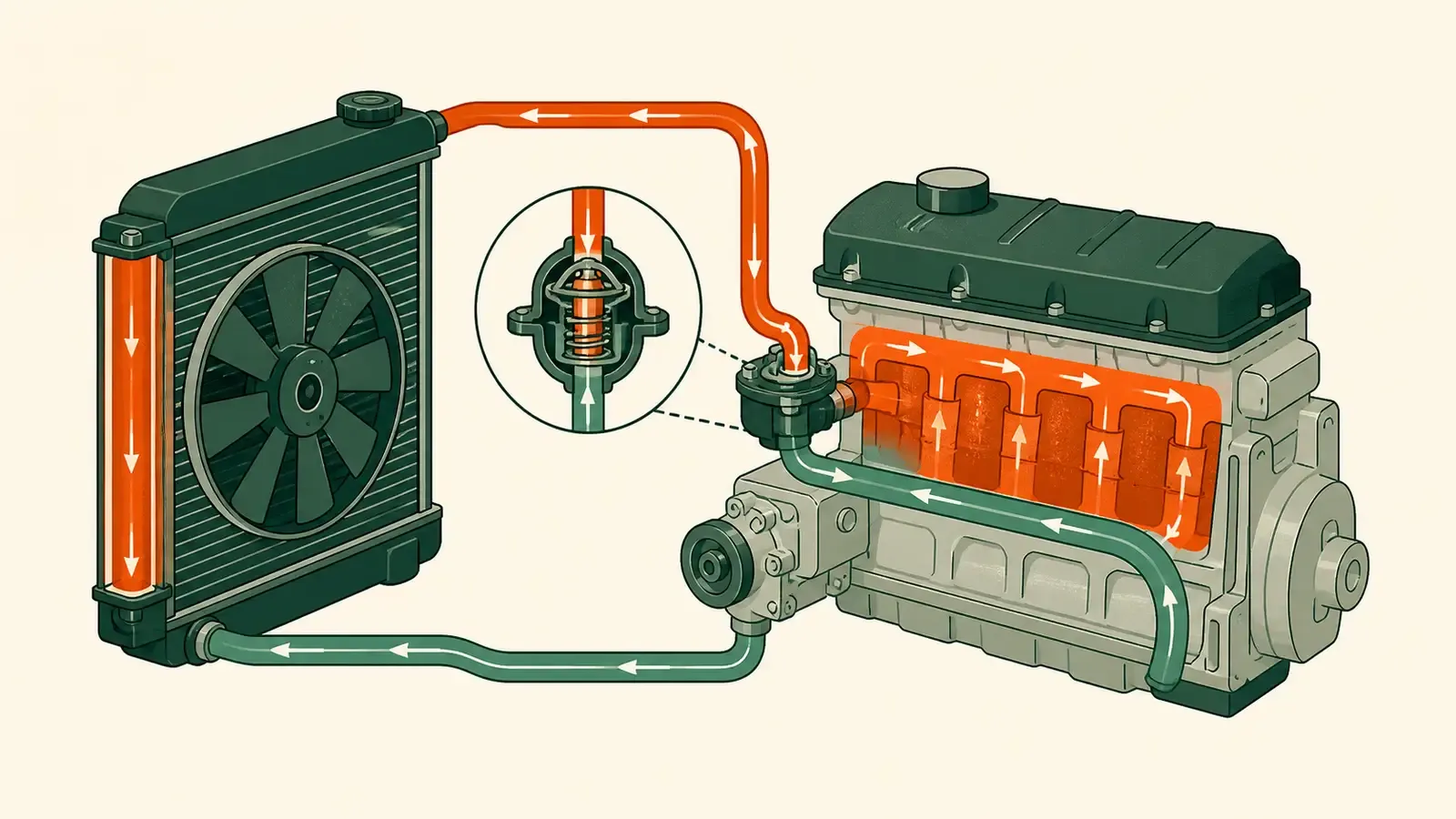
Pull over as soon as it's safe, switch off the air conditioning, and turn on the heater to draw heat away from the engine block. Switch on your hazard lights if you're stopping on the roadside, and choose a spot away from moving traffic rather than the nearest gap. Turn off the engine once you're stopped and let it cool for at least 15 minutes before opening the bonnet. Watch the temperature gauge rather than waiting for a warning light, since not every car shows one until the engine is already significantly hot. Do not keep driving to reach home or the workshop — a few more kilometres on an overheating engine can turn a coolant top-up into a head gasket repair.
Most overheating comes from a coolant problem: a leak from a hose, radiator or water pump, or coolant that has simply run low over time and was never topped up. A stuck thermostat that won't open, a failed radiator fan, or a radiator core blocked with dirt and debris can also stop heat escaping even when the coolant level itself is fine. In Malaysian traffic conditions, insects and road dust building up on the radiator fins over time can also reduce airflow enough to matter, especially on cars that spend most of their time in stop-start city driving. Electrical faults play a role too — if the cooling fan relies on the charging system and the alternator is failing, the fan may cut in and out or stop altogether, which is one of the signs of a bad alternator worth checking alongside dimming lights and slow cranking.
No. A hot cooling system is pressurised, and opening the radiator cap while the engine is still warm can release scalding coolant and a burst of steam straight at your face and hands. Some radiator caps have a two-stage release that lets built-up pressure escape gradually rather than all at once, but it still isn't something to test while the engine is hot. Wait until the engine is cool to the touch, at least 15 to 20 minutes after stopping, before touching the cap or checking the coolant level. If you need to add coolant or plain water on the roadside as a temporary measure, pour it in slowly with the engine switched off, and treat it as a reason to get the system checked rather than a fix on its own.
A car diagnostic inspection is RM 80 for a small car and RM 120 for a large one, and takes about an hour. It checks coolant condition, hose and radiator condition, fan operation, and looks for the pressure loss that points to a leak, before any repair is quoted. Paying for the inspection first, rather than guessing and replacing parts one at a time, usually costs less overall because it avoids paying for parts that were never the problem. If the cause turns out to be more serious — a warped cylinder head, a blown gasket, or a failing water pump — that moves into engine repair and overhaul, which is priced after inspection rather than as a flat rate, since the scope of work varies so much between cases.
Running the air conditioning puts extra load on the engine, and the aircond condenser sits directly in front of the radiator under the bonnet. A blocked or failing aircond system can restrict airflow through to the coolant radiator behind it, which raises engine temperature especially at low speed or in traffic. If cooling fades once you're stuck in traffic or the air wasn't cold to begin with, it's worth checking how often car aircond should be serviced, since a system overdue for service is more likely to be running poorly and adding heat under the bonnet rather than just blowing warm air. Ignoring a struggling aircond system for months tends to make both problems — cooling and comfort — worse together, since the condenser and radiator effectively share the same airflow.
Overheating itself doesn't wear down a timing belt directly, but a badly overheated engine can warp the components that the belt and tensioner depend on, and severe cases sometimes mean checking belt condition as part of the repair scope. The correct timing belt interval depends on the vehicle, not on mileage alone, which is worth knowing anyway before you decide whether a belt check is overdue on top of the overheating fault. Cars that have gone through a serious overheat are sometimes due for a wider check of rubber components generally, not just the timing belt, since prolonged heat affects hoses and seals in similar ways.
If you've separately noticed the steering wheel shaking under braking or clunking over bumps on rough road, mention it when you book the overheating check — it won't be related to the cooling fault, but flagging it now saves a second visit later. Vibration under braking can point to worn pads, scored rotors, tyres, or suspension components, and unusual noises or a car that pulls to one side are common symptoms of worn suspension worth flagging at the same time so both can be looked at in one visit. None of this changes the priority of sorting out the overheating first, but a single visit that covers everything noticed is more efficient than several separate ones.
A single mild overheat that you caught early, with coolant topped up afterwards and no warning light returning, may need nothing more than a leak check and a top-up. Repeated overheating, or any overheat accompanied by white exhaust smoke or milky-looking oil on the dipstick, means head gasket damage is possible, and continuing to drive risks turning a moderate repair into a full engine rebuild. Ignoring early warning signs to save the cost of an inspection is usually the more expensive choice in the long run. When in doubt, book the diagnostic inspection rather than waiting to see if it happens again.
Note when the overheating happened — at idle, in traffic, or at highway speed — and whether the warning light came on before or after you noticed steam or smell. Mention if you've topped up coolant yourself and what you used, since mixing coolant types can affect the diagnosis. This is especially useful if the overheating has only happened once and hasn't been reproduced yet, since the workshop can plan the inspection around trying to catch it. Send the car model and these details on WhatsApp before you arrive, so the workshop can confirm whether it's a diagnostic slot or a longer booking.
| Symptom | Likely cause | Estimated cost |
|---|---|---|
| Temperature gauge in red or warning light | Low coolant or a leak | varies — inspection needed |
| Steam or smoke from under the bonnet | Hose, radiator or water pump failure | varies — inspection needed |
| Sweet smell inside the cabin | Coolant leaking into the heater core | varies — inspection needed |
| Overheats mainly in traffic, weak cooling from vents | Blocked condenser or fan restricting radiator airflow | RM 150–RM 200 |
| White exhaust smoke, milky oil | Possible head gasket failure | varies — inspection needed |
| Cause unclear or overheating is intermittent | Diagnostic inspection needed | RM 80–RM 120 |
Engine symptoms are diagnosed before any repair or overhaul scope is proposed.
A structured diagnostic inspection is used to identify likely causes before repairs are approved.
No. Even a short distance under load can push coolant temperature higher and turn a simple leak into head gasket damage. Pull over safely, switch off the engine, and let it cool for at least 15 minutes. If the gauge returns to normal after topping up coolant, drive gently to the nearest workshop rather than continuing your original route.
Only once the engine has cooled, since pouring liquid into a hot radiator can crack the block or send scalding coolant back at you. Add water slowly with the engine off and the cap loosened carefully, treat it as a temporary fix, and get the cooling system checked properly rather than repeating the top-up.
A car diagnostic inspection is RM 80 for a small car and RM 120 for a large one, and takes about an hour. It checks coolant level, hoses, the radiator, and fan operation to identify the likely cause before any repair work is quoted, so you know what you're paying for before agreeing to it.
Yes, if it isn't caught early. A brief overheat that's addressed quickly may only need a coolant top-up or hose repair, but repeated or prolonged overheating can warp the cylinder head, blow the head gasket, or damage the water pump — repairs that move from a routine service into a full engine repair and overhaul.
1, Jalan Kota 1/1, Cahaya Kota Puteri, 81750 Masai, Johor