Car Diagnostic Inspection
A structured diagnostic inspection is used to identify likely causes before repairs are approved.
A practical guide to steady and flashing engine warning lights.
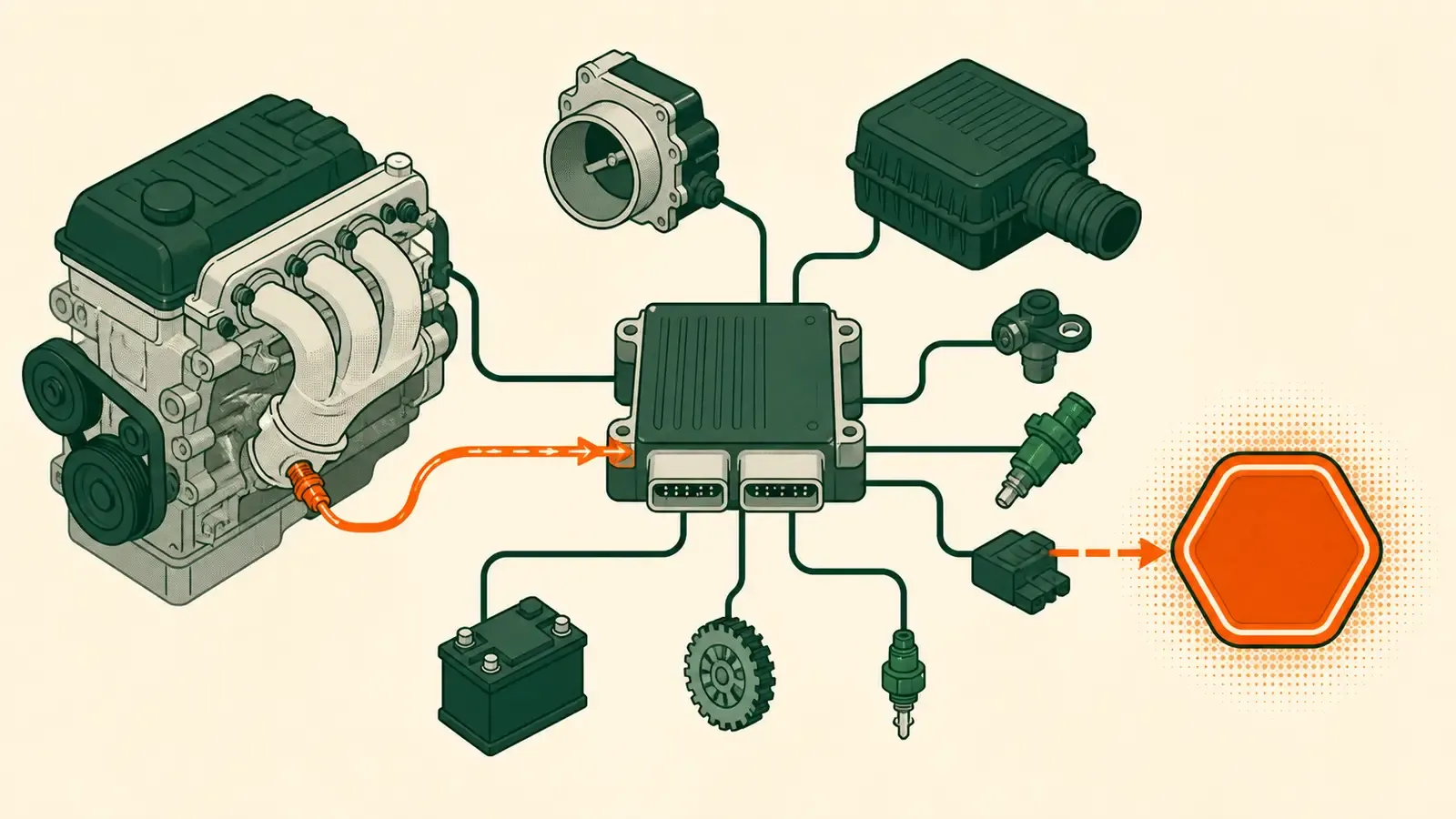
The check engine light comes on when the engine control unit logs a fault code it considers worth flagging, and that can mean anything from a loose fuel cap to a failing sensor or a serious misfire. A Car Diagnostic Inspection — RM 80 for a small car, RM 120 for a large car, about an hour — reads the stored codes and narrows down what is actually wrong before any repair is quoted.
Yes, and the difference decides how urgent the problem is. A steady light usually means the fault is present but not damaging the engine right now, so you can plan a workshop visit within a few days. A flashing light means the engine is misfiring badly enough to send unburned fuel into the exhaust system, which can destroy the catalytic converter within minutes of continued driving.
The light rarely appears on its own. Rough idling, a sudden drop in power, a smell of fuel, or the temperature gauge climbing are common companions, and each one points toward a different system under the bonnet. If the gauge is rising at the same time as the light, read What to Do When Your Car Overheats for the immediate steps to take before the engine takes lasting damage.
Sometimes. A worn alternator or a failing charging system can trip codes that look engine-related on the dashboard, particularly on cars where the alternator feeds sensors and the ignition system directly. The starting, charging and warning-light symptoms described in Signs of a Bad Alternator are worth checking against what your car is actually doing before you assume the fault sits in the engine itself.
On some engines, yes. A timing belt that has stretched or slipped a tooth throws off the ignition and valve timing, and the ECU reads that as a misfire or timing fault and lights up the dashboard. Because the correct replacement interval depends heavily on the make and model, When Should a Timing Belt Be Replaced? explains why no single mileage figure applies to every car.
An aircond compressor clutch that seizes or drags can put extra load on the engine's accessory belt, and on some models that shows up as a fault code even though the actual problem sits in the air-conditioning system rather than the engine. How Often Should Car Aircond Be Serviced? covers the usage patterns and warning signs that justify checking the aircond side of things too.
Not usually, and that distinction matters for getting the diagnosis right. A rough-running engine can cause a shudder felt through the whole car at idle, but a vibration that appears specifically when you brake almost always points to the pads, rotors, tyres or suspension instead. Why Does My Car Shake When Braking? sets out how to tell those causes apart before you book a slot.
A steady light is not an emergency, but ignoring it for weeks can let a small fault turn into a bigger repair. A failing oxygen sensor, for example, can quietly increase fuel consumption and wear down the catalytic converter the longer it runs unaddressed. Booking a Car Diagnostic Inspection early is usually cheaper than waiting for the fault to grow into a full Engine Repair and Overhaul.
Tell the workshop the make, model, and exactly when the light appeared — after refuelling, after a service, or out of nowhere — along with whether it is steady or flashing and any other symptom such as noise, smell or a loss of power. That detail lets the inspection start from a shortlist of likely causes instead of a blank scan.
The diagnostic fee itself depends only on car size — RM 80 for a small car, RM 120 for a large one — but the repair that follows depends entirely on what the codes point to. A loose sensor connector costs far less to fix than a failed catalytic converter or an engine that needs an overhaul, which is why a firm quote is only given after the inspection is complete.
The inspection starts with a review of your symptoms, followed by an OBD scan that pulls the stored fault codes directly from the engine control unit where the car supports it. A visible multi-point check follows — hoses, belts, connectors, fluid levels — before you get a plain explanation of the likely cause and a quote for what fixing it involves.
Disconnecting the battery or using a cheap code reader to clear the light will often make it go off, but it does nothing to fix the underlying fault, and the light usually returns within a few drives. Clearing the code before an inspection also erases the freeze-frame data that helps pinpoint exactly when and under what conditions the fault occurred, making diagnosis slower rather than faster.
| Symptom | Likely Cause | Estimated Cost |
|---|---|---|
| Steady light, engine runs normally | Minor sensor fault or loose fuel cap | RM 80–120 (diagnostic) |
| Flashing light | Serious misfire, risk of catalytic converter damage | RM 80–120 (diagnostic), repair varies — inspection needed |
| Light with overheating gauge | Cooling system fault | varies — inspection needed |
| Light with rough idle or power loss | Ignition or fuel system fault | varies — inspection needed |
| Light with dim lights or slow crank | Alternator or battery fault | RM 250–350 (battery) or varies — inspection needed |
A structured diagnostic inspection is used to identify likely causes before repairs are approved.
Engine symptoms are diagnosed before any repair or overhaul scope is proposed.
Usually yes, for a short while, since a steady light means the fault is not causing immediate damage. It is still worth booking a Car Diagnostic Inspection within a few days, because some faults that start minor — a loosening sensor connector, for example — get worse and more expensive the longer they are left unchecked.
The ECU sometimes clears a code after several successful drive cycles if the fault does not recur, which can happen with a loose fuel cap or a one-off sensor glitch. The fault code is usually still stored even after the light goes off, so a diagnostic scan can still show what triggered it.
Not usually. The light is a warning about a logged fault, not a shutdown signal, so most cars with a steady light continue running normally. A flashing light or one accompanied by stalling, overheating, or a sudden loss of power is a different situation and should not be driven through.
A Car Diagnostic Inspection takes about an hour and includes a symptom review, an OBD scan where applicable, and a visible multi-point check. You leave with the likely cause identified and a quote for the next step, rather than a guess at what might be wrong.
1, Jalan Kota 1/1, Cahaya Kota Puteri, 81750 Masai, Johor