A car that keeps bouncing after a bump, dives noticeably when braking or feels less settled in a turn may have worn shock absorbers or struts. These signs do not identify a failed part by themselves. Tyres, springs, mounts, links and alignment can change the way a car feels. A proper inspection matters before you approve replacement.
In short
- Repeated bouncing, extra body roll, nose dive and visible leakage are reasons to inspect dampers. Monroe lists these as symptoms, not as a diagnosis you can make from the driver’s seat.
- A clunk or uneven tyre wear may point somewhere else in the suspension, steering or tyre system. Check the whole complaint rather than ordering absorbers by symptom alone.
- If control or braking feels compromised, stop safely and ask for qualified advice before driving on.
- Ask the workshop which component failed, what evidence supports the finding and whether associated tyres or mounts also need attention.
- Pungbrother’s suspension repair service is quoted after inspection; no confirmed fixed absorber price is published.
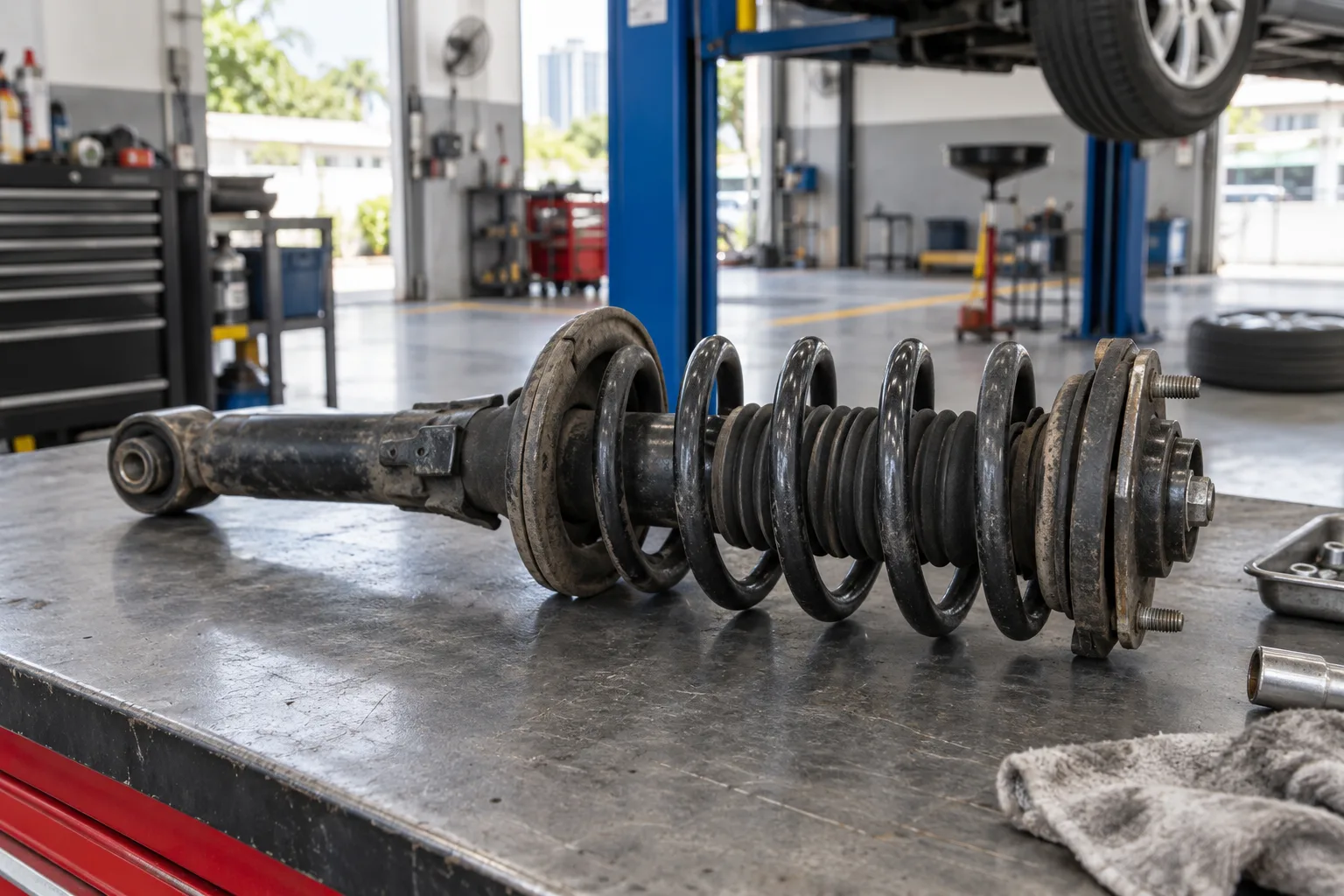
AI-generated illustration of a generic part. It is not evidence of a Pungbrother repair or a failed absorber.
What does a car absorber actually do?
An absorber is a damper. It controls the movement of the spring and body after the wheel travels over a bump. In some vehicles it is a separate shock absorber; in others, a strut is part of the assembly supporting and locating the wheel. The distinction matters when ordering parts or comparing quotes. Monroe’s shock-versus-strut explanation describes the different roles. A spring carrying the vehicle’s weight is not the same component as the damper controlling movement.
The driver notices the combined result of tyres, springs, dampers, mounts and road surface. That is why an absorber symptom is a clue, not a verdict. A change after fitting tyres, loading the boot or hitting a pothole can alter what you feel. Tell the technician when the issue began. A useful inspection looks for physical condition and related faults, then checks whether the symptom fits the finding. It should not begin and end with an internet video of a bouncing car.
This guide focuses on absorber-related clues. For a broader look at links, bushings and other causes, read our suspension symptom guide. Keeping those questions separate makes it easier to discuss the actual repair.
Is repeated bouncing the clearest absorber sign?
Repeated movement after an ordinary bump is one of the better reasons to consider damping. A worn damper may no longer control the spring as well as it should. Monroe’s symptom guide includes excessive bouncing among signs of worn shocks and struts. Notice whether the car settles after the bump or continues moving, and whether the sensation happens at one end or throughout the vehicle.
Still, a rough or unsettled ride does not prove a particular absorber is bad. Incorrect tyre pressure, a damaged tyre, different cargo load or another suspension fault can change the ride. Do not conduct a roadside bounce test next to moving traffic and do not get underneath a car supported only by a jack. Explain the behaviour to a workshop and let a technician inspect it with suitable equipment. Monroe’s inspection guidance emphasizes checking the component and surrounding system rather than relying on one impression.
If the car lurches badly or is difficult to keep in lane, treat control as the immediate issue. Stop where safe. An article cannot tell whether your specific car is safe to drive the remaining distance to a workshop.
Does nose dive or extra body roll mean the absorbers are worn?
The front of a car naturally moves under braking and the body leans to some extent in a bend. The question is whether that movement is noticeably greater than normal for your car. Reduced damping can contribute to nose dive or sway, according to Monroe’s symptoms overview. But braking condition, tyre grip, load and driving conditions also affect what a driver perceives.
Describe the change in ordinary terms: the front dips more than before during routine braking, the rear continues to move after a speed bump, or the body feels unsettled in a familiar turn. Do not deliberately brake hard or swerve to test a suspected fault. A technician can assess the relevant tyres, brakes and suspension safely. If a new handling problem appeared after an impact, mention the impact because a bent or loose part calls for a different inspection than gradual damper wear.
The result should be a named finding, not just the phrase “bad handling.” Ask what was inspected and whether both sides were compared. If the car also has a brake warning, grinding or a soft pedal, a brake concern may need attention first. Pungbrother’s brake service page is a separate service, not a substitute for inspecting an unstable vehicle.
Can an absorber leak be seen from outside?
Some damaged dampers show fluid around the body or shaft area. Leakage is among the signs identified in Monroe’s symptom guide. Yet a wet-looking area can also be road contamination or fluid from another nearby component. A dry exterior does not guarantee that damping is healthy. Appearance is one part of the inspection, not the whole answer.
Do not reach behind a hot or moving wheel assembly to look for a leak. If you see a fresh stain on the ground, tell the workshop where it appeared and whether it had a colour or smell; do not assume it was shock oil. Fluids from brakes, engine or cooling system have different implications. The workshop should identify the source before proposing a part. A photo taken safely can help explain the complaint, but a photo alone rarely establishes the correct replacement.
Ask how the technician distinguished a leaking absorber from another leak, and whether the related mount, spring and tyre were checked. That conversation is especially important if the proposed quote includes more than the visibly wet part.
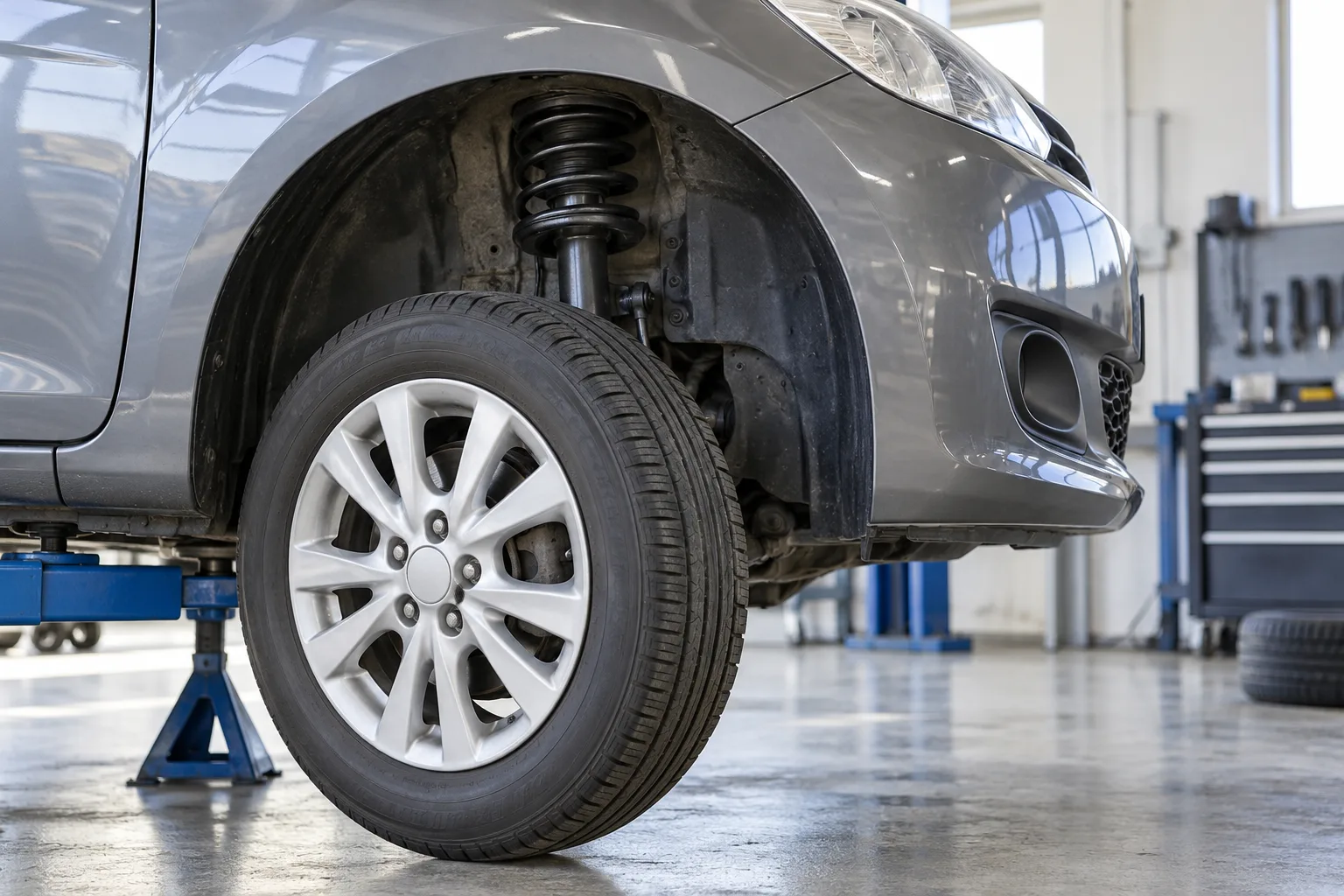
AI-generated illustration. The depicted vehicle and part have not been diagnosed.
What about a clunk or uneven tyre wear?
Neither sign belongs uniquely to an absorber. A clunk over bumps can involve a mount, link, bushing or another loose component. A tyre can wear unevenly because of inflation, alignment, balance or other mechanical issues. Monroe’s tyre-wear guide describes several possible factors. Replacing absorbers without checking those alternatives may leave the original noise or wear pattern unchanged.
Record whether the noise happens on small bumps, during steering, during braking or only on one side. For tyre wear, note which tyres are affected and whether the wear is on one edge or across the tread. A technician can use that history to inspect the relevant areas. If a tyre looks badly damaged or a wheel appears out of position, avoid driving and seek qualified help. Do not put a hand into a wheel arch or under an unsupported car to find the sound yourself.
Pungbrother offers wheel alignment and balancing as a separate service. Alignment can be relevant after a repair or when geometry is wrong, but it cannot repair a failed damper, a loose mount or every tyre wear pattern. The order is diagnosis, agreed repair, then any follow-up check that applies to the vehicle.
| What you notice | Why an absorber may be considered | Other checks worth discussing |
|---|---|---|
| Body keeps moving after bumps | Reduced damping can allow repeated movement | Tyres, load, springs and mounts |
| Greater nose dive or sway | Damper control may have changed | Brakes, tyre grip, impact damage |
| Fluid on a damper | Could be a component leak | Identify fluid source and severity |
| Clunk at one corner | Strut mount or nearby assembly may be involved | Links, bushings and loose parts |
| Uneven tyre wear | Dampers can contribute to some patterns | Pressure, alignment, tyres and steering |
Should one absorber or a pair be replaced?
Do not use a blanket rule from a search result to approve parts. The exact vehicle, component design, maker guidance and condition of the opposite side matter. In many discussions, replacing axle pairs is recommended to keep behaviour balanced, but that recommendation should be applied to the part and car in front of the technician, not used as an automatic bill for all four corners. Ask for the proposed scope and the reason behind it.
Also ask whether the quote covers mounts, springs, labour and any alignment check. Those are different items. A line labelled “absorber repair” may not tell you which parts will actually be fitted. The old parts and inspection findings should correspond to the agreed work. If a workshop recommends related components, ask whether they are unsafe, damaged or simply convenient to replace while the assembly is apart. A clear explanation lets you make an informed decision.
There is no verified fixed absorber-replacement price on Pungbrother’s pricing page. The page lists confirmed estimates for five other services and says a firm quote comes before work. For suspension faults, describe your symptom, arrange inspection and request the actual scope and total rather than borrowing an unrelated price.
When should you stop driving instead of booking a routine visit?
Stop safely and seek qualified advice if the car is difficult to control, a wheel seems displaced, a severe new noise follows an impact, or a tyre appears unsafe. If normal steering or braking feels unreliable, do not drive farther merely to reach an appointment. A workshop may advise recovery rather than an ordinary drive. Ask what is appropriate for your situation; this article cannot make a remote roadworthiness decision.
For a mild, repeatable bounce without an acute safety change, arrange an inspection instead of waiting until the behaviour becomes worse. Avoid excessive speed and heavy loads while you seek advice. Tell the workshop the car model and year, the side or axle involved, what happened before the symptom began and whether you notice a leak or tyre issue. Specific observations are more useful than saying simply “absorber rosak.”
Pungbrother Enterprise is at 1, Jalan Kota 1/1, Cahaya Kota Puteri, 81750 Masai, Johor. Use the current Pungbrother contact details to confirm an appointment and ask for a quote after inspection. Do not assume that an online description is a diagnosis or that a particular part is in stock.

AI-generated illustration of the driving situation, not a real customer vehicle or test result.
Frequently asked questions
Can I diagnose bad absorbers with a bounce test?
No single quick test reliably identifies every fault. Notice repeated movement, but ask for a physical inspection of the dampers, tyres and related parts. Do not test beside traffic or under an unsupported car.
Does a leaking absorber always need replacement?
A technician must first confirm that the fluid comes from the absorber and assess the component using the vehicle and part maker’s guidance. A wet-looking area alone is not a complete diagnosis.
Can worn absorbers cause uneven tyre wear?
They can contribute, but Monroe notes other causes, including tyre and alignment factors. Ask for the tyre and suspension to be assessed together.
Is a clunk over a bump proof of a bad absorber?
No. Mounts, links, bushings and other parts can make similar sounds. Describe the conditions that trigger the noise and let a technician locate it.
Should I replace all four absorbers at once?
Not automatically. Ask the workshop which parts failed, what the vehicle and component makers recommend, and why the quoted scope fits your car.
Does Pungbrother publish an absorber replacement price?
No confirmed fixed price appears on its suspension repair page. The workshop should inspect the car and provide a firm quote before agreed work.