A brake squeal is usually a higher-pitched sound; grinding is rougher and can signal contact that needs urgent inspection. But sound alone does not identify the failed part. A squeal might involve a wear indicator, vibration, surface condition or another cause. Persistent grinding or any change in braking ability is a reason to stop when safe and seek qualified advice before driving farther.
In short
- New brake noise should be described by when it occurs, not converted immediately into a pad diagnosis. Brembo’s noise and vibration guidance covers several causes.
- A pad may include an acoustic wear indicator, but a squeal can also arise without the pad being at its wear limit. Brembo’s pad information describes such features.
- Persistent grinding, braking pulling, a soft pedal or a warning lamp calls for prompt professional assessment. Do not keep driving merely to see whether the sound disappears.
- A disc can develop surface rust after a car stands, but that possibility does not make ongoing grinding harmless. Brembo’s guide to brake stiction discusses moisture and surface effects.
- Ask the workshop to inspect pads, discs, caliper hardware and the relevant system, then explain the finding before quoting parts.
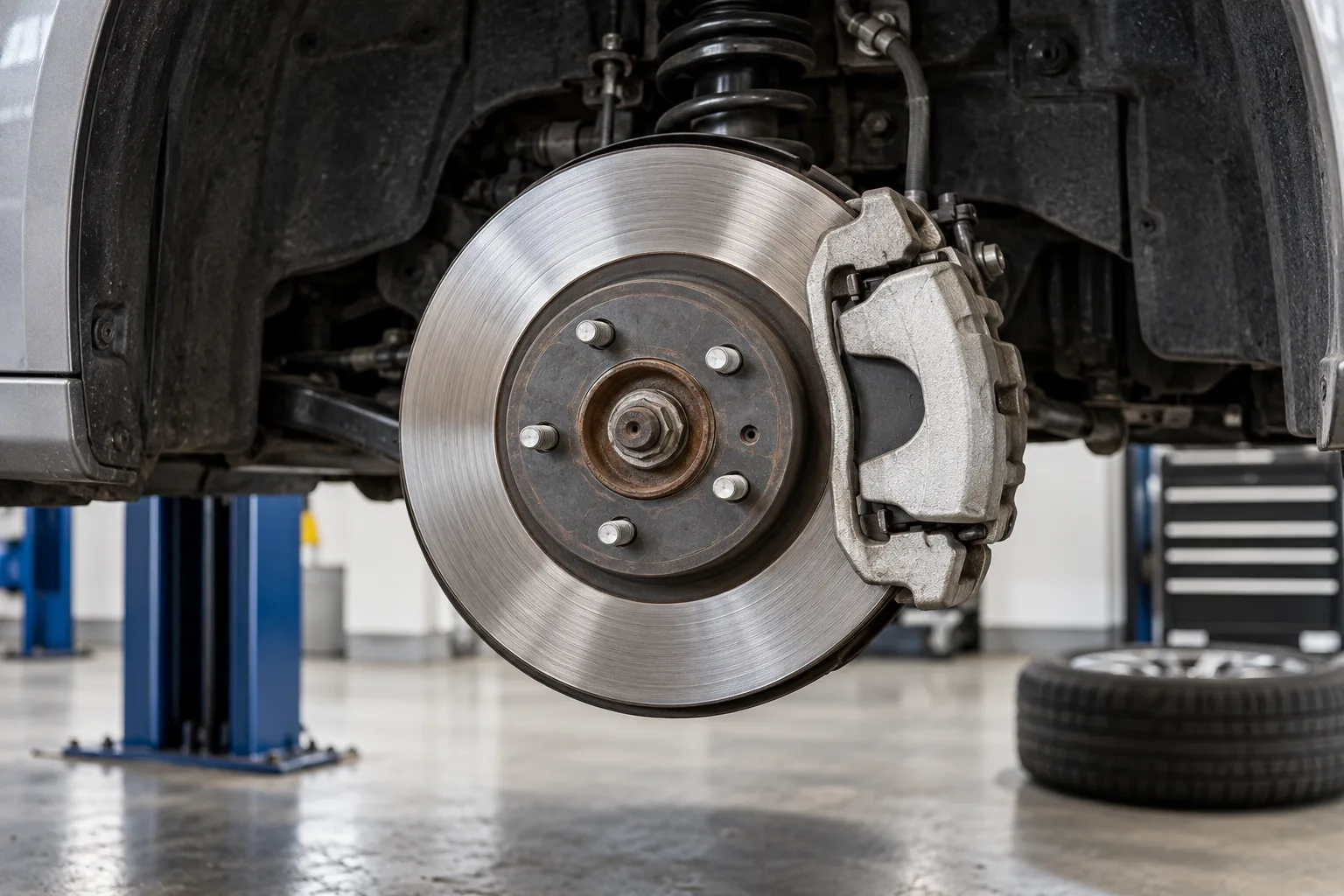
AI-generated illustration. No real damage, Pungbrother vehicle or customer repair is represented.
What does a squeal tell you?
A squeal is a high-frequency noise. It may be heard only with light pedal pressure, at low speed, during the first stops of the day, or after a longer drive. Some brake pads include a mechanical indicator intended to make noise as a wear warning. Other noise can relate to pad and disc surface condition, hardware or vibration. Brembo’s maintenance guidance explains that noise has multiple possible causes and needs brake-system inspection.
The conditions around the noise are valuable. Does it appear only while the pedal is applied? Does it continue when the brake is released? Is it one wheel or impossible to locate? Did it begin after replacement parts were fitted? Was the car parked in rain or high humidity? These clues can direct an inspection, but do not prove the pad is at its limit. Avoid replacing parts solely because a phone recording sounds like an example online.
If the squeal is new and repeatable, book an inspection even if the car seems to stop normally. Wear can be silent too, so the reverse is also true: no sound does not prove the pads are healthy. Use your vehicle’s service guidance and a condition check, not a noise-only replacement schedule.
Why is grinding more concerning?
Grinding is a rough scraping or metal-like sound rather than a brief high-pitched chirp. Persistent grinding during braking can indicate unwanted contact and possible damage to pad or disc surfaces. It may also come from a different mechanical cause. Without inspecting the wheel and brake system, no article can safely identify which part is involved. The practical decision is to reduce risk, not to name a component at the roadside.
If the sound is persistent, braking performance changes, the vehicle pulls during braking, the pedal feels abnormal or a warning appears, find a safe place to stop. Consult the owner’s manual’s warning instructions and arrange qualified help. Do not take a long drive to the workshop simply to “burn off” the noise. If a professional says the car should not be driven, arrange an appropriate way to move it rather than assuming towing is included with a service visit.
Moisture can cause temporary surface changes after parking, as Brembo’s brake stiction guide explains. That is a possible context for a short-lived sound, not permission to ignore repeated grinding. If the noise persists after normal use, returns regularly, or accompanies changed braking, have it inspected.
| Sound or behaviour | Useful description | Safer next step |
|---|---|---|
| Brief high-pitched squeal only on some stops | When and how often it happens | Arrange a pad, disc and hardware check |
| Repeatable squeal with every brake application | Whether braking feels normal | Book prompt inspection; do not diagnose from sound |
| Rough grinding when braking | Whether it stops on pedal release | Stop when safe and seek professional advice |
| Grinding plus pulling or pedal change | All symptoms and warning lamps | Treat as urgent; avoid continued driving |
| One brief sound after a wet parking period | Whether it disappears or returns | Monitor only if braking remains normal; inspect if persistent |
This table is triage, not a guarantee of safety. A quiet brake can still have a fault, and an apparently minor sound may require urgent work after inspection. If you cannot confidently judge whether braking is normal, stop using the car and ask a qualified person.
Could rain or washing cause a temporary sound?
Brake discs are exposed to the environment. After rain, washing or a period parked, light surface changes can occur. Brembo’s guide to stiction and corrosion shows why moisture can affect brake surfaces. A short noise that disappears during ordinary braking may have a different explanation from a sound that persists on every stop.
However, the distinction must not become an excuse to continue driving with reduced braking. If the pedal feels different, the car pulls, a warning appears or grinding remains, seek an inspection. Do not use aggressive braking to try to clean the discs. Do not spray lubricant, cleaner or water into the brake assembly as a home experiment. Brakes are safety-critical and their condition should be established by appropriate inspection.
Tell the workshop when the car was last used, whether it stood outdoors, and whether the sound began after a wet period. A meaningful inspection still checks pads and discs instead of assuming a weather explanation.
What should a brake inspection include?
The workshop should try to reproduce the noise safely, note when it occurs and inspect the components relevant to it. That can include pad material and evenness of wear, disc surface and condition, caliper movement and hardware, with additional checks if pedal feel or warning lights indicate a wider issue. Brembo’s noise and vibration guidance links several of these elements rather than treating all sound as pad wear.
Ask the technician which wheel or axle showed the problem, what was seen or measured, and whether the disc is within the correct specification for the vehicle. If a pad is replaced because it is worn, ask whether another condition caused uneven wear. If a disc needs work, ask why pad replacement alone is insufficient. Pungbrother has separate pages for brake pad replacement and brake disc and rotor service; the second job is quoted after inspection.
Braking can involve hydraulic and electronic systems as well as friction parts. A soft pedal or warning lamp may point beyond pad and disc surfaces. If a workshop proposes an unrelated part, ask how its test result explains the symptom. A photograph of a removed component can help, but the workshop should identify that it came from your car and explain the relevant finding, not show a generic internet example.
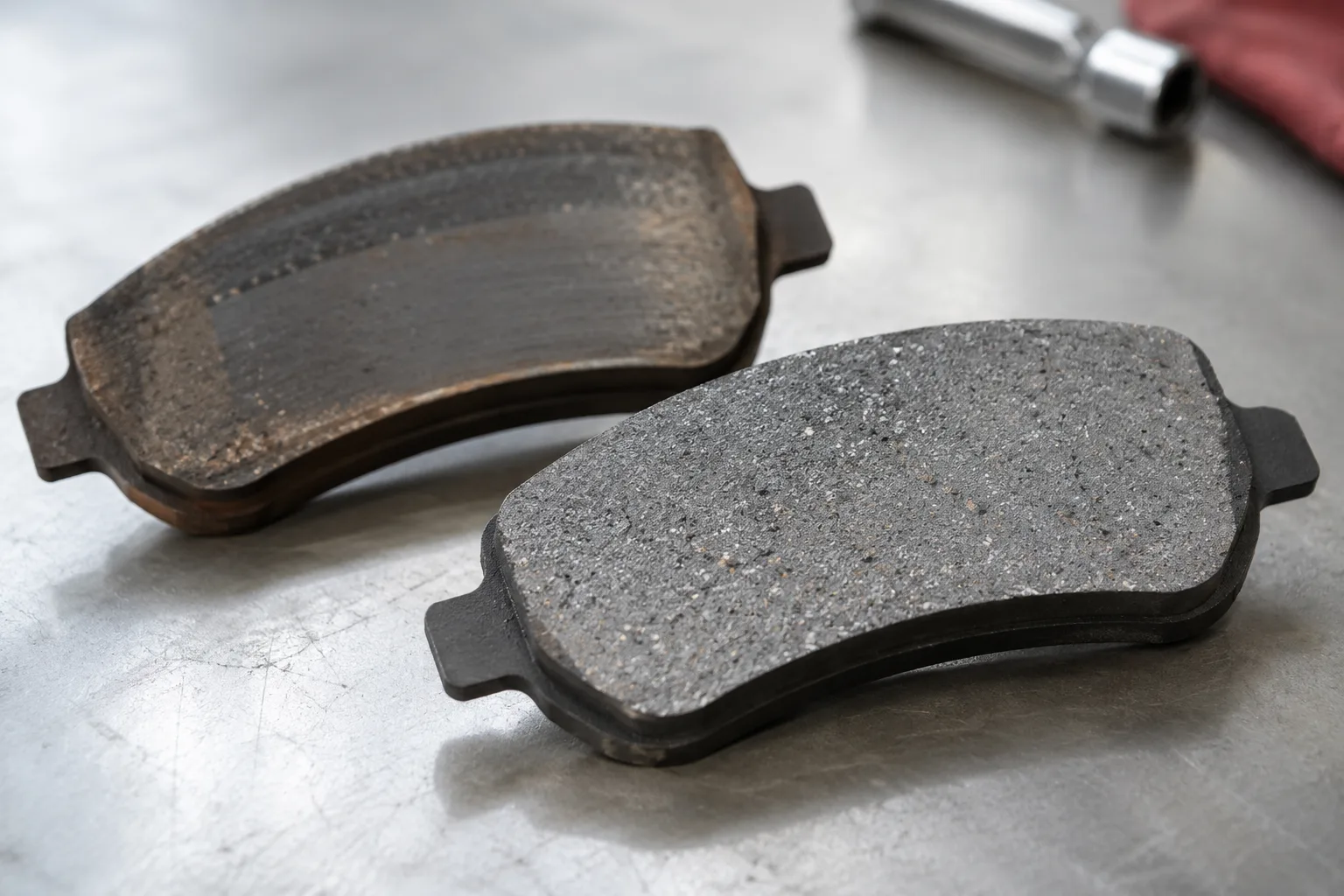
AI-generated illustration. The image does not establish wear thickness or a cause of noise.
Is it safe to continue driving with a squeal?
There is no universal yes-or-no based only on pitch. A momentary squeal on a damp first stop is a different report from constant noise with poor braking, yet both may require inspection depending on what else is happening. If stopping performance is normal and there are no warnings, arrange a timely brake check instead of ignoring a new repeatable sound. If the pedal, stopping distance or vehicle direction feels abnormal, stop when safe and seek qualified advice before driving farther.
Do not use an article to override a vehicle warning or an on-scene professional assessment. A brake system is safety-critical, and the exact condition cannot be checked through a text description. The driver’s priority is to avoid an unnecessary journey when a serious fault is possible. The workshop’s priority is to find and explain the cause before quoting work.
For a car stranded in Johor, ask the workshop what assistance or movement options are available. The presence of a workshop contact page does not itself mean mobile repair or towing is offered. Do not assume a service appointment includes roadside recovery.
What does a brake-noise visit cost at Pungbrother?
Pungbrother publishes guide prices for brake pad replacement: RM 200 for a small car and RM 250 for a large car, with around one hour estimated. This figure applies only if pad replacement is the agreed work. It is not a diagnosis for every squeal or grinding sound, and it does not represent a fixed price for discs, calipers or other brake repairs.
For brake disc and rotor service, the published page says the price is quoted after inspection. Pungbrother’s pricing page calls listed amounts estimates and says a firm quote comes before work. When booking, describe whether the noise occurs on braking or when coasting, whether there is pulling, pedal change or a dashboard warning, and whether the vehicle can be moved safely.
AI-generated illustration. It is not a documented breakdown, repair outcome or customer photograph.
Frequently asked questions
Does squealing mean I need brake pads immediately?
Not necessarily. A wear indicator is one possibility, but noise also has other causes. A technician should check pad condition, discs and related hardware before recommending a repair.
Can grinding be only surface rust after rain?
Moisture can affect disc surfaces, but persistent grinding or any change in braking needs inspection. Do not assume a weather explanation makes further driving safe.
Is it okay to drive to the workshop with grinding brakes?
Do not assume so. Stop in a safe place and seek qualified advice about moving the vehicle. If braking is abnormal, avoid continued driving and ask about appropriate recovery.
Why do brakes squeal after new pads are fitted?
There are multiple possible causes involving surfaces, hardware, installation and system condition. Report when the noise started and have the actual repair inspected. Do not assume that every new-pad noise is normal.
Should I replace the discs whenever brakes make noise?
No automatic replacement follows from sound alone. The workshop should show disc condition and the applicable specification. Ask for the reason and quote if disc work is recommended.
What should I tell Pungbrother before I visit?
Describe the sound, when it occurs, whether the pedal or stopping feels different and whether warning lights are on. Say if the car may be unsafe to drive. The workshop contact page has the current phone and WhatsApp details.