Aircond Compressor Replacement
The compressor and related air-conditioning components are inspected before replacement is recommended.
Noise and cooling symptoms that may require compressor checks.
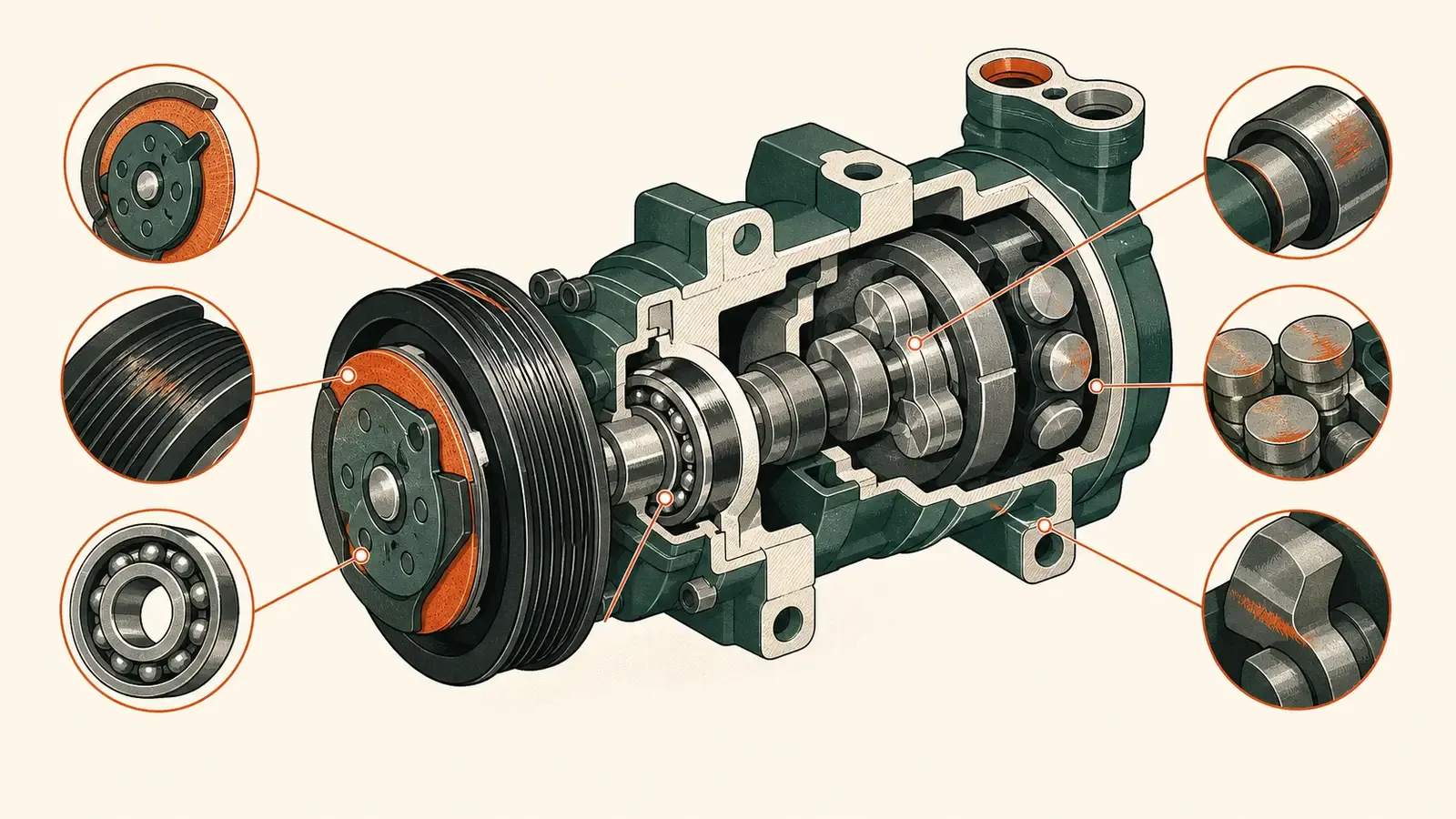
The clearest signs are warm air despite the aircond being switched on, a compressor clutch that clicks but never fully engages, and a grinding or rattling noise from the front of the engine when the aircond is running. Cooling that cuts in and out, especially in slow traffic, is also common and points to the compressor rather than the blower or cabin filter.
A compressor is driven by a belt and relies on internal bearings and a refrigerant-oil mix to stay lubricated. When oil runs low or a bearing wears, metal parts start touching under load, producing a whine or grind that tracks with engine speed. That noise usually builds over one to three weeks rather than appearing overnight, which is the window to get it checked before the pulley or belt is damaged too.
If the clutch engages but the air stays warm, the compressor may be spinning without building pressure — usually a refrigerant leak, a worn internal valve, or oil starvation. A Car Air Conditioning Service checks refrigerant pressure and visible leak points first; if pressure is present but cooling still fails, the fault sits inside the compressor and Aircond Compressor Replacement is the next step.
Not every under-bonnet rattle is the compressor. A misfire can sound like a knock near idle, and Symptoms of Spark Plug Problems covers the starting and performance issues that sometimes get blamed on the aircond instead. A vibration felt through the wheel while braking has nothing to do with cooling — Steering Wheel Vibration Causes explains how wheel balance, alignment and brakes cause that. Matching the symptom to the right system avoids paying for the wrong repair.
Waiting is reasonable if the aircond is simply weak with no noise, since that's often a refrigerant top-up rather than a compressor fault. Once there's grinding, a seized clutch, or a burning smell near the belt area, waiting risks the drive belt, which can affect the alternator and power steering pump on the same belt loop. Book an inspection as soon as the noise starts, not after it stops.
A standard Car Air Conditioning Service has a firm figure — RM 150 for a small car and RM 200 for a large car, around 1.5 hours. Compressor replacement itself is quoted after inspection because the scope varies: whether only the compressor is worn, whether the clutch or pulley also needs replacing, and whether the system needs a full refrigerant recharge afterward. A firm quote is given for approval before work starts.
The inspection covers clutch engagement, drive belt condition, refrigerant pressure, and any oil residue at hose fittings, since a leaking fitting is a common reason a compressor runs low on lubrication. If the car is already booked in for a cooling complaint, it's also a reasonable time to ask whether tyre wear or steering pull justify a look at How Often Do You Need Wheel Alignment? — an unrelated system, but the same visit. Mentioning the exact noise and when it happens helps the inspection start in the right place.
A seized compressor clutch adds drag to the engine and, in rare cases, can make the drive belt slip enough that the alternator undercharges the battery. If the car is also slow to crank or needs jump starts, that's a separate electrical fault — Why Won't My Car Start? sets out the battery, starter and charging causes worth checking alongside the aircond problem, since fixing one doesn't rule out the other.
Aircond problems often surface around the same mileage as other wear items, so it's worth reviewing service history while the car is booked in. Fluid age matters more than distance for some parts — the same reasoning behind When Should Brake Fluid Be Changed applies to refrigerant oil, and one workshop visit is a reasonable point to check both instead of treating them as separate trips.
| Symptom | Likely cause | Estimated cost |
|---|---|---|
| Warm air, clutch engaged | Refrigerant leak or worn valve | varies — inspection needed |
| Grinding noise near belt | Worn compressor bearing | varies — inspection needed |
| Clutch won't engage | Faulty clutch coil or fuse | varies — inspection needed |
| Weak, fading cooling | Low refrigerant / general service | RM 150–200 |
| Compressor confirmed faulty | Compressor replacement | Quote after inspection |
| Unclear cause or warning light | Diagnostic inspection | RM 80–120 |
The compressor and related air-conditioning components are inspected before replacement is recommended.
Cooling performance, refrigerant condition and visible air-conditioning components are checked before a firm quote.
A compressor that seizes puts extra strain on the drive belt, and if the belt slips or snaps it can affect the alternator and power steering pump sharing the same loop. It won't damage the engine internals directly, but ignoring the noise risks a bigger, more expensive repair down the line.
Low refrigerant usually means weak but present cooling with no unusual noise, and a top-up during a Car Air Conditioning Service often resolves it. A compressor fault typically brings grinding, clutch problems or warm air even when pressure checks out fine — an inspection tells the two apart.
There is no fixed price because the scope depends on what else needs replacing alongside the compressor, such as the clutch, pulley or a full refrigerant recharge. The workshop inspects the system first and gives a firm quote for approval before any replacement work begins.
Short trips are usually fine if the noise is mild and cooling still works, but grinding, a seized clutch or a burning smell means you should stop using the aircond and get it checked. Continuing to run a failing compressor risks belt damage that affects other engine components.
1, Jalan Kota 1/1, Cahaya Kota Puteri, 81750 Masai, Johor