Timing Belt Replacement
The timing belt system is inspected and a replacement scope is confirmed for the vehicle.
Why the correct timing-belt interval depends on the vehicle.
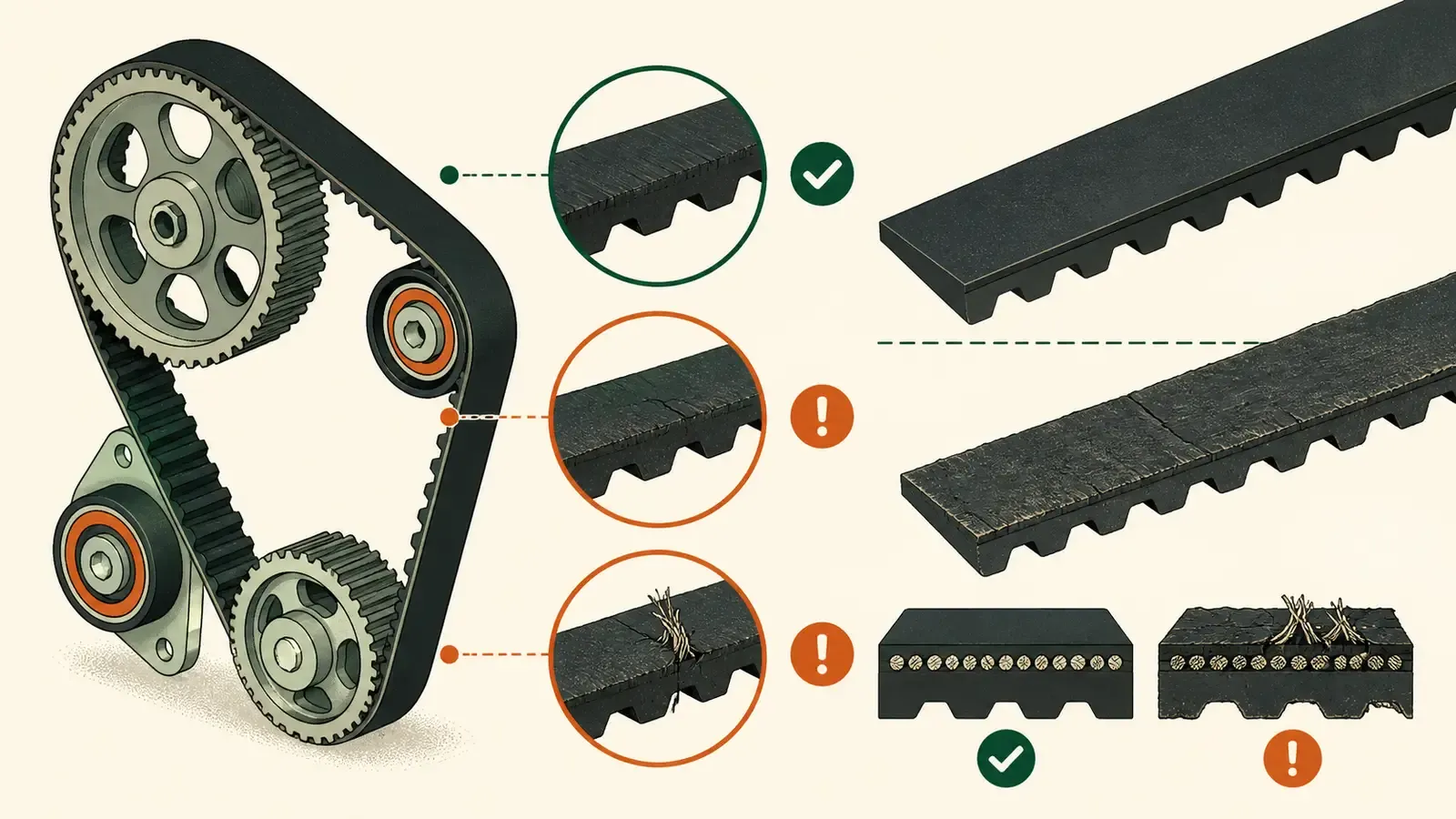
Timing Belt Replacement is quoted after inspection, because the correct interval, the belt design, and the parts that come off with it are set by the manufacturer for that specific engine, not by one rule for every car. Most manufacturers specify replacement somewhere between 60,000 km and 100,000 km, or roughly five to seven years, whichever comes first, but the exact figure sits in the service book for that engine rather than on a general price list. A small Perodua engine and a diesel pickup engine can carry different intervals even though both use a belt rather than a chain. Older or harder-worked engines sometimes call for shorter intervals than a lightly used one of the same model. The workshop confirms the manufacturer's figure and the belt's actual condition before quoting the job.
Manufacturers list both because heat, rubber ageing, and pulley wear happen even if the car covers very few kilometres. A car that does short trips or sits idle for long periods can reach the age limit long before the odometer reaches the distance limit, and the earlier of the two figures is the one that applies. This is why a low-mileage older car can still need the belt replaced on schedule.
On an interference engine, the pistons and valves occupy the same space at different points in the rotation, timed precisely by the belt. If the belt snaps or jumps a tooth, valves can bend and pistons can be damaged before the engine finishes turning over. That turns a scheduled service into Engine Repair and Overhaul work, diagnosed and quoted only once the actual damage is inspected. Non-interference engines are more forgiving if a belt fails, but the car still stops running, usually without warning, wherever it happens to be at the time.
A worn timing belt does not always wait for the odometer to reach the interval. Watch for a ticking or slapping noise from the front of the engine, visible cracking or fraying on the belt surface where it is accessible, or an engine that cranks but is reluctant to start. Any of these is worth a Timing Belt Replacement inspection rather than waiting for the scheduled distance, since a belt that is already failing does not care what the service book says.
A visual and diagnostic check can confirm cracking, glazing, or missing teeth without stripping the whole system, and this is normally the first step regardless of the manufacturer's interval. If the belt looks and tests sound, the workshop can note the finding and revisit it at the next interval rather than replacing a belt that still has service life left. If it does not, the same inspection turns directly into a replacement quote.
No. Many newer engines use a timing chain instead, designed to last the life of the engine rather than being replaced on a set interval, though a chain can still stretch or wear at very high mileage. Whether a specific engine uses a belt or a chain is stated in its manual, or can be confirmed by the workshop from the model and engine code, since two versions of the same car sometimes carry different engines under the same name.
On many engines the water pump is driven by the same belt and sits behind the same covers, so reaching one usually means reaching the other. If the pump is close to its own service life, replacing it at the same time avoids paying for the same labour twice within a year or two. The workshop checks the water pump's condition as part of the timing belt inspection and adds it to the quote only where it applies to that engine.
Timing Belt Replacement is quoted after inspection because parts and labour vary by engine — some belts sit behind straightforward covers, others need mounts or other components removed to reach them. Whether the water pump, tensioner, or idler pulleys also need replacing changes the scope of the job. The workshop provides a firm quote for approval before any work begins, once the actual engine and belt condition are confirmed rather than assumed from the model name alone.
If the car is close to the manufacturer's distance or age figure, or shows any of the warning signs above, replacing the belt now is usually the safer choice on an interference engine — the cost of a failed belt is an engine repair, not a service. Waiting makes sense only when the car is genuinely well within its interval and shows no symptoms at all. A short diagnostic inspection can settle the question before money is committed either way.
If the interval has already passed, treat it as a priority rather than routine maintenance, especially on an interference engine, since every additional kilometre adds risk without changing the schedule. Booking a Timing Belt Replacement inspection as soon as possible lets the workshop check the belt's actual condition and quote the job before a failure forces an unplanned repair.
A timing belt job puts the engine bay under close inspection, which makes it a good moment to check other wear items instead of booking five separate visits. If the car has started clunking over bumps, it is worth mentioning that alongside the classic symptoms of worn car suspension. If cooling has been fading in traffic, ask about how often car aircond should be serviced while the bonnet is open anyway. Slow cranking or dim lights are early signs of a weak car battery, and a whining noise or a battery that keeps going flat can point to signs of a bad alternator — both are quick checks once the engine is already exposed. A steering wheel that shakes under braking is a separate problem worth raising too, since that usually traces back to why the car shakes when braking rather than the timing belt.
Give the model, engine code if you know it, and the current odometer reading when you book, since the interval and parts list are specific to the engine, not just the car nameplate. Mention any noise, hesitation to start, or previous timing belt work already done, so the inspection is not spent working out what has already been replaced. If a recommended interval is printed in the service book, quote it too — it saves time confirming figures already on paper in the car.
| Symptom | Likely cause | Estimated cost |
|---|---|---|
| Ticking noise from engine | Worn timing belt or tensioner | varies — inspection needed |
| Engine will not start | Snapped timing belt (interference engine) | varies — inspection needed |
| Visible cracking on belt | Belt reaching end of service life | varies — inspection needed |
| Oil leak near timing cover | Worn seal near timing belt area | varies — inspection needed |
The timing belt system is inspected and a replacement scope is confirmed for the vehicle.
Engine symptoms are diagnosed before any repair or overhaul scope is proposed.
Check the service manual for the model and engine code, since two versions of the same car sometimes use different engines. If the manual has no listed timing belt interval, the engine likely uses a chain instead. The workshop can also confirm this from the engine code during a diagnostic inspection or booking call.
It is a risk rather than an immediate failure, and how much risk depends on whether the engine is an interference design. On an interference engine, a belt that fails past its interval can cause serious internal damage, so booking an inspection promptly is worth more than waiting for a clear symptom.
Not automatically — it depends on the condition found during inspection and on what the engine design calls for. Some timing belt kits include the tensioner and idler pulleys as standard practice for that engine, others do not, and the workshop confirms the exact scope in the quote before starting work.
Time varies by engine, since some belts sit behind easy-to-remove covers while others require more of the engine to come apart to reach them. There is no fixed duration for this job — the workshop gives a time estimate along with the quote once the engine and access are confirmed.
1, Jalan Kota 1/1, Cahaya Kota Puteri, 81750 Masai, Johor