Car Diagnostic Inspection
A structured diagnostic inspection is used to identify likely causes before repairs are approved.
Why an ABS warning needs diagnostic inspection.
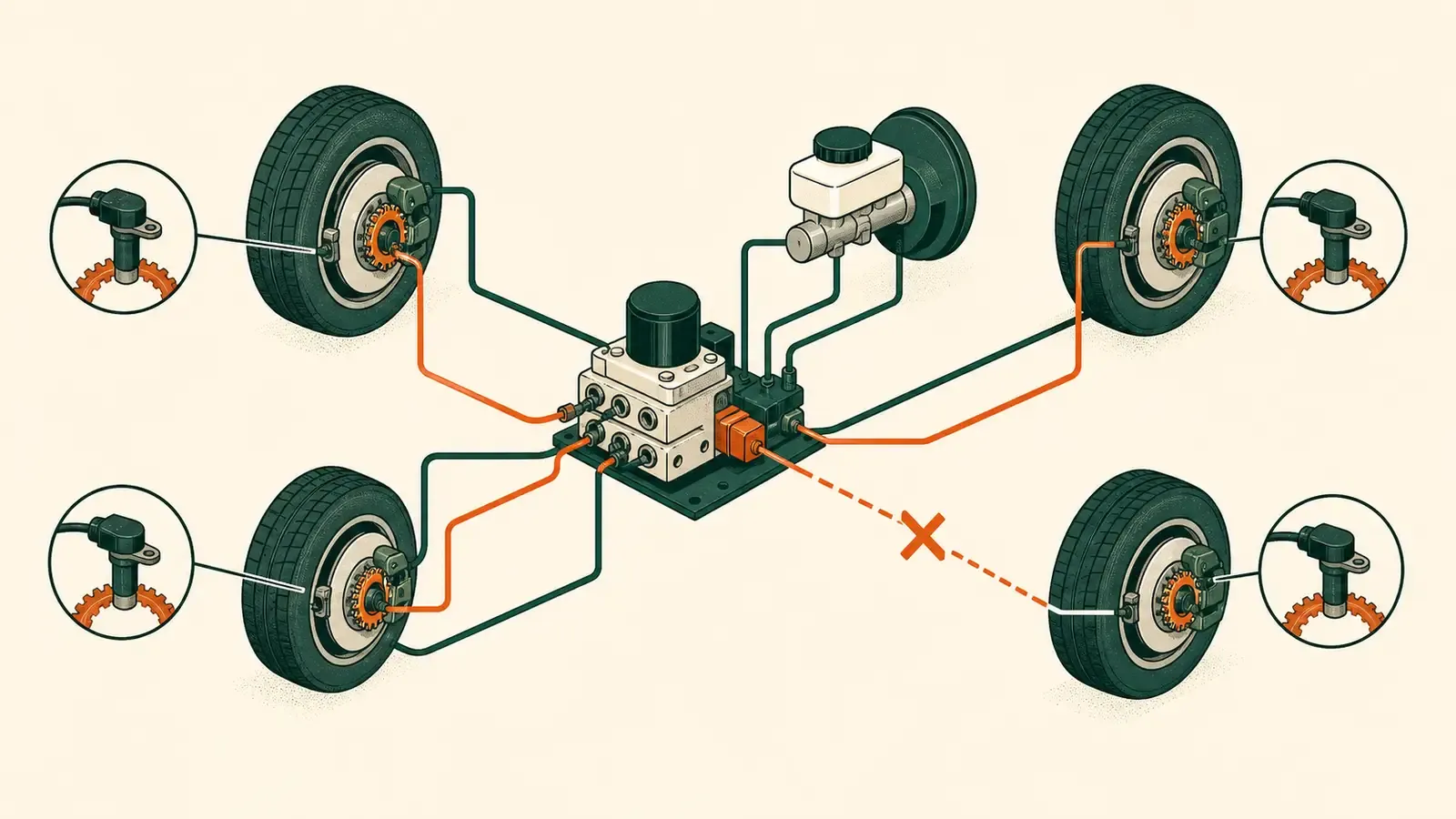
The ABS warning light means the car's anti-lock braking computer has found a fault in the system and switched the anti-lock function off, leaving your normal brakes to work on their own. It does not mean the brakes have failed — pedal pressure, discs and pads still work — but anti-lock assistance, and on many cars electronic stability control, is disabled until the fault is fixed, so it is not something to leave for the next routine service. A car diagnostic inspection, RM 80 for a small car or RM 120 for a large car and about an hour, reads the fault code stored in the ABS module and points to the affected wheel sensor or circuit. Guessing the cause from the dashboard alone rarely works, because sensors, wiring, brake fluid level and the pump itself can all light up the same symbol.
You can usually drive short distances with only the ABS light showing, since the normal brake pedal, discs and pads still function without anti-lock assistance. Braking on wet roads or during a hard stop becomes less predictable because the wheels can lock instead of pulsing, so avoid motorway speeds and sudden braking until the fault is checked. If the ABS light comes on together with the main brake warning light, treat it as a brake problem rather than a minor sensor fault, and get the car looked at before driving any further than necessary.
The most common cause is a wheel speed sensor that has failed, become dirty, or lost connection through a damaged wiring plug — often after driving through deep water, hitting a pothole, or as a wheel bearing starts to wear. Low brake fluid, a failing ABS pump motor, or a fault inside the control module can also trigger it. Corroded sensor rings show up more often on older cars in Johor's humidity than in drier climates. Only an inspection that reads the stored fault code tells you which of these applies to your car, rather than replacing parts on a guess.
Not directly — the ABS light is about the wheel sensors and control module, not pad thickness on its own. But a sensor sitting close to a worn disc, or a caliper dragging from old pads, can disturb the signal enough to trigger the light indirectly. It helps to know how long do brake pads last on your model, because thin pads and a dragging caliper often show up together with a sensor fault rather than as separate problems. If pads do need replacing, brake pad replacement is RM 200 for a small car or RM 250 for a large one, about an hour, and can be done in the same visit as clearing the ABS fault.
The ABS light rarely appears completely on its own. A weak battery or a failing alternator can drop voltage low enough to confuse the ABS module's readings, so it is worth understanding car battery lifespan in Malaysia's heat, since starting trouble in hot weather often shows up around the same time as a sensor fault. If the check engine light comes on too, it is worth knowing what does the check engine light mean, because the two systems sometimes share a wiring fault or a stressed electrical circuit. This overlap is common enough that a single visit covering both symptoms is usually more efficient than treating each light as a separate booking. One diagnostic inspection checks both systems together instead of guessing which light to chase first.
Before any longer trip, treat the ABS light as one item on a wider check rather than the only fault worth fixing. A checklist such as how to prepare your car for a long drive covers tyres, fluids and battery condition alongside the brake and ABS system, so nothing important gets missed before you leave Masai. It is also a reasonable time to deal with unrelated comfort issues — if the aircond has been struggling in traffic, the guide on why is my car aircond not cold is worth reading, since sorting everything out in one workshop visit saves a second trip right before you travel.
Waiting rarely makes an ABS fault cheaper, and a light ignored for months makes it harder to recall whether it flickered occasionally or came on gradually and stayed. A fault that starts as a single sensor issue can, over weeks of driving with the ABS disabled, wear unevenly on the affected wheel's brake components, turning a cheap sensor swap into a larger repair. Book a diagnostic inspection while the symptom is fresh, and mention when the light first appeared, whether it flickers or stays solid, and whether it followed any recent tyre, wheel or brake work, so the technician can narrow down the fault faster instead of starting from zero.
A structured diagnostic inspection starts with a symptom review — when the light comes on, whether it flickers, and any recent work on tyres or brakes — followed by an OBD scan where applicable to read the stored fault code from the ABS module. A visible multi-point check then looks at brake fluid level, wiring connectors and the wheel sensors themselves for damage or corrosion. You get the findings and a next-step quote before any repair work begins, so you know exactly what a sensor, wiring or module repair will cost before agreeing to it.
| Symptom | Likely cause | Estimated cost |
|---|---|---|
| ABS light on, steady | Wheel speed sensor fault | RM 80 / RM 120 (diagnostic) |
| ABS + brake warning light together | Low brake fluid or hydraulic fault | varies — inspection needed |
| ABS light flickers when braking | ABS control module fault | varies — inspection needed |
| ABS + battery light together | Charging system affecting ABS module | varies — inspection needed |
| ABS light after tyre or wheel change | Sensor wiring disturbed | RM 80 / RM 120 (diagnostic) |
A structured diagnostic inspection is used to identify likely causes before repairs are approved.
Brake pads and visible braking components are checked before replacement work begins.
Yes, in most cases you can drive normally to a workshop, since the standard brakes work without ABS assistance. Avoid hard braking, high speed and wet roads where wheel lock-up is more likely. If the main brake warning light comes on with it, or the pedal feels different, stop and arrange a tow or call the workshop before continuing.
Sometimes it clears after the car restarts if the fault was a temporary sensor glitch or a loose connector reseated itself. If it returns within a few drives, the fault is still present even though the light is not showing constantly. A diagnostic inspection reads the stored fault code even after the light has gone off.
Yes. Low voltage from a weak battery or a failing alternator can affect how the ABS module reads sensor signals, sometimes triggering the light along with dim lights or slow cranking. Checking battery and charging voltage is part of a standard diagnostic inspection, so both issues are identified in the same visit rather than two separate trips.
The diagnostic inspection that identifies the cause is RM 80 for a small car or RM 120 for a large car, about an hour. The repair itself, whether a sensor, wiring, or module, depends on what the inspection finds, so a firm quote is given before any work starts.
1, Jalan Kota 1/1, Cahaya Kota Puteri, 81750 Masai, Johor