Car Diagnostic Inspection
A structured diagnostic inspection is used to identify likely causes before repairs are approved.
A pre-trip checklist for fluids, tyres, battery, brakes and cooling.
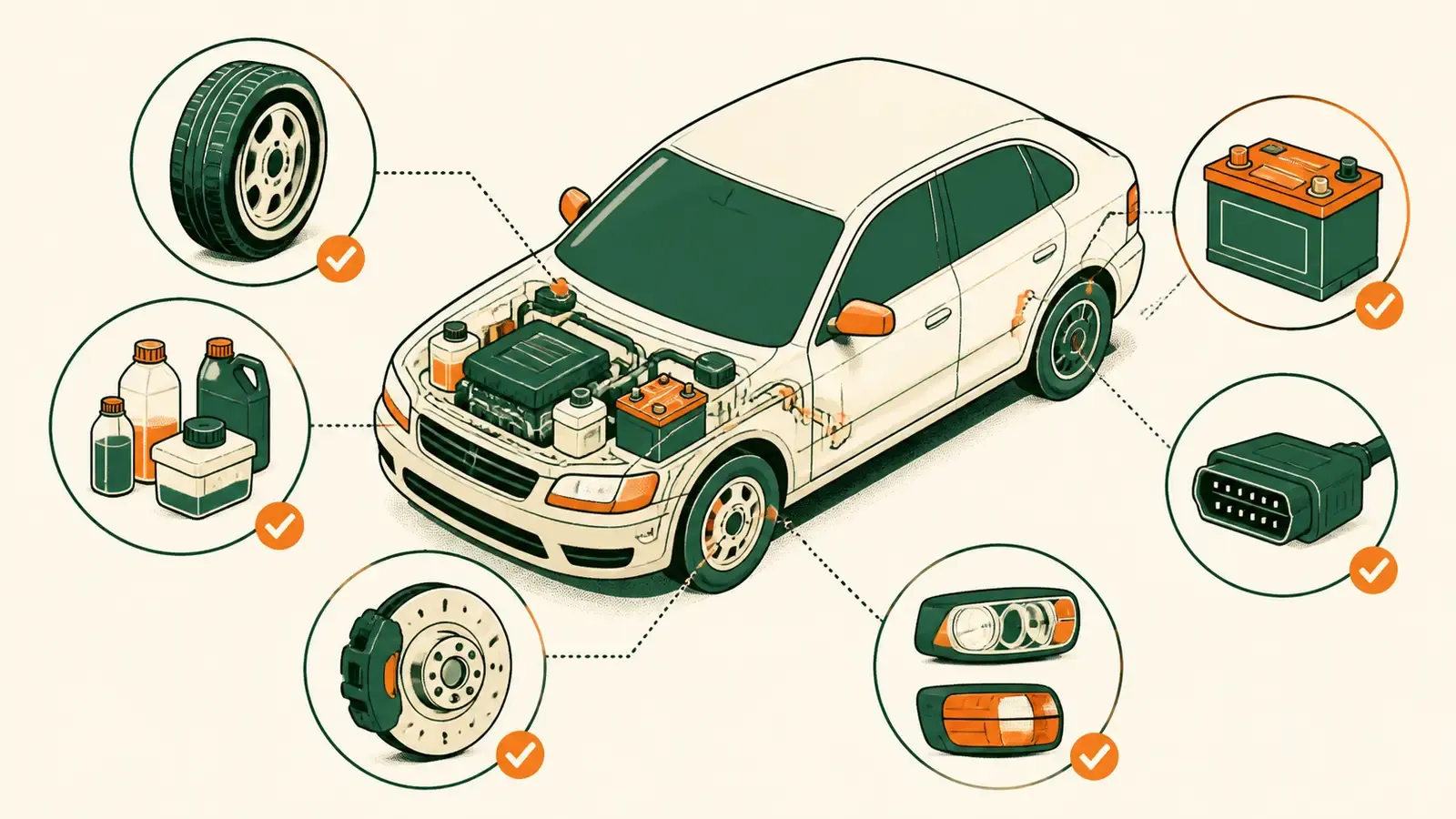
Five systems decide whether a long drive goes smoothly: engine oil, tyres, battery, brakes and cooling. Check all five before you leave, not after a warning light appears on the highway. A basic check at home takes about 15 minutes: oil level and colour, tyre pressure and tread, battery terminals, brake pedal feel, and coolant level under the bonnet. If anything looks marginal, a car diagnostic inspection at the workshop identifies the cause before you commit to a long drive up the coast or across the causeway. Waiting until you're on the road turns a small, cheap check into a breakdown recovery bill and a lost day of the trip. Most of what follows takes minutes to look at yourself; the parts that need tools or a lift on the ramp are worth booking a day or two before departure, not the night before you leave.
Tyres wear unevenly on short trips around town, and a fault that's harmless at 50 km/h becomes dangerous at highway speed. Check tread depth on all four tyres and the spare, not just the two that look worn, and check pressure when the tyres are cold — driving to a petrol station first gives a false high reading. Uneven wear across one tyre often points to a suspension or alignment issue rather than the tyre itself, so if one corner wears faster than the others, get it looked at before the trip rather than after. Tyres also age even without much use; if yours are more than five years old regardless of tread depth, the rubber may have hardened enough to affect grip in the rain, which matters more on a highway during a downpour than on a slow street. Carry a jack, the spare, and know where the jacking points are on your own car — this is not something to work out for the first time on the shoulder of the expressway at night.
Dark, gritty oil or an oil-service reminder on the dashboard means the oil has already done its job and needs replacing. An engine oil and filter change is RM 100 for a small car and RM 150 for a large one, and takes about 30 minutes — worth doing before a long drive rather than partway through one. Old oil breaks down faster under sustained highway RPM than in stop-start town driving, so if the interval is close, change it before you leave rather than 200 km into the trip. Check the level yourself with the dipstick if you're unsure whether it's due; a level that's visibly low points to a leak that's worth fixing before, not after, a week of daily long-distance driving.
Slow cranking, dim headlights or a battery that's needed a jump start in the past month are signs it won't survive a week away from home. Heat shortens battery life faster in Malaysia than in cooler climates, and the factors that affect car battery lifespan in Malaysia are worth checking against your car's age and usage before a long trip. A battery replacement is RM 250 for a small car and RM 350 for a large one, and takes about 30 minutes — a workshop visit before you leave, not a roadside call-out during the drive. If the terminals look corroded or loose, that alone can cause intermittent starting problems that mimic a dying battery.
Squealing, grinding or a soft pedal are signs the pads need attention before you rely on them for sudden stops on unfamiliar roads. How long brake pads last depends on driving style, load and how often you brake hard, so a car that's fine around town can still have pads close to the wear limit. Brake pad replacement is RM 200 for a small car and RM 250 for a large one, and takes about an hour. A long drive usually means a heavier car — passengers, luggage, maybe a roof box — and a heavier car needs longer to stop, which is exactly when thin pads matter most. A pedal that feels spongy rather than firm can mean air in the lines or worn components beyond the pads themselves, which is worth flagging when you book.
Sustained highway speed and hours of engine running put more strain on the cooling system than daily short trips, so check coolant level, hose condition and radiator fan operation before you leave. Knowing what to do when your car overheats matters more on a highway with no shoulder for kilometres than it does in city traffic where you can pull over immediately. Top up coolant if it's low, but a level that keeps dropping points to a leak that needs inspection rather than repeated top-ups. If the temperature gauge climbs on a long incline, that's a sign to get the cooling system checked before, not during, the trip.
Weak or warm airflow that's tolerable on a 20-minute commute becomes miserable on a four-hour stretch with the whole family in the car. If cooling fades in traffic or the air isn't cold at all, the checks for why your car aircond is not cold cover the same refrigerant and compressor issues that get worse under sustained highway use. An air-conditioning service is RM 150 for a small car and RM 200 for a large one, and takes about 1.5 hours — enough time to catch a refrigerant or component issue before you're stuck with warm air and closed windows on the expressway.
A steady check engine light is worth investigating before departure; a flashing one means stop and don't drive further until it's checked. Understanding what the check engine light means helps you judge whether it's safe to head off or whether the car needs to go to the workshop first. A car diagnostic inspection is RM 80 for a small car and RM 120 for a large one, and takes about an hour — it scans the fault codes and does a visible multi-point check so you leave with an answer, not a guess. Don't ignore a light that came on days ago hoping it clears itself; it rarely does, and a long drive tends to make it worse.
Book two or three days before you leave, not the morning of departure — that leaves time to order a part if one's needed. Pungbrother Enterprise is open Monday to Saturday, 09:00 to 18:00, at Jalan Kota 1/1, Cahaya Kota Puteri, Masai, and most checks and replacements are completed the same day once the fault is confirmed. Mention the car model, the length of the trip and any symptom you've noticed when you call or message on WhatsApp, so the inspection covers the right ground instead of starting from zero. A five-system check before a long drive — tyres, oil, battery, brakes and cooling — costs far less in time and money than a breakdown call-out halfway through the journey.
| Symptom | Likely cause | Estimated cost |
|---|---|---|
| Squealing or grinding brakes | Worn brake pads | RM 200–250 |
| Slow engine cranking | Weak or failing battery | RM 250–350 |
| Dark, gritty engine oil | Oil change overdue | RM 100–150 |
| Warm air from vents | Aircond system fault | RM 150–200 |
| Check engine light on | Unknown fault — needs scan | RM 80–120 |
| Temperature gauge climbing | Cooling system issue | varies — inspection needed |
A structured diagnostic inspection is used to identify likely causes before repairs are approved.
Engine oil and filter are replaced using the specification agreed for the vehicle.
Book two or three days before departure, not the morning you leave. That gives the workshop time to order a part such as a battery or brake pads if one is needed. A same-day visit works for a quick oil or battery check, but not always for parts that need ordering.
At minimum, check tyre pressure and tread when the tyres are cold, engine oil level and colour, and battery terminals for corrosion. Look at the coolant level under the bonnet and make sure the brake pedal feels firm, not soft. Anything that looks marginal is worth a proper inspection before you leave rather than a guess.
Yes. Sustained highway speed keeps the engine and cooling system working harder for longer than stop-start town trips, and a heavier load from passengers and luggage adds strain to brakes and suspension. A fault that's minor around Masai can become serious over several hours at highway speed, which is why a pre-trip check matters.
Yes. Mention the trip length and any symptoms you've noticed on WhatsApp or by phone before you come in, so the inspection covers oil, tyres, battery, brakes and cooling together. Most checks and any replacements needed are completed the same day, though a part that needs ordering may take longer.
1, Jalan Kota 1/1, Cahaya Kota Puteri, 81750 Masai, Johor