Engine Repair and Overhaul
Engine symptoms are diagnosed before any repair or overhaul scope is proposed.
Visible and indirect clues that should prompt an inspection.
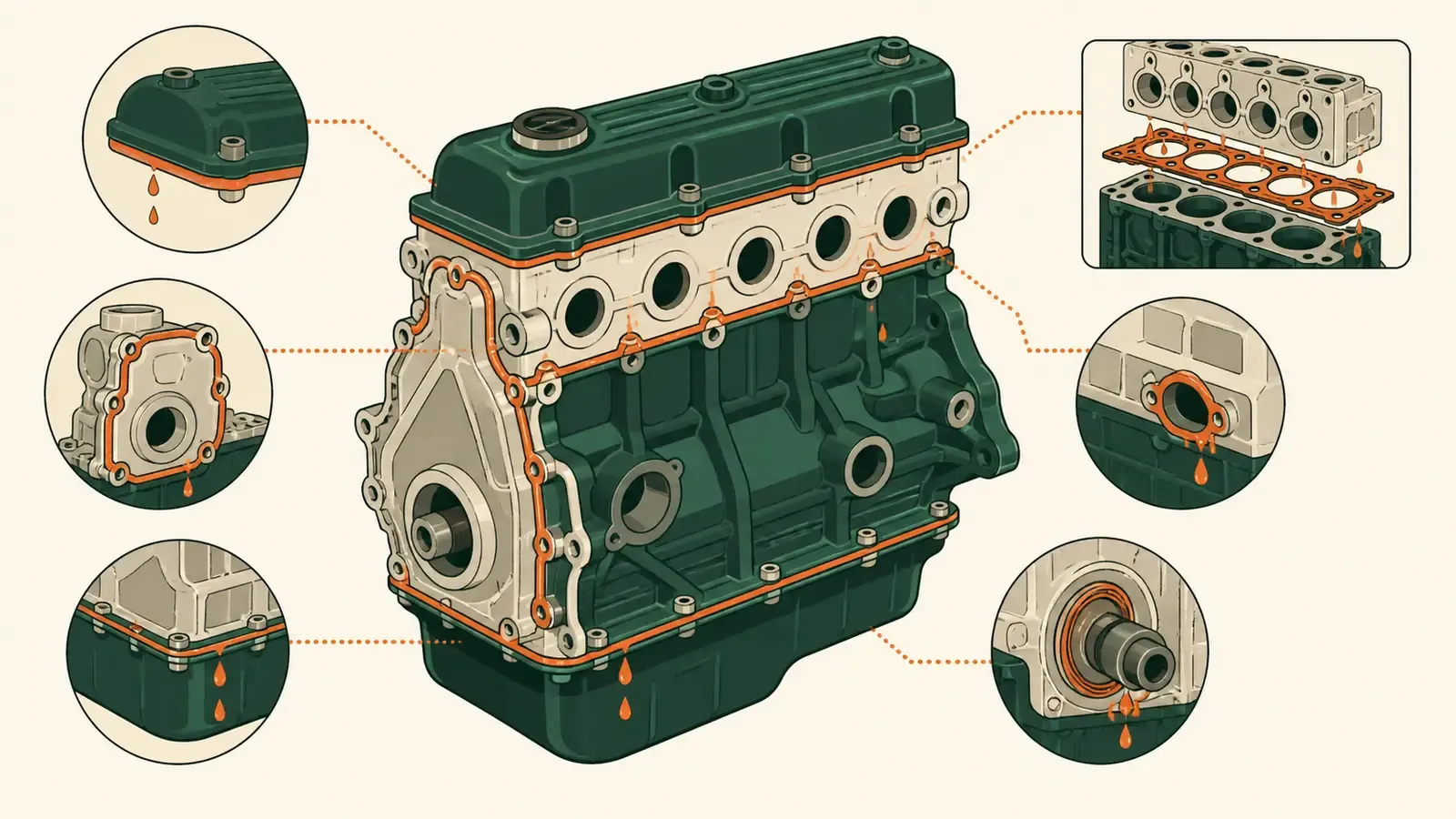
The clearest sign is a dark, oily spot on the ground where the car usually parks overnight — check the tarmac or driveway, not just under the bonnet. A faint burning smell after a drive, especially once the engine has cooled, often means oil is dripping onto a hot exhaust or manifold. You might also notice the oil level dropping between services with nothing visibly wet outside. Any one of these on its own is worth a look; together, they usually mean the leak has been building for a while and is unlikely to fix itself.
Not every leak lands on the ground. Oil can seep from a valve cover gasket or seal and burn off against a hot part of the engine before it ever drips down, so the dipstick reads low with nothing visible underneath. Heat under the bonnet in Malaysia's climate wears out rubber seals and gaskets the same way it shortens battery life, so if you're also noticing slow starts alongside a falling oil level, it's worth reading Car Battery Lifespan in Malaysia to check whether the two share a cause. A slow, invisible leak still needs tracing rather than just topping up each month and hoping it holds.
Not every puddle under a parked car is engine oil. Water dripping near the middle of the car on a hot day is normal condensation from the air-conditioning system — if that fluid is watery rather than oily, it's expected, though weak cooling on top of it is worth checking separately in Why Is My Car Aircond Not Cold?. A reddish fluid usually points to power steering or transmission fluid, while a clear or slightly oily patch near a wheel could be brake fluid rather than engine oil, a different concern from the wear covered in How Long Do Brake Pads Last?. Colour, position and texture together narrow down what's actually leaking before anyone touches the car.
A very slow leak that only drops the level slightly between services is usually safe to drive on while you arrange an inspection, provided you keep checking the dipstick. It stops being safe once the oil pressure warning light comes on, the engine sounds noticeably louder, or the temperature gauge climbs — at that point, stop rather than continue the trip. An oil pressure warning is a different signal from an ABS light on the dashboard, and if that one lights up instead, see What Does the ABS Warning Light Mean? for what it actually covers. Mixing up the two warning lights delays the repair that's actually needed.
A leak that seems manageable around town can become a real problem over hours of highway driving, where the engine runs hotter for longer without a stop to check the dipstick. Oil that's already low leaves less margin before pressure drops, so a leak worth monitoring locally is worth fixing before a trip out of Johor. Working through How to Prepare Your Car for a Long Drive before you leave covers oil, tyres, battery, brakes and cooling together, which is the right time to also resolve a leak instead of hoping it holds until you're back.
Note where the stain sits under the car — front, middle or back — and roughly how big it is after an overnight park. Check the dipstick against its markers and note whether any warning light is on. Telling the workshop the car's model, how often you're topping up, and whether the smell or smoke shows up while driving or only after parking saves time, because it points the diagnostic inspection at the right part of the engine from the start instead of a slower, broader check.
Topping up oil between services is a reasonable short-term measure for a very slow leak, but it isn't a fix — the seal or gasket that's failing keeps failing. Waiting usually costs more later: a gasket caught early is a contained job, while a neglected leak that drops oil pressure can turn into engine repair and overhaul, priced only after inspection because the scope varies so much by cause. If the leak is worsening month to month rather than staying flat, that's the signal to book an inspection rather than keep topping up and watching the level.
An oil change won't fix a leak, but it's often the point where a leak first gets noticed — fresh oil shows a small drip more clearly against a clean sump than old, dark oil already coating the underside of the engine. If you're due for a change anyway, mention the leak when booking an oil and filter change so the drain plug and filter seal get checked while the car is already up, rather than treating it as a separate visit later.
| Symptom | Likely Cause | Estimated Cost |
|---|---|---|
| Dark spot under engine when parked | Worn oil pan gasket or drain plug seal | varies — inspection needed |
| Burning smell after driving | Oil leaking onto hot exhaust or manifold | varies — inspection needed |
| Blue-grey exhaust smoke | Oil reaching internal engine components | varies — inspection needed |
| Oil level drops between changes | Slow external leak or worn seal | RM 80–120 (diagnostic inspection) |
| Oil pressure warning light on | Level dropped enough to affect pressure | RM 80–120 (diagnostic inspection) |
Engine symptoms are diagnosed before any repair or overhaul scope is proposed.
Engine oil and filter are replaced using the specification agreed for the vehicle.
Oil is dark, slippery and often smells slightly burnt; water from the air-conditioning system is clear and usually appears further back near the firewall. A reddish stain points to power steering or transmission fluid instead. If unsure, wipe the drip and check its colour and texture again the next day.
A small drop over several weeks is common as an engine ages, but the source should still be found rather than just topped up repeatedly. If the level starts falling faster, or a warning light appears, book a diagnostic inspection instead of waiting for the leak to get worse on its own.
Yes. Once the level drops far enough that oil pressure can't be maintained, moving parts run without proper lubrication and wear or seize. What starts as a seal or gasket replacement can turn into a full engine repair, which is why finding a leak early through inspection matters more than the leak itself seems to.
A diagnostic inspection is RM 80 for a small car and RM 120 for a large car, taking about an hour. It includes a visible multi-point check and identifies the likely source before any repair is quoted, so you know the cost of fixing it before agreeing to any work.
1, Jalan Kota 1/1, Cahaya Kota Puteri, 81750 Masai, Johor