A brake pedal that suddenly feels soft, sinks unusually far or fails to produce normal stopping force is a safety warning. Do not continue a normal journey to test whether it improves. Slow and stop in the safest available place, then seek qualified assistance. Air, fluid or component problems are possible, but the exact cause needs inspection.
In short
- If braking power is reduced or the pedal approaches the floor, stop safely and arrange help rather than driving to an appointment.
- Toyota’s owner guidance lists a spongy pedal or loss of brake effectiveness among symptoms that need attention; your own model manual takes precedence.
- Brake-fluid condition is one possible factor. Brembo explains how moisture and heat can produce a spongy pedal.
- A leak, air in the hydraulic circuit or component fault can also be involved. A visual glance at the reservoir is not a diagnosis.
- Pungbrother has brake services in Masai, but the cause and repair price must be established before work.
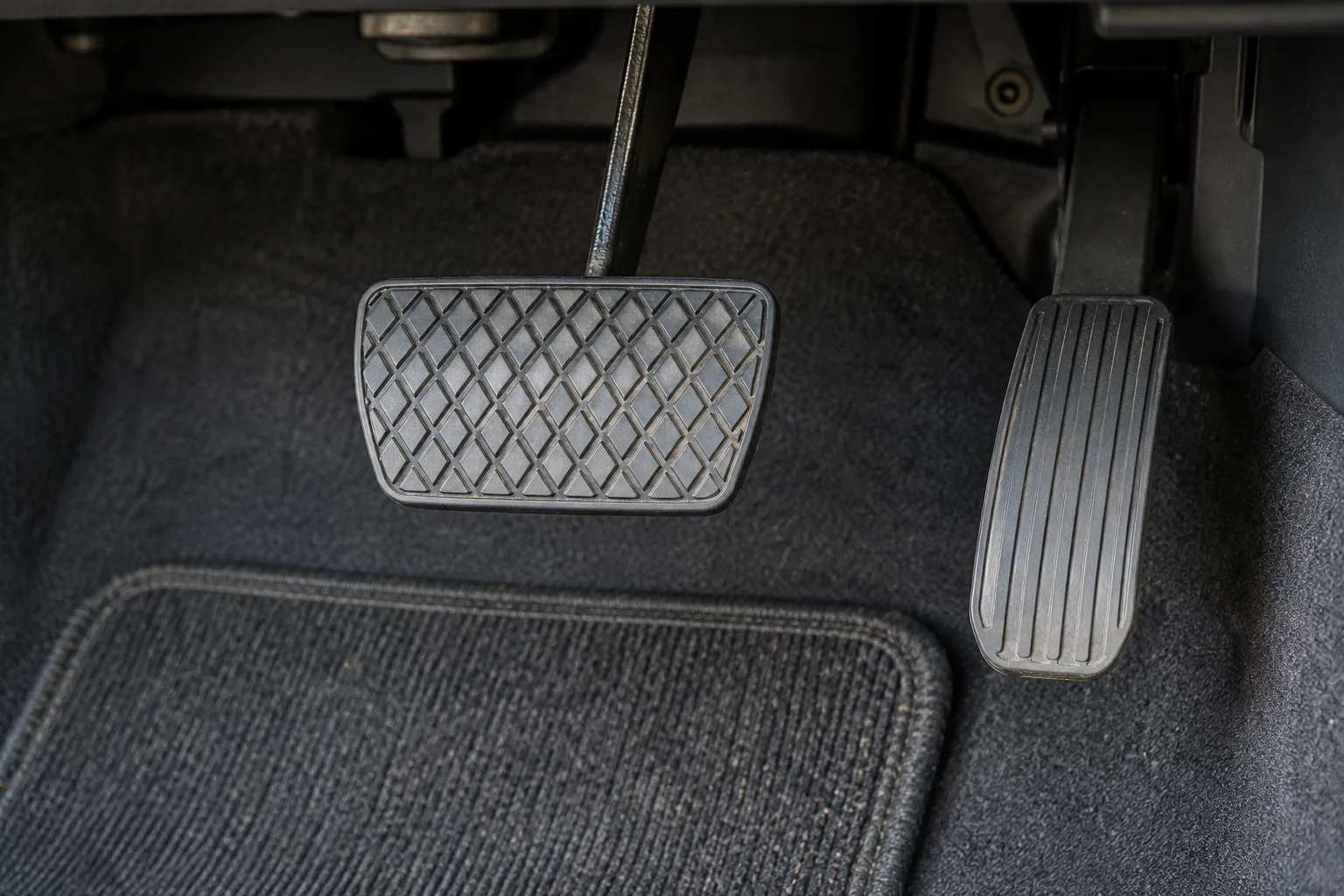
AI-generated cabin illustration. It is not a real vehicle with a confirmed brake fault.
What is the immediate safe response to a soft brake pedal?
If the change happens while driving, focus on keeping the vehicle under control, creating space from other traffic and reaching a safe stopping place. Follow the emergency instructions in your vehicle’s manual. Use hazard lights when appropriate and seek roadside or emergency help if necessary. This guide cannot give a universal manoeuvre for every road, transmission and brake-system design. The important decision is not to resume ordinary driving after an unexplained loss of normal pedal feel or stopping force.
If the pedal feels nearly normal after several presses, that does not prove the problem has resolved. Intermittent faults can recur. Do not use repeated hard stops as a self-test on a public road. Tell the assistance provider exactly what changed, whether a warning light appeared and whether fluid is visible under the car. If the brakes may be impaired, ask about recovery rather than assuming it is safe to drive to the workshop.
If you only notice the softness before setting off, leave the car parked and arrange a qualified check. Do not move it around a car park to ‘see how bad it is.’ A brake problem can worsen under heat and repeated use, and another driver or pedestrian could be nearby. The cost and inconvenience of recovery are secondary to stopping ability.
What does ‘soft’ or ‘spongy’ actually mean?
Drivers use several words for an abnormal pedal. ‘Spongy’ often means the pedal travels farther or feels springy before the brakes respond. ‘Sinking’ may mean the pedal continues moving while steady pressure is held. ‘Low’ may describe a pedal near the floor. ‘Hard’ is a different sensation and can have different causes. None of these descriptions alone identifies a particular part, but they tell the technician what to investigate.
Brembo’s brake-fluid guidance explains that absorbed moisture can lower the fluid’s boiling point. Under heat, vapour can be compressed and the pedal can feel spongy while braking effectiveness falls. This is one possible mechanism, not proof that a fluid change alone will fix every soft pedal. Air in the circuit, a leak or a hydraulic component issue may require different work.
Describe when the symptom began. Was it after a long descent or repeated stops? Did it start immediately after a brake repair? Is it present on the first press after parking overnight? Has the brake warning light appeared? Did the car pull to one side or make a new noise? This sequence can direct the inspection. It does not replace a professional check or make the car safe to drive.
Could low brake fluid be the cause?
Low fluid level can be important, but it has more than one explanation. Pad wear changes the fluid level in some systems, while a leak can lower it more urgently. Do not assume that topping up the reservoir is a repair. A leak may be hidden at a hose, line, caliper or another part of the circuit. The system needs inspection to determine whether it can hold pressure and stop the car reliably.
Looking at a reservoir from outside a stationary car may give you information to report, but only if it can be done safely and without touching hot or moving parts. Do not open the reservoir merely to check the colour, and do not mix or add an unspecified fluid. The correct fluid specification belongs to your vehicle manual. Contamination can damage a brake system. If you see a puddle, avoid touching unknown fluid; it may not even be brake fluid.
The key question for the workshop is whether low level is a symptom of a fault or a normal change associated with wear. Ask what was inspected, whether a leak was found and whether the hydraulic system was tested after repair. A note saying ‘fluid filled’ without locating the reason for the low level is not an adequate explanation for a suddenly soft pedal.
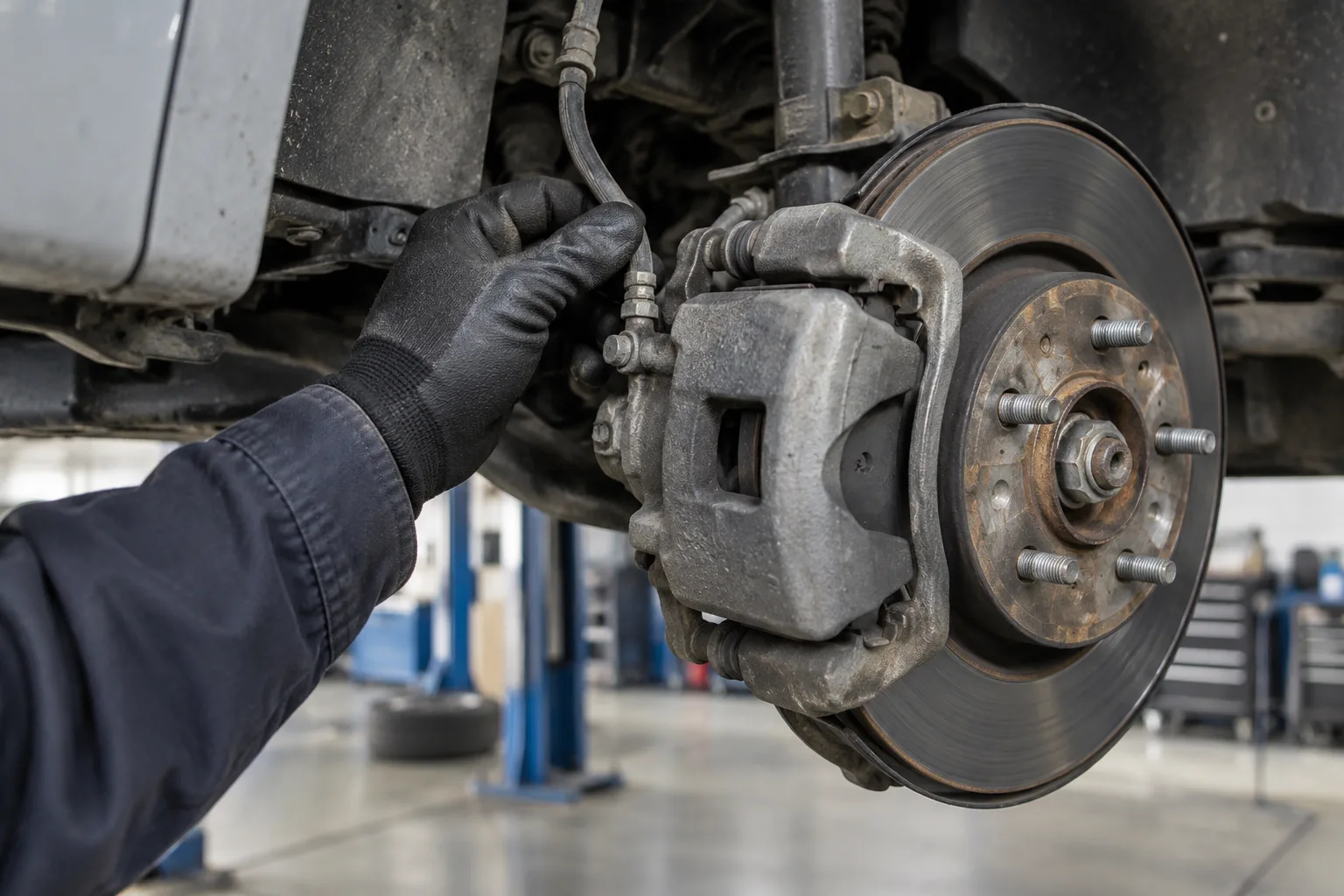
AI-generated workshop illustration. It is not a real inspection or evidence of a leak.
Can old brake fluid make the pedal soft?
Brake fluid can absorb moisture over time. Brembo says the resulting lower boiling point may allow vapour to form under heavy braking, causing a spongy pedal and reduced effectiveness. The vehicle maker’s replacement schedule, correct specification and actual condition should guide service. This does not mean every soft pedal is caused by old fluid or that a flush is sufficient when there is a leak.
If the symptom appeared after a fluid change, tell the workshop that timing. Air may have entered or remained in a circuit, or a different fault may have become noticeable. That is a reason for reinspection, not a remote accusation about the previous repair. If the symptom appears only after repeated heavy braking, heat-related problems need to be considered, but the brakes may still be unsafe between those events.
Our separate guide on brake-fluid change intervals addresses routine maintenance. A sudden soft pedal is not simply an overdue-service reminder. It is a current stopping-performance concern that deserves diagnosis before the next normal trip.
| Driver observation | Why it matters | Safe next step |
|---|---|---|
| Pedal almost reaches floor | Stopping force may be compromised | Stop safely; seek qualified assistance |
| Pedal changes after repeated braking | Heat and fluid condition may matter | Do not continue testing; arrange inspection |
| Fluid visible near a wheel | Possible leak among other explanations | Avoid touching; do not drive if brakes feel abnormal |
| Symptom began after recent work | The repair history helps diagnosis | Give the workshop the invoice and timeline |
| Warning light plus changed pedal | Multiple safety signals | Follow the vehicle manual and arrange help |
What should a professional brake inspection include?
The technician should start with the reported pedal behaviour and the vehicle’s brake design. They may inspect fluid level and condition, visible hydraulic components, pads, calipers, hoses and warning information, then use the manufacturer’s test and bleeding procedure if indicated. The exact scope depends on what is found; not every car requires every possible part or a blanket fluid service.
Ask for a clear explanation of the cause, not just a list of replacements. If a hose leaked, which hose and where? If air was present, why and how was the system tested after service? If a component failed, how was the fault confirmed? A post-repair check of pedal feel and braking operation is important before the car is returned. These questions help you approve a meaningful repair rather than paying for an unrelated pad set.
Do not attempt hydraulic repairs or bleeding with internet instructions if you lack equipment and training. Modern braking systems may have model-specific electronic procedures. Incorrect work can leave air in the circuit or compromise braking. This is a safety-critical system, and the right place for diagnosis is a qualified workshop.
What can Pungbrother quote in Masai?
Pungbrother Enterprise lists brake pad replacement estimates of RM 200 for a small car and RM 250 for a large car. Those figures on its pricing page apply to pad work, not to every cause of a soft pedal. A hydraulic repair, fluid service or other fault needs a finding and a firm quote before work. No universal price for solving a soft pedal is published.
The workshop also has a brake disc and rotor service, but a soft pedal does not automatically call for disc replacement. Give the make, model and year, the exact pedal behaviour, any warning light, and whether stopping ability changed. Before arranging the visit, ask whether the car should be recovered rather than driven. The current address, telephone and hours are on the Pungbrother contact details.
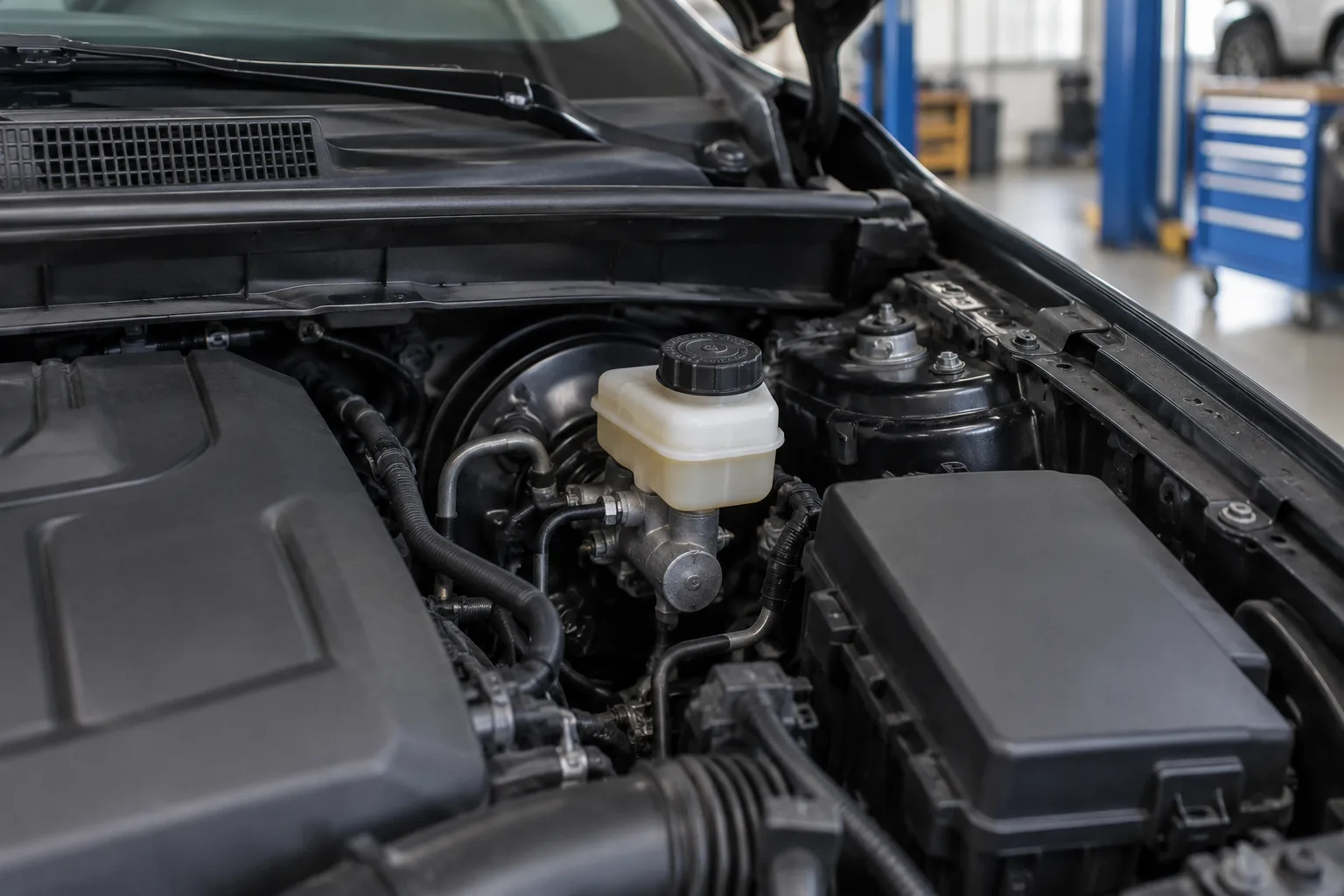
AI-generated illustration. The reservoir level and fluid condition are not diagnostic data.
Frequently asked questions
Is a soft brake pedal safe if the car still stops?
It cannot be declared safe remotely. A changed pedal can signal a fault that worsens under heat or repeated use. Stop safely and seek qualified advice before normal driving.
Will pumping the pedal fix a soft pedal?
Temporary improvement is not a repair or proof of safety. Follow the vehicle’s emergency guidance and arrange inspection of the underlying cause.
Can I just add brake fluid?
Do not use a top-up as a substitute for diagnosis. The cause of low level matters, and the vehicle requires the correct fluid specification and procedure.
Does a spongy pedal always mean air in the lines?
No. Fluid boiling under heat, leaks and other hydraulic faults can also affect pedal feel. A workshop must inspect the system.
What if the symptom started after pad replacement?
Tell the workshop immediately and provide the work record. The timing helps diagnosis, but only an inspection can establish the cause.
Does Pungbrother have a published soft-pedal repair price?
No. The public price guide lists a pad estimate, not a universal quote for hydraulic diagnosis or repair.