Brake Pad Replacement
Brake pads and visible braking components are checked before replacement work begins.
Why service history and fluid condition guide replacement.
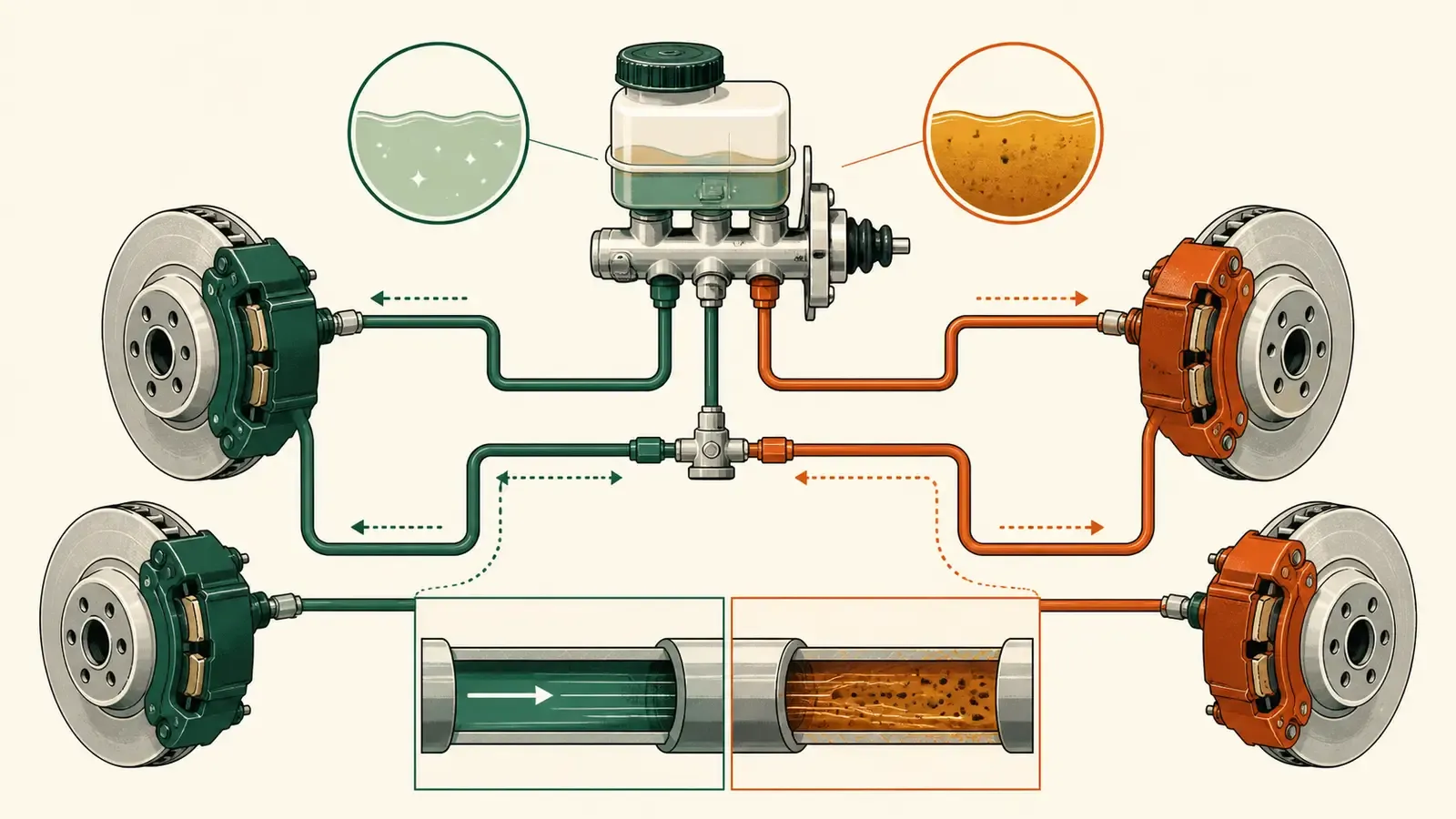
Brake fluid carries the pressure from your foot on the pedal through to the callipers at each wheel, working through a sealed hydraulic system rather than a mechanical cable. The catch is that brake fluid is hygroscopic — it draws in tiny amounts of moisture from the air over months and years, even inside a sealed system, through hoses, seals and the reservoir cap. As water content rises, the fluid's boiling point drops, and under sustained hard braking it can heat up enough to form vapour inside the lines. Vapour compresses, unlike fluid, so the pedal can feel soft or sink further than usual under your foot. This is a slow, invisible change — the fluid can look almost normal sitting in the reservoir long after it has started losing its margin, which is why colour and moisture readings during an inspection matter more than a rough guess based on time alone.
There is no separate confirmed price for a fluid-only change here, because it isn't sold as a stand-alone job — it's assessed as part of a brake inspection alongside pad and rotor condition. Most manufacturers suggest checking brake fluid roughly every one to two years, but the number on a service sticker matters less than what the fluid actually looks like and how the pedal feels under your foot right now. A car driven mostly in town traffic with light, frequent braking ages fluid differently to one that does regular hill or highway driving with harder, sustained braking. Book a Brake Pad Replacement inspection and ask for the fluid colour to be checked at the same time — it takes only a few extra minutes and tells you whether a change is worth adding to that visit or can reasonably wait.
Old, moisture-heavy fluid loses its boiling point margin, and that risk doesn't build up gradually the way worn brake pads do — it tends to show up in one specific moment, usually under hard or prolonged braking such as a long downhill stretch. The pedal can feel unusually soft, or in a worse case sink slowly toward the floor as you hold steady pressure. Left unchecked for years, moisture in the fluid can also start corroding metal components inside the callipers and ABS unit from the inside, turning what would have been a simple fluid change into a more expensive repair later on. None of this is as urgent as a grinding brake pad, but it's worth catching before a long trip rather than after one — check pedal feel and fluid colour on the checklist covered in How to Prepare Your Car for a Long Drive, alongside tyres, battery and the cooling system.
No, and it helps to keep the two apart when describing the problem to a workshop. A soft or sinking pedal usually points to air or moisture in the brake fluid itself, while an ABS warning light on the dashboard points to a sensor, wiring or module fault picked up by the anti-lock braking system — a separate issue covered in What Does the ABS Warning Light Mean? A car can show one symptom without the other, or both together after an unrelated fault somewhere else in the system. Mentioning exactly which one you're seeing, or both, lets a diagnostic check start in the right place instead of testing everything from scratch.
Usually not. Vibration felt through the steering wheel specifically under braking most often points to a warped or scored brake rotor rather than fluid condition, and that's a Brake Disc and Rotor Service matter — rotors are measured and a repair recommendation is given after inspection. Other causes of steering wheel shake, including wheel balance and alignment problems that show up at speed rather than only under braking, are covered separately in Steering Wheel Vibration Causes. Brake fluid problems tend to change how the pedal feels underfoot — soft, spongy, sinking — rather than causing the wheel itself to move, so the two symptoms point a technician toward different parts of the car.
Brake fluid is usually clear to light amber when fresh and darkens with age, and it feels slightly oily rather than thick or greasy. That's a different appearance to the darker, heavier drips described in Signs of an Engine Oil Leak, so a patch under the car is worth a closer look before assuming which system it's coming from. A small brake fluid leak matters more than it looks, since even a modest drop in reservoir level can mean reduced pedal pressure at the wheel it feeds. If you're not sure which fluid you're looking at, a photo sent ahead of a visit helps the inspection start faster on the day.
Not directly — fluid condition and pad thickness wear on different schedules and for different reasons, so replacing one doesn't reset the clock on the other. Pads wear from friction and need replacing at RM 200 for a small car or RM 250 for a large one, roughly an hour's job, while fluid degrades from moisture regardless of how gently or hard you've been braking. That said, if pads are already worn down at the same time a fluid check is due, it makes sense to deal with both in the same visit rather than book two separate slots, since the wheel is already off and the hydraulic system is already open for inspection.
If the pedal feels noticeably softer than normal, or sinks even slightly under steady pressure while stopped, treat it as worth checking within days rather than waiting for the next scheduled service. If it's simply due for a routine one-to-two-year check and the pedal feels completely normal, it can reasonably be folded into your next Brake Pad Replacement or Engine Oil and Filter Change visit without urgency. The real difference is whether you're managing a routine wear item on a timeline or responding to a change you've actually felt underfoot.
Describe the pedal feel in plain terms — soft, sinking, fine but noisy, or fine but shaking — along with any warning light showing on the dashboard and roughly when the brakes were last worked on if you know it. That short description means the inspection starts at the right point rather than repeating basic checks a clear description would already have answered. If the car has also been slow or reluctant to start recently, mention that separately, since a weak battery or starting fault is usually unrelated to the brakes and is covered in Why Won't My Car Start? rather than forming part of the same repair.
Fluid can look clear and still have absorbed enough moisture to lower its boiling point, since discolouration is a visual cue rather than a full test. Colour alone doesn't confirm moisture content, so a workshop check goes beyond looking at the reservoir and considers pedal feel, service history and how the car is normally driven. If the pedal has changed but nothing looks obviously wrong, it's still worth a check rather than assuming it will resolve on its own.
| Symptom | Likely Cause | Estimated Cost |
|---|---|---|
| Soft or spongy pedal | Moisture or air in brake fluid | varies — inspection needed |
| Pedal sinks slowly | Fluid or seal leak | varies — inspection needed |
| Squealing or grinding noise | Worn brake pads | RM 200–250 |
| Steering wheel shakes when braking | Warped or scored rotor | quote after inspection |
| Brake warning light on dash | Low fluid or worn pads | RM 200–250 or inspection needed |
| Dark or cloudy fluid at check | Fluid due for replacement | varies — inspection needed |
Brake pads and visible braking components are checked before replacement work begins.
Brake discs, rotors and pad contact surfaces are inspected for safe repair recommendations.
Check for a soft or spongy pedal, a dashboard brake warning light, or fluid that looks dark and cloudy rather than clear to light amber. None of these confirm the cause on their own, so a workshop check of fluid colour and pedal feel is the fastest way to know if it needs replacing.
No, they're separate jobs. Brake Pad Replacement costs RM 200 for a small car and RM 250 for a large one and addresses worn pad material, while fluid condition is a separate check based on colour, moisture and pedal feel rather than pad thickness.
Drive gently and get it checked soon rather than waiting for a scheduled service. A soft pedal can mean air or moisture in the fluid, and that risk becomes more serious under hard or prolonged braking, such as down a long hill, so book an inspection before a long trip.
There's no separate confirmed price for brake fluid alone, since it's assessed alongside pad and rotor condition during a brake inspection. Book a Brake Pad Replacement or Brake Disc and Rotor Service inspection and a firm quote will cover whatever combination of fluid, pads or rotors the check finds necessary.
1, Jalan Kota 1/1, Cahaya Kota Puteri, 81750 Masai, Johor